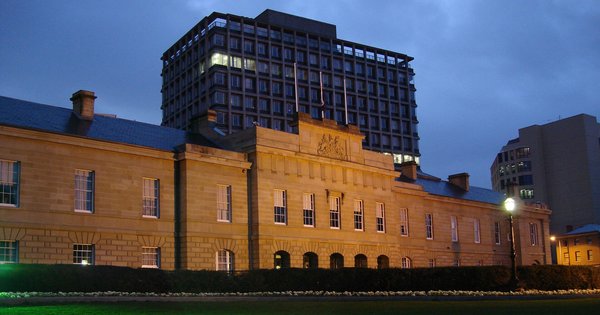
It took a decade of campaigning, almost 20 hours of debate in the lower house, and a week of careful argument in the upper house. On Wednesday, Tasmania finally banned conversion practices.
The Greens’ Conversion Practices Prohibition Bill passed both houses of the Tasmanian parliament on Wednesday 25 November, ABC News reports. Advocates are calling it the strongest law of its kind in the country.
When we last covered this in September, Premier Jeremy Rockliff had just given Liberal MPs a conscience vote. Here’s how it got over the line, and what it actually does.
What the law bans
Conversion practices are attempts to change, suppress or eradicate a person’s sexual orientation or gender identity. They range from formal “therapy” to informal pressure, and the bill treats them all as harmful.
According to ABC News, AAP and QNews, the law:
- creates criminal offences, including intentionally engaging in conversion practices towards another person that cause them injury
- creates a Conversion Practices Commissioner to educate about, prevent and respond to conversion practices
- lets survivors receive financial compensation
- requires government bodies to refer conversion practices to the commissioner
- protects parents and health practitioners who act ethically and lawfully
When the bill passed the lower house in October, the ABC reported that it spells out things that are not conversion practices: a health practitioner providing services they consider appropriate, taking part in online debate, religious prayer, and parents discussing sexual orientation, gender identity, sexual activity or religion with their children.
The ABC says Tasmania’s law is most similar to Victoria’s.
How it passed
This was a cross-party win, not a party-line one.
- The lower house, October. After almost 20 hours of debate, the bill passed the House of Assembly “on the voices”, without a formal count, the ABC reported. Labor, four of the seven independents and Liberal MPs including Rockliff backed it. Treasurer Eric Abetz and Deputy Premier Guy Barnett voted against, calling it “overreach”.
- The upper house, this week. The Legislative Council debated the bill through the week and passed it with one minor amendment. Supporters and opponents both described the debate as highly respectful, per the ABC.
- Back to the lower house. Because of that amendment, the bill went back to the House of Assembly, which passed it again on Wednesday.
The amendment removed the words “intimate or sexual relationship with” from the bill’s definition of sexual orientation, PinkNews reports. Greens MLC Cassy O’Connor said her party supported the change to avoid misunderstanding. Members rejected other amendments that would have narrowed the bill, including ones that would have turned the protections for prayer, parental guidance and pastoral care into full exemptions.
Two years, a dozen drafts
Greens leader Rosalie Woodruff announced the bill in July. Her party spent two years on more than a dozen drafts, working with legal experts and people with lived experience, QNews reports. It builds on a 2022 recommendation from the Tasmanian Law Reform Institute.
Parents of trans children backed it. So did numerous doctors and healthcare workers, who signed an open letter to parliament before the debate.
Why it matters: research from La Trobe and Macquarie universities, cited by AAP, found that one in 20 young LGBTQIA+ Tasmanians have been subjected to conversion practices, and that they are at higher risk of suicide.
“We are fabulous”
The people who pushed hardest for this were survivors.
Renie Elliott went through five years of conversion practices. “I didn’t want anyone else to have to go through what I went through,” she told the ABC, adding that she was “thrilled” and “relieved”. To QNews, she put it simply: “This is a momentous day for Tasmania.” And as PinkNews reports, she had a message for anyone who was ever told something was wrong with them: “We’re not broken, we’re not degenerate, we’re not evil, we’re not dangerous. We are fabulous.”
Glen Worrell, who went through 21 years of conversion practices, said he was “quite elated and relieved”. “I believe it will save lives,” he told AAP.
Equality Tasmania’s Rodney Croome called the ban “a tribute to the bravery of Tasmania’s conversion survivors” and “the most comprehensive and effective of its kind in Australia.”
In the upper house, independent MP Bec Thomas said “freedom of religion does not include a right to harm another person,” and described the goal as “a Tasmania where people are not told they are broken because of who they are.” Fellow independent Ruth Forrest noted that LGBTIQA+ people aren’t broken, “but they can be harmed, broken, made ill and damaged by conversion practices.” And O’Connor said the island “would be a kinder, safer place for the significant proportion of our population who identify as LGBTIQA+.”
Who’s still left
Tasmania joins New South Wales, Victoria, Queensland, South Australia and the ACT, which already ban conversion practices. That leaves Western Australia and the Northern Territory as the last Australian jurisdictions without one.
No start date has been reported yet. We’ll update when the law is in force.
It caps a big week for queer Australians: on the same Wednesday, the federal government issued its formal apology to LGBTQIA+ military personnel (our explainer).
If you’re in Tasmania and need support, Working It Out is the state’s specialist LGBTIQA+ support service.
Photo: Jorge Láscar / Wikimedia Commons, CC BY 2.0.