Here’s a finding that’s both reassuring and worrying at the same time: Montenegro’s newest police officers mostly believe LGBTI people deserve equal protection. Most of them have just never been taught how to give it.
A new study by LGBT Forum Progres, a Montenegrin LGBTI organisation, surveyed 62 newly employed police officers from all three regions of the country. 64.5% said they had never attended any training on the human rights of LGBTI people, Portal Analitika reported on November 19.
The publication, titled Znanjem do povjerenja (“Through knowledge to trust”), was written by researcher Milica Špajak.
The good news first
The attitudes are better than many people might expect:
- 74.2% agreed that LGBTI people have the same right to police protection as every other citizen.
- 72.6% said reports from LGBTI people should get the same attention as anyone else’s.
- 87.1% correctly identified the Law on the Prohibition of Discrimination, the law that protects people from discrimination in Montenegro.
“The results show that most respondents support equal treatment of LGBTI persons,” Špajak said, according to Portal Analitika.
The gap: knowing what to do
Supporting equal treatment and knowing how to deliver it on a night shift are different things. Only 29% of the officers said they were fully informed about who within the police to turn to when an LGBTI person reports violence or discrimination. Half said they were only partly informed.
That matters more than it sounds. If a young trans woman walks into a station after being attacked, the officer at the desk is the first test of whether she ever reports again.
There’s also a split on whether training would help: 51.6% said more training would be useful in their work, while 35.5% said they didn’t see the benefit. The topics officers wanted most were practical ones: concrete steps after a report comes in, and the legal framework that protects LGBTI people.
Špajak said the findings point to the need for training on how reports are handled.
What LGBT Forum Progres is asking for
The organisation is calling on Montenegro’s Police Administration (Uprava policije) and Ministry of Internal Affairs to:
- Build LGBTI rights training into officers’ regular professional development, not one-off workshops.
- Adopt clear, written procedures for handling reports of violence and discrimination against LGBTI people.
- Keep police and civil society working together, so training and procedures draw on the experiences of LGBTI people who’ve actually asked for protection.
The research was part of a project called “Inclusion and Safety,” run with the NGO Socijalni Centar and funded by Montenegro’s Ministry of Human and Minority Rights.
Not the first warning
Activists have been making this case for a while. In March, the Centre for Civic Education ran a session for 24 participants at the Police Academy in Danilovgrad, led by activists Aleksandar Matić and Vuk Adžić. Adžić warned that when victims meet misunderstanding or a dismissive response, they can stop reporting violence altogether, which leaves perpetrators unpunished and raises the risk of repeat attacks, CCE reported.
That trust problem shows up in the data. Earlier this year, investigations by the Center for Investigative Journalism of Montenegro found that hate crimes against LGBTQ+ people rarely reach court. ILGA-Europe’s country page notes two attacks on LGBTI people reported in Podgorica in January 2025, with no outcome reported by late 2025.
The bigger picture
On paper, Montenegro is the Western Balkans’ leader. It ranks 18th in Europe with 53% on ILGA-Europe’s Rainbow Map 2026, ahead of Croatia (19th), Albania (25th), Bosnia and Herzegovina (27th), Serbia (29th) and North Macedonia (33rd). Its parliament passed a same-sex partnership law in 2020.
But a law is only as good as the person on duty when you need it. ILGA-Europe also flags that the anti-discrimination law isn’t fully implemented and that gender recognition reform has stalled.
This survey is useful precisely because it’s not a horror story. It shows a new generation of officers who are broadly on side and asking for practical tools. That’s a fixable problem, if the Police Administration and the ministry decide to fix it.
If you need help in Montenegro
- LGBT Forum Progres and Queer Montenegro both work on support and reporting.
- If you report an incident to the police, note the date, the station and the officers’ names, and ask for a copy of your statement.
- You can bring someone you trust with you, including someone from a local LGBTI organisation.
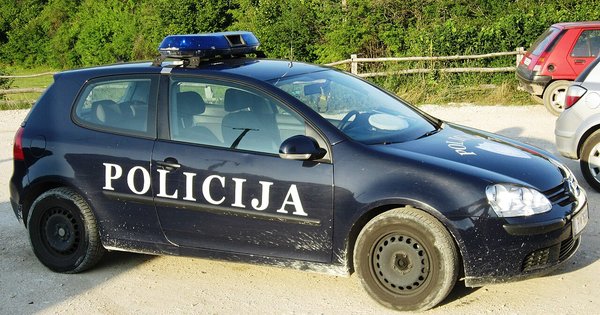
Sources: Portal Analitika (Nov 19, 2026), reporting LGBT Forum Progres’s study; Centre for Civic Education (Mar 17, 2026); ILGA-Europe Rainbow Map 2026. Photo: Dickelbers, police car in Montenegro, 2011, CC BY-SA 3.0, via Wikimedia Commons.