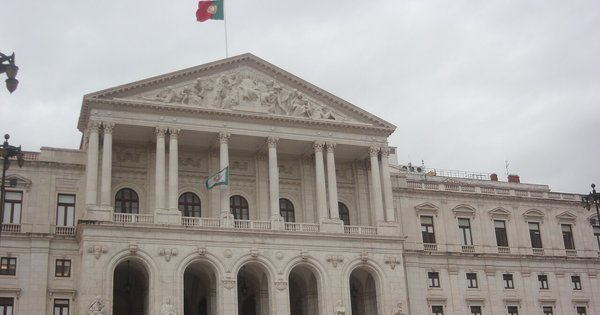
Portugal’s 2018 gender self-determination law is one of Europe’s most straightforward. Eight months after parliament voted to start dismantling it, Europe’s main trans, intersex and youth networks have put their objection on the parliamentary record in five words: “There is no problem to solve.”
On November 19, TGEU, IGLYO, OII Europe and ILGA-Europe published joint comments they submitted to the Assembleia da República, urging MPs to withdraw or reject two bills that would repeal the law. It lands a week after Human Rights Watch sent the committee handling the bills its own warning.
Quick recap
On March 20, Portugal’s parliament approved, at first reading, bills from the PSD, Chega and CDS-PP to rewrite the country’s gender identity rules (we covered the vote and the months of committee limbo that followed). The bills are now in the Committee on Constitutional Affairs, Rights, Freedoms and Guarantees for detailed, article-by-article work. That committee held public hearings in September with trans and intersex people, families, LGBTI+ organisations, health professionals and specialists, according to esQrever.
The two bills the European networks focus on are Bill 391/XVII/1 from Chega and Bill 486/XVII/1 from the PSD. Both would repeal Law 38/2018, the Self-Determination Act, and bring back the medicalised model of Law 7/2011. The groups note the two parties together have the votes to pass them.
Law 38/2018 is still in force today.
What the bills would change
According to the joint comments:
- Medical gatekeeping returns. Trans adults “would once again have to prove their identity to two multidisciplinary medical teams,” with years of psychological monitoring, and would “in practice show proof of surgery before the State recognises who they are.”
- Teens lose out. 16- and 17-year-olds would be shut out of legal gender recognition. Chega’s bill would also write a ban on gender-affirming care for under-18s into law.
- Intersex kids lose a protection. Portugal “made history in 2018 as the second European country to ban non-consensual medical interventions” on intersex children. The groups say Bill 391 repeals that ban “without an adequate replacement,” and that Bill 486’s “health exception” is too vague.
- More rollbacks. Chega’s bill would restrict teaching about gender diversity in schools. The PSD bill would remove gender expression as a protected ground, restrict sport by “biological sex” and delete the right to use a social name.
The data argument
The networks’ core case is simple: the law works. They cite 1,595 gender marker changes between 2018 and 2022, more than triple the previous period, and say the competent authority, the CIG (Commission for Citizenship and Gender Equality), “reported in 2022 and again in 2026 that it knows of no refusals, no fraud and no misuse.”
They argue the rollback isn’t justified by any demonstrated need and would breach the European Convention on Human Rights, EU law, the UN Convention on the Rights of the Child and Council of Europe Recommendation CM/Rec(2025)7. They also flag that the bills say nothing about pending applications or registry changes already made, which leaves people who’ve already updated their documents in an uncomfortable grey zone.
Human Rights Watch weighs in too
In a letter dated November 12 to the committee chair, first reported by Público, Human Rights Watch asked MPs to reject the PSD, Chega and CDS-PP bills. It warned of a “retrocesso significativo” (a significant step backwards) for trans and intersex people, opposed bringing back “requisitos médicos obsoletos e patologizantes” (outdated, pathologising medical requirements), and criticised blanket bans on youth care for ignoring each young person’s circumstances and needs. HRW also said the CDS-PP changes could create confusion over whether non-urgent procedures on intersex children are legal.
They’re not alone. UN human rights chief Volker Türk asked parliament in August to withdraw or revise the bills, and Portugal’s own equality body, the CIG, and the Ordem dos Médicos, the medical association, have also criticised them, esQrever reports.
What happens next
No date has been published for the committee’s vote or a final vote in the full chamber. Until then, nothing changes on paper: self-determination is still the law, and the 2018 intersex protections still stand.
The four networks are asking for three things: drop the bills, consult trans and intersex people (with their safety and anonymity guaranteed) before any reform, and assess the impact on children first. Portugal’s parliament now has their objections, HRW’s and the UN’s on the record. What it does with them will show whether “no problem to solve” gets a hearing.
Sources: ILGA-Europe, TGEU, IGLYO and OII Europe joint statement (Nov 19, 2026); esQrever on Human Rights Watch’s letter, citing Público (Nov 13, 2026). Photo: Matthew Black, São Bento Palace, Lisbon, CC BY-SA 2.0, via Wikimedia Commons.