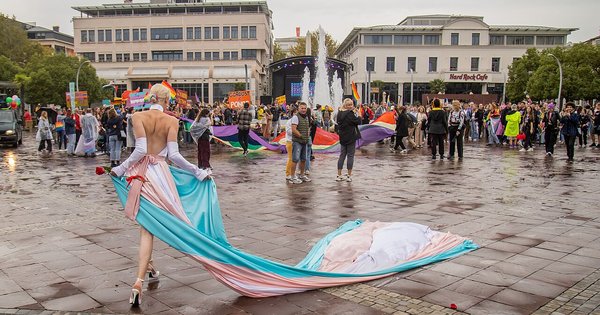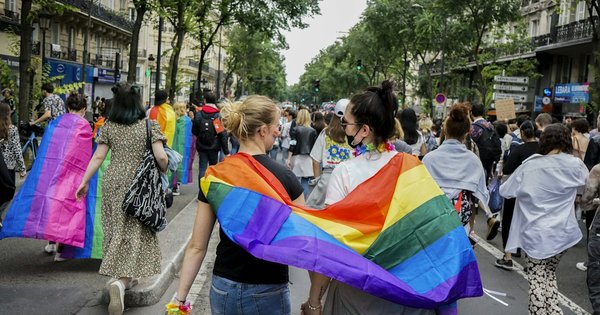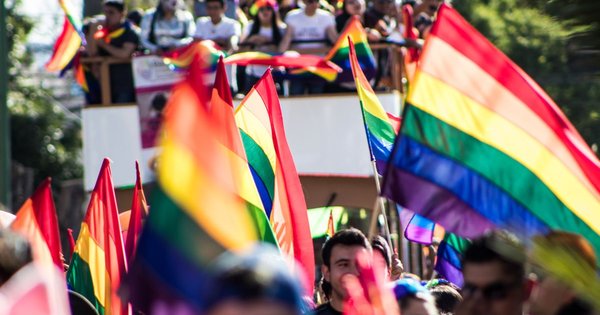
Madrid does Pride at a scale that’s hard to overstate. On Saturday, July 4, the Spanish capital reaches the loud, sweaty, joyful peak of MADO 2026 — Madrid Orgullo — with the main march setting off from the Glorieta del Emperador Carlos V near Atocha station and rolling up the Paseo del Prado toward Plaza de Colón, where organizers read out this year’s manifesto. It is, by most counts, the largest Pride event in Europe, and the streets of Chueca and the boulevards around them have been building toward this moment for more than a week.
The parade is organized by COGAM, Madrid’s veteran LGBTQ+ association, together with the national federation FELGTBI+. That pairing matters, because it’s a reminder that the party here has always carried a political spine. The floats crawl deliberately through the center of the city — community groups, unions, NGOs, and yes, plenty of corporate contingents — and the atmosphere shifts gradually as the sun goes down, from demonstration to celebration. By the time the last floats reach Colón in the evening, the mood is pure euphoria, but the manifesto read at the end keeps the day tethered to its purpose.
Why this year’s march carries extra weight
Spain remains one of the most legally progressive countries in the world for LGBTQ+ people. Same-sex marriage has been legal since 2005 — Spain was only the third country in the world to get there — and the 2023 “Ley Trans” established self-determination of gender for trans people without requiring medical gatekeeping. On paper, few places offer more.
But the last couple of years have made clear that legal protection and lived safety are not the same thing. Reported anti-LGBTQ+ hate crimes have climbed in Spain, and the political temperature around trans rights in particular has risen as far-right voices have grown louder across Europe. Organizers have leaned into that tension in recent editions of MADO, framing the celebration explicitly as resistance rather than just a party. That framing gives the 2026 march its edge: the crowds packing the Paseo del Prado aren’t only there to dance, they’re there to be counted.
What the week looks like
MADO isn’t a single day. The festival takes over the Chueca neighborhood for roughly ten days, with stages in the Plaza de Chueca, the Plaza del Rey, and the Plaza de Pedro Zerolo hosting concerts, drag performances, and DJ sets late into the night. There’s the famous — and slightly chaotic — high-heels race down Calle de Pelayo, community programming, and enough street parties to keep the neighborhood buzzing until dawn. The main march on July 4 is the centerpiece, but the celebration wraps around it on both sides.
For anyone thinking about going, a few practical notes. The parade steps off in the early evening and the crowds are enormous, so the metro is your friend — Chueca station on Line 5 sits right in the heart of it, though expect it to be packed. Central hotels sell out months ahead and prices spike hard during Pride week, so this is very much a “book early or stay farther out” situation. And Madrid in early July is hot; the evening timing of the march is a mercy, but daytime events call for water, shade, and sunscreen.
The bigger European picture
Madrid’s march lands in the middle of a dense European Pride season. Amsterdam is gearing up to host WorldPride and EuroPride in early August, and cities across the continent — from Vienna to Warsaw to Cologne — have been marching through June and into July. What makes Madrid distinct is the sheer density of it: a whole central district given over to the celebration, with the city’s institutions largely behind it rather than resisting it.
That civic embrace is exactly what activists in much of Southeastern Europe are still fighting for, and it’s worth holding both realities at once. In Madrid, the question is how to keep a massive, well-resourced celebration politically meaningful. In much of the Balkans, the question is still whether a few hundred marchers can walk safely at all. Pride season contains both of those stories, and Madrid’s July 4 march — big, loud, unapologetic — is a reminder of what’s possible when a country decides its queer citizens belong fully in public life.
The march reaches Plaza de Colón in the evening. If you’re in the city, get there early, bring water, and stay for the manifesto — it’s the part that reminds everyone why the party started in the first place.
Sources: MADO’26 official site, idealista/news, Travel And Tour World.