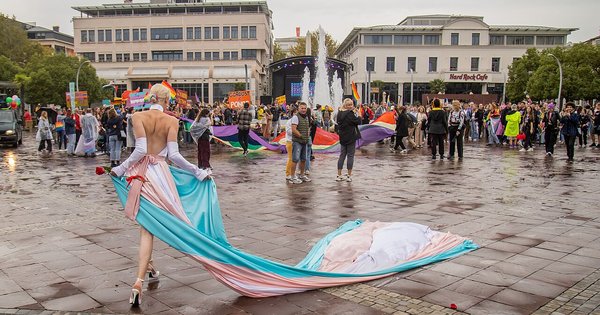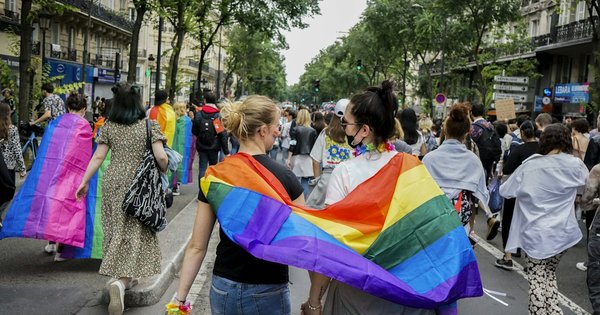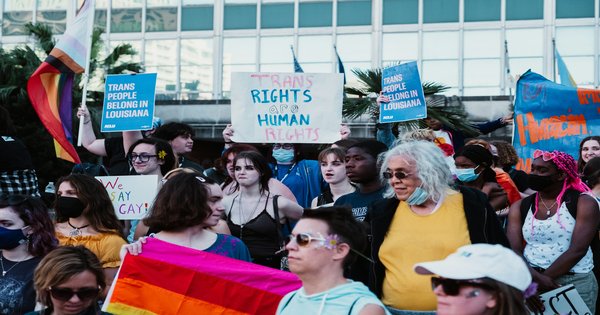
An estimated 150,000 people marched through central London on Saturday for London Trans+ Pride 2026, which organizers are calling the largest trans-specific pride event ever held anywhere. The march set off from near BBC headquarters and, for the first time in the event’s history, ended in Trafalgar Square — a symbolic upgrade in scale and visibility for a march that started as a modest community gathering less than a decade ago.
The size of the crowd matters on its own, but the timing matters more. This year’s march landed in the middle of one of the most contested periods for trans rights in recent UK history, following a 2025 UK Supreme Court ruling that defined “woman” and “sex” under the Equality Act as referring to biological sex, and the Equality and Human Rights Commission’s subsequent guidance applying that ruling to single-sex spaces. Both have been read by trans advocates as a significant narrowing of legal protection, and both were squarely in view of marchers on Saturday.
”Our joy is louder than their hate”
Lewis G Burton, one of the event’s founding organizers, told the crowd at Trafalgar Square: “Every single person who marched today is proof that we are not going anywhere, that our joy is louder than their hate.” It’s a line that captures the dual register London Trans+ Pride has carried since it began — part protest, part unapologetic celebration, refusing to let the first crowd out the second.
Not every speech was celebratory. Caroline Litman addressed the crowd about her daughter Alice, who died by suicide in 2022 after waiting more than 1,000 days for gender-affirming healthcare through the NHS. Litman warned that “more children are going to die” unless Prime Minister Andy Burnham reverses course on policies she characterized as hostile to trans people. It’s the kind of testimony that reframes a Pride march from a parade into something closer to a public reckoning — a reminder that the debate over gender-recognition law and healthcare access isn’t abstract for the families living inside it.
Why the record turnout is the story
Trans Pride events have historically run smaller than the broader Pride marches they sit alongside — a reflection, organizers have long argued, of how much more exposed trans people are made to feel even within LGBTQ+ spaces. A 150,000-person turnout inverts that pattern. It suggests that the more hostile the political and legal climate has become, the more people — trans and cisgender allies alike — have been willing to show up publicly rather than stay home.
That’s worth sitting with, especially for anyone outside the UK who assumes the fight over trans rights is a uniquely American story. It isn’t. The UK’s legal landscape has shifted in ways that echo battles playing out in the US and, in different forms, across parts of Eastern Europe — court rulings and administrative guidance narrowing recognition, followed by a public response that refuses to let the narrowing go unanswered. London’s numbers this year are a data point in that larger, international pattern: legal setbacks are not, on their own, shrinking the movement pushing back against them.
London Trans+ Pride began in 2019 as a smaller, community-organized march born partly out of frustration that the mainstream Pride in London parade wasn’t centering trans voices strongly enough. Within seven years it has grown into an event organizers say now outdraws many national Pride marches outright — a trajectory that says something about both the depth of community support and the sharpened stakes trans people in Britain feel they’re organizing against. The route’s finish at Trafalgar Square, a square more associated with state occasions and national commemorations than community marches, is itself a small but pointed claim to public space and legitimacy.
For readers who split time between the UK and mainland Europe, as TrueQueer’s founders do, the contrast is a useful gut check. Legal recognition for trans people looks different city to city and country to country — sometimes better on paper in places with a harder day-to-day reputation, sometimes worse in places that market themselves as progressive. Saturday’s crowd size in London is a reminder that the numbers on a rights index don’t always capture where a movement actually has momentum.
Sources: PinkNews; ITV News London; Attitude.