We haven’t made it to Thessaloniki yet — our time in Greece so far has been in Athens — but Greece’s second city keeps coming up in conversations with LGBTQ+ travelers and expats who’ve spent time in the Balkans and Eastern Mediterranean, and it’s earned a spot on our list. Here’s what we’ve pieced together from local guides, Greece’s own tourism board, and fellow travelers’ reports.
The legal backdrop
Greece made history in February 2024, becoming the first Orthodox Christian-majority country to legalize same-sex civil marriage and joint adoption. That single change reshaped the country’s standing on LGBTQ+ rights almost overnight, and it applies everywhere in Greece, Thessaloniki included. It’s worth knowing, though, that the picture isn’t uniformly rosy: Greece’s Justice Ministry has moved to close a legal loophole that had allowed single men and gay male couples to access surrogacy, and full parental-rights protections for LGBTQI+ families still lag behind the marriage law itself. Marriage equality was a landmark, not a finish line.
Where to go
Thessaloniki doesn’t have a single “gayborhood” the way some larger European cities do. Instead, the queer-friendly spots are scattered through a few central areas: the long waterfront promenade, the nightlife district of Ladadika near the old port, and the area around Kamara (the Arch of Galerius). Visit Greece’s own tourism board describes the city as “largely LGBTQ-friendly” with a progressive, university-town character — Thessaloniki is home to Aristotle University, one of the largest in southeastern Europe, and that student population shapes a lot of the city’s social life.
For nightlife specifically, Valaoritou Street is the strip to know. eNola, a gay club that’s been running since 2008, sits on the second floor of a building at Valaoritou 19, with dancing, karaoke, and themed nights most evenings starting around 11:30 p.m. It’s picked up multiple Travel Gay Awards mentions over the years. A short walk away, Anothen Cafe Bar on Karolou Ntil Street offers a lower-key, LGBTQ-friendly setting for coffee or a cocktail from early evening — a good option if you want conversation over volume. As with any smaller scene, venues do open and close; it’s worth a quick search before you go to confirm a spot is still running.
Thessaloniki Pride
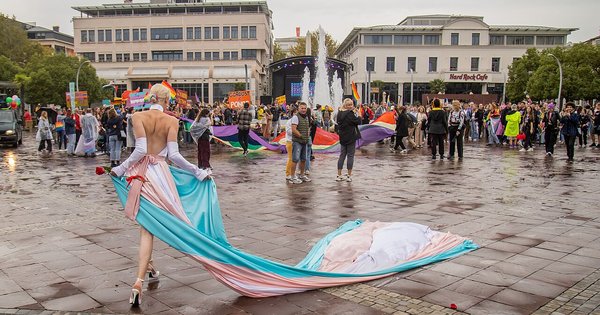
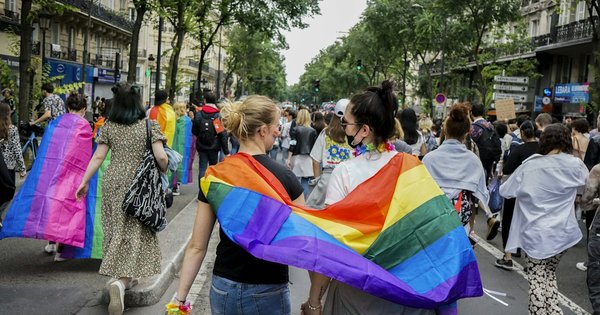
The city has its own Pride, running in mid-June — 2026’s edition is scheduled for June 15 through 20, marking its 14th year. It traces its roots back to informal gatherings organized along the waterfront in the 1980s and ’90s by OPOTh, the city’s Homosexuals’ Initiative. It’s a newer, smaller event than Athens Pride, which has been running since 2005 and draws considerably larger crowds, but that scale difference doesn’t mean Thessaloniki’s is an afterthought — for a city its size, in a country where Pride organizing is still a relatively recent tradition outside the capital, a 14-year track record says something.
The vibe
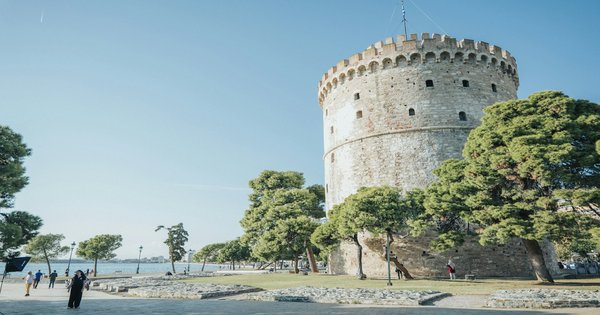
Thessaloniki trades some of Athens’s tourist-driven energy for something more local. It’s known for its food scene — this is widely considered the best city in Greece to eat in, with a Byzantine, Ottoman, and Sephardic Jewish culinary history layered into everything from street food to sit-down tavernas — and for a waterfront promenade anchored by the White Tower, the city’s best-known landmark, that’s genuinely one of the nicer places in Europe to spend a slow evening.
Travelers who’ve spent time in Sofia or Skopje will recognize the pattern here: a capital city gets most of the international attention and most of the visible queer infrastructure, while the second city has a smaller but sincere community that doesn’t advertise itself as loudly. That was our experience with Sofia’s scene compared to what people describe of Athens versus Thessaloniki — worth remembering if you’re expecting a Barcelona-sized nightlife district and find something quieter instead.
Practical notes
Thessaloniki is well connected by air and by train from Athens (roughly four to five hours by rail, or a short flight). Late spring through early fall is the easiest window weather-wise, and timing a visit around Pride in mid-June gets you both good weather and the city’s most visibly queer week of the year. As always with a scene this size, connecting with local LGBTQ+ groups or following Thessaloniki Pride’s own channels before you arrive is the best way to get current, on-the-ground recommendations — this is a guide to get you oriented, not a substitute for local voices once you’re there.
We’ll update this once we’ve actually spent time in the city ourselves.