Two weeks ago we wrote that the presidential vote was the first thing we’d be watching from here in Pristina, because it decided whether Kosovo’s Assembly would survive the autumn at all. On Tuesday night it went right down to the wire. Then, a few minutes past midnight, it was done.
Kosovo has a president again. Here’s what happened, and why it matters for queer Kosovars waiting on the Civil Code.
Eighty-one votes, fourteen minutes late
In the early hours of October 7, the Assembly elected Justina Shiroka-Pula president with 81 votes, European Western Balkans reported. She needed at least 80 of the 120 seats. Her opponent in the final round was Eliza Hoxha, an MP from the opposition Democratic Party of Kosovo (PDK).
The timing was tight. The Constitutional Court had given the Assembly 60 days, from August 8 to midnight on October 6, to elect a head of state. Voting ended at 00:03 and the count at 00:14. According to Radio Free Europe/Radio Liberty, the secret ballot began six minutes before the deadline, and some experts said finishing after midnight could allow a legal challenge, though none had been announced. Former Constitutional Court president Enver Hasani told European Western Balkans it isn’t a constitutional problem: “The process started on time.”
Had the vote failed, the Assembly would have been dissolved and new elections held within 45 days. That would have been Kosovo’s fourth parliamentary election since February 2025.
Who she is, and how the deal was struck
Shiroka-Pula is an economist and the first woman to lead Kosovo’s Academy of Sciences and Arts, RFE/RL reports. She was minister of energy and mining from 2008 to 2011 and a PDK member of the Assembly from 2011 to 2014.
Her name emerged late in a day-long standoff between Prime Minister Albin Kurti’s Vetëvendosje and the PDK. The PDK wanted the Assembly to first pass amendments to the law on the Kosovo Specialist Chambers, the Hague-based war crimes court. Kurti eventually agreed, and proposed Shiroka-Pula as part of his third offer. The amendments passed 88 to 0. RFE/RL reports they sharply narrow the court’s jurisdiction and cap sentences at 15 years, and legal experts warn they could face constitutional review. That deal, and the street protests of October 5 and 6 that came before it, will dominate Kosovo’s politics for a while.
In a short address, the new president said she would be the president of all citizens, and pledged to protect “the Constitution, the interests of the Republic and the dignity of the citizens.”
She didn’t mention LGBTQ+ people, and we found no record of her public position on same-sex partnerships. We’re not going to guess.
Why a ceremonial vote matters for queer couples
Kosovo’s presidency is largely ceremonial. But the failure to elect one is what has repeatedly brought the whole Assembly down, and a parliament that keeps dissolving can’t pass anything, least of all a contested Civil Code.
That code is where same-sex couples have been told to look since April 2024, when Kurti announced his government intended to legalise civil unions through it. As of February 2026, Outright International reports, the Assembly still hadn’t adopted it, amid fierce opposition that included members of the ruling party. ILGA-Europe’s Rainbow Map page on Kosovo notes a European Parliament report expressing concern that the draft Civil Code still hasn’t been adopted. ILGA-Europe’s own recommendations start with legal recognition and protection for same-sex couples, such as registered partnership, and a legal gender recognition system based on self-determination.
So October 7 doesn’t change the arithmetic. Kurti’s government still rests on the thin majority we described last month. What it changes is the calendar. For the first time in a long while, Kosovo has a government, a president and an Assembly that isn’t counting down to its own dissolution.
The other clock: Kosovo’s LGBTI action plan
There’s a second deadline worth knowing about. Kosovo’s first-ever Action Plan for the Rights of LGBTI Persons runs from 2024 to 2026, according to the UN, whose mission in Kosovo helped draft it and sits on the government’s Advisory and Coordination Group on LGBTI Rights. That plan expires at the end of this year. Whether a stable government writes a stronger successor, or quietly lets it lapse, is a fair test of how seriously it takes the issue.
What we’re watching next
Between now and our move to Podgorica in December:
- Whether the Civil Code appears on the Assembly’s agenda, and whether same-sex partnerships are in the code itself, as Kosovar organisations such as the Center for Equality and Liberty have demanded, or pushed into a separate law.
- A follow-up to the 2024–2026 action plan.
- Any legal challenge to the midnight vote, which could reopen the crisis.
Kosovo’s constitution already bans discrimination based on sexual orientation, in Article 24, Outright International notes. The promise is on paper. Since Tuesday night, there’s finally a full set of institutions in place that could turn it into a law couples can use. Whether they will is another question, and we’ll keep reporting the answer as it comes.
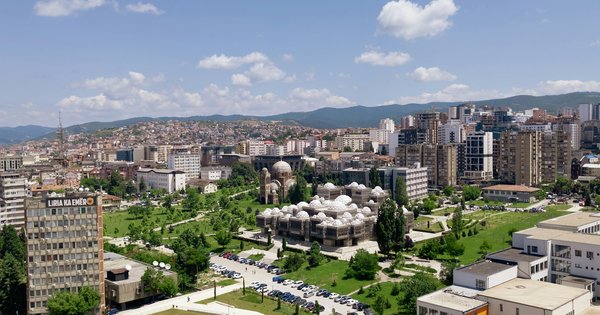
Sources: European Western Balkans (Oct 7, 2026); RFE/RL (Oct 7, 2026); Outright International, Kosovo; ILGA-Europe Rainbow Map, Kosovo; UN, “How LGBTIQ+ communities are bridging divides in Cyprus and Kosovo” (Jun 2025). Photo: Jonathan Ansel Moy de Vitry / Unsplash.