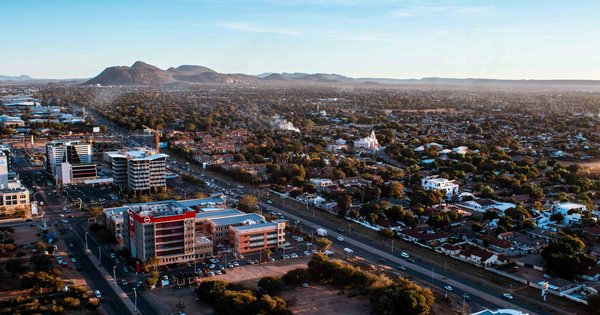
Two women walked into Botswana’s High Court asking for something simple: to be married. This month, the country’s judges finally heard their case in full.
Over October 22 and 23, a five-judge panel in Gaborone heard arguments in the challenge brought by Bonolo Selelo and Tsholofelo Kumile, MambaOnline reports. The court has set judgment for April 2, 2027.
If they win, Botswana would become only the second country in Africa with marriage equality, after South Africa in 2006.
How we got here
- 2019: Botswana’s High Court rules that criminalising consensual same-sex relations is unconstitutional. The Court of Appeal upholds it in 2021, BOPA’s Daily News recalls.
- 2025: Selelo and Kumile try to register their marriage. The registration office refuses, because the Marriage Act only provides for a man and a woman. They go to court.
- Spring 2026: Botswana formally deletes the old colonial-era “unnatural offences” provisions from its Penal Code, as we reported.
- September 2026: After a summer of procedural hearings, the court settles who gets to argue.
- October 22–23, 2026: The main hearing.
Who argued what
The couple and LEGABIBO. Botswana’s LGBTQ+ rights organisation LEGABIBO is challenging the refusal alongside Selelo and Kumile, supported by the Southern Africa Litigation Centre (SALC). They argue the refusal violates their rights to dignity, equality, non-discrimination, privacy and autonomy, and their freedom of expression and association, per MambaOnline.
LEGABIBO’s sharpest line: “Exclusion is not symbolic; it denies practical legal protection.” It listed what’s on the line: property and inheritance, medical decision-making, spousal maintenance, taxation, social security and the legal security of children growing up in same-sex households.
SALC framed the question this way: the case asks “whether the State can treat one group of adult citizens differently” because of the sex of the person they love.
The government. The state argued that marriage exists for procreation, that same-sex marriage conflicts with Botswana’s culture and traditions and with religious freedom, and that it’s for parliament, not the courts, to decide.
The church and cultural groups. Three organisations joined as respondents: the Botswana House of Prayer and Transformation, the Dingwetsi Association and the Evangelical Fellowship of Botswana. According to LEGABIBO, they based much of their case on Christian doctrine.
Outside the courthouse
Both sides showed up. Supporters carried rainbow flags and placards reading “Love does not harm” and “marriage 4 all”. Opponents from Christian groups held signs including “we say no to homosexuality”, MambaOnline reports.
”It is our culture to fight for love”
Back in March, Selelo told Botswana’s state news agency that it felt awkward to be opposed by churches and Dingwetsi, and pointed to a piece of history every Motswana knows: the marriage of founding president Sir Seretse Khama to Ruth Williams, which went ahead in 1948 despite fierce opposition.
“It is our culture to fight for love,” she said, BOPA reported.
That’s a powerful reframe in a case where the other side’s main argument is culture. The couple aren’t asking Botswana to become something else. They’re claiming a story the country already tells about itself.
What happens next
Now, the wait. Five judges have until April 2, 2027 to deliver their judgment, and whichever way it goes, the losing side may take it to the Court of Appeal.
Botswana’s courts have sided with LGBTQ+ people before, on decriminalisation in 2019 and again on appeal in 2021. That record is part of why the whole continent is watching this one.
We’ll be back on April 2.