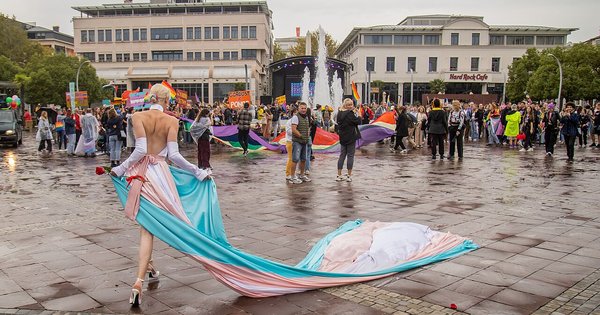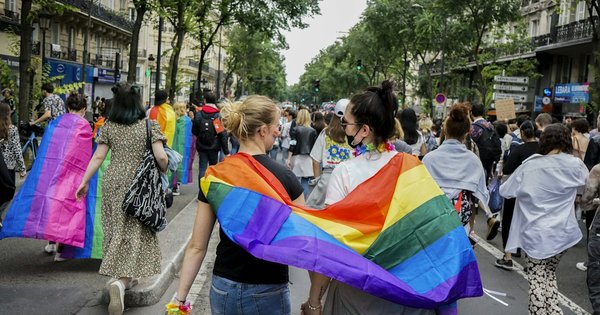
Belgrade Pride Week opens Monday, August 31, and runs through Sunday, September 6 — a week of exhibitions, theater, panel discussions, sports events, and parties that builds toward the year’s central moment: the Pride Protest March, confirmed for Saturday, September 5, starting at Manjež Park.
It’s worth pausing on that name — Pride Protest March, not just Pride March. Belgrade Pride has never fully shed the “protest” framing that defined its earliest, most violent years, and organizers keep it deliberately. As the announcement on the group’s site puts it, the march is “the protest and activist day of Pride Week and its most important segment,” an opportunity for LGBTI+ people to publicly demand laws that still don’t exist in Serbia — chiefly, legal recognition for same-sex couples and a gender identity law — while standing in solidarity with LGBTI+ people elsewhere who can’t do the same.
A history that shapes the framing
That language isn’t rhetorical flourish. Belgrade Pride’s 2010 march was met with riots by ultranationalist groups that injured more than 100 people, and for years afterward the event was either banned outright or held under a security lockdown that made it feel more like a state operation than a celebration. The event has grown steadily safer and larger since — 2024’s edition was widely described as the biggest yet — but the underlying legal gaps that motivated the earliest marches are still, in 2026, unresolved. Serbia has no Law on Same-Sex Unions and no Law on Gender Identity, despite years of advocacy pushing for both.
This year’s Pride also arrives against the backdrop of Serbia’s broader political turbulence. A student-led movement that began after a fatal railway station collapse in Novi Sad in late 2024 has grown into the most sustained challenge to President Aleksandar Vučić’s government in years, with mass protests and, at points, mass detentions. Belgrade Pride organizers have explicitly framed this year’s event as standing alongside that movement — arguing that police violence against protesters and the state’s historic failure to protect LGBTI+ people from violence are symptoms of the same underlying problem.
What’s actually happening during the week
Pride Week programming is organized by Belgrade Pride in partnership with the Youth Initiative for Human Rights (YIHR) and other local organizations, and it’s built to be accessible beyond just the LGBTI+ community — exhibitions, film screenings, lectures, and community talks run alongside more activist-oriented sessions. The organizers put out an open call earlier this year for event proposals from individuals and groups who wanted to contribute programming, a structure that’s helped Pride Week grow into something closer to a genuine cultural festival layered on top of its protest core.
Belgrade Pride is also part of a wider network: ERA – LGBTI Equal Rights Association, which coordinates advocacy across Albania, Bosnia and Herzegovina, Croatia, Kosovo, Montenegro, North Macedonia, Serbia, Slovenia, and Turkey, has increasingly pushed for exactly this kind of cross-border, cross-movement solidarity. Zagreb Pride, which marked its 25th anniversary this year, has followed a similar arc — expanding from a narrowly focused march into an event embedded in Croatia’s broader human rights landscape.
What to watch for
Expect a heavier security presence on September 5 than at most Pride Week events, given both Serbia’s history with the march and the current political climate. Whether the energy from the student protest movement translates into turnout at Pride remains an open question — but if even a portion of the hundreds of thousands who’ve marched against government corruption over the past two years show up, this could be among the largest Pride marches Belgrade has seen.
For LGBTQ+ travelers and allies in the region — including those of us who split time across the Balkans — Belgrade Pride Week is one of the clearest annual signals of where things stand in Serbia: not just for the LGBTI+ community specifically, but for how much room exists for public dissent more broadly. This year, more than most, the two questions are being asked together.
Pride Week runs August 31 – September 6, 2026, with the Pride Protest March on Saturday, September 5, beginning at Manjež Park. Full programming is available at prajd.rs.