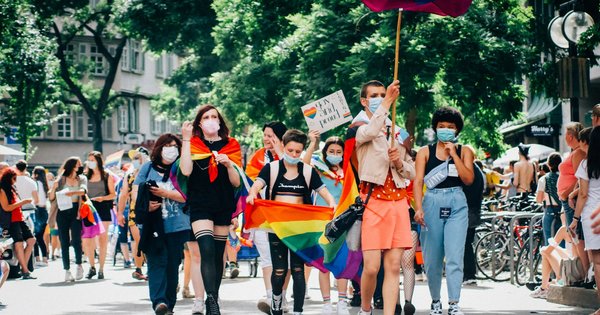
Two days ago we wrote about the Rainbow Wave: Chris Pappas became the first openly gay man elected to the Senate, Sarah McBride was re-elected, and Virginia voted for marriage equality. All true.
Now the ballot-measure counts are mostly in, and they tell a second story. In four states, the same electorate that leaned blue on candidates voted for restrictions on trans students.
“It’s a paradox,” Rodrigo Heng-Lehtinen of the Trevor Project told The Advocate. Here’s how it broke down.
Where anti-trans measures passed
Arizona: Proposition 318. The “Protect Girls’ Sports in Arizona Act” bars K-12 trans students from sports teams matching their gender identity, and from the matching locker rooms, restrooms and showers. It defines sex by the original birth certificate, applies to all Arizona schools and athletic associations, and lets students sue schools that break it. It won about 59% of the vote and takes effect January 1, The Advocate reports. Darrell Hill of the ACLU of Arizona called it “unnecessary” and warned “it can really act as a big barrier for trans people to participate in public life.”
Colorado: Proposition 134. Requires students to play on school and college teams matching their sex, defined by reproductive biology. It passed 53% to 47%, per The Advocate. It changes state law, not the constitution.
Colorado: Proposition 135. Bans surgeries on minors intended to alter sex characteristics, and bars public funding for them. On Thursday The Advocate described it as poised to pass, and CPR News reports that opponents of both Colorado measures have conceded.
Washington: Initiative 638. Bars trans girls from girls’ school sports teams and, according to Ballotpedia, requires healthcare documentation verifying sex to play on a female team. It passed 57% to 43%.
Nebraska: Initiative Measure 442. A constitutional amendment barring students of the male sex, as the measure defines it, from school and college teams designated for females, women or girls. Approved, per Ballotpedia.
Where they didn’t
Missouri: Amendment 3 was defeated. It was a constitutional amendment that tied restrictions on gender transition treatment for minors to abortion and reproductive rights, Ballotpedia reports.
And two states went the other way entirely:
- Vermont: Proposal 4 passed, adding explicit equal protection on the basis of sexual orientation, gender identity and gender expression to the state constitution, alongside race, ethnicity, sex, religion, disability and national origin. The state Senate had approved it 29-0 in March, and the House 128-14 in May, The Advocate reports. “The federal Constitution represents a floor, not a ceiling, of rights,” state Rep. Barbara Rachelson said in May.
- Virginia voted for its marriage equality amendment.
How advocates are reading it
The reactions in The Advocate’s roundup split along that same paradox.
“Our hearts are heavy as we acknowledge difficult losses around the country,” said Deirdre Schifeling of the ACLU. Writer Charlotte Clymer said: “Yes, I am heartbroken by the anti-trans ballot initiatives that passed in several states.”
Others pointed at the candidates. “Our opponents thought their hateful politics would win in a landslide, and the exact opposite happened,” said HRC’s Jay Brown. GLAAD’s Sarah Kate Ellis: “Fear-mongering about transgender people is a losing strategy.”
Both can be true. Republicans spent $183 million on anti-trans TV ads before the midterms, and Democrats still had a big night. But when trans kids’ sports were put to voters as a standalone question, majorities in four states said yes to restrictions.
“This is going to take a while,” said Cathy Renna of the National LGBTQ Task Force.
What it means now
- Arizona’s rules start January 1, according to The Advocate.
- Court challenges are common for measures like these. None had been announced in the sources we read, and we’ll report them when they are.
- The wins still count. The Los Angeles Blade reports a record number of LGBTQ+ members of Congress, and Vermont and Virginia now have constitutional protections that didn’t exist a week ago.
If you’re a trans student in one of these states: this vote was about a policy, not about whether you belong. You do. Find your people, your GSA, your coach who gets it, and let the adults with law degrees take the fight from here.