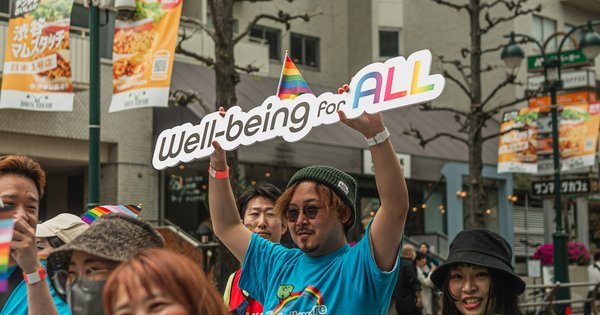
This weekend, a few hundred people gathered in Zwickau’s Kornmarkt for a Christopher Street Day march that, on paper, looks like dozens of others held across Germany every summer: a demonstration from the train station, a stage, speeches, music, a plea to be visible without fear. What makes CSD Westsachsen 2026 worth paying attention to is where it’s happening.
Zwickau sits in western Saxony, a region where the far-right Alternative für Deutschland doesn’t just poll well — it wins. The city’s federal constituency has been held by an AfD member of the Bundestag since 2021, and both of Zwickau’s state-level seats in the Saxon parliament are also held by AfD representatives. This is, in other words, a Pride march organized in the middle of the party’s institutional heartland, not on its fringes.
The event is put on by Bündnis CSD Zwickau, a coalition anchored by the local Aidshilfe Westsachsen chapter and community groups including Queer Space Zwickau and JACKT Zwickau, working out of the Alter Gasometer cultural center. Organizers have been explicit that they see the march as a political act as much as a celebration: a statement that queer people in the region have “the right to live, love and be visible without fear,” at a time when many in Zwickau and the surrounding towns say they feel unsafe, unseen, or unprotected. The program leans into that framing — speeches and stage performances built around the idea of turning visibility into a deliberate, public act of resistance rather than a given.
That framing isn’t paranoia. Smaller CSDs across Saxony have a track record of drawing organized opposition. Marches in towns like Bautzen and Pirna have regularly attracted far-right counter-demonstrations numbering in the hundreds, requiring heavy police presences to keep the two sides apart. Saxony as a whole has become something of a proving ground for how queer communities organize under conditions most Western European LGBTQ+ people don’t have to think about: not whether a Pride march can happen, but whether it can happen safely, and whether local politics will treat it as a legitimate civic event or a provocation.
It’s a dynamic TrueQueer has tracked elsewhere this year — a summer marked by a fatal terror attack on Berlin’s CSD in July, and a quieter, steady drip of flag thefts and vandalism in cities like Mönchengladbach. Zwickau’s march is a smaller story than either of those, and that’s precisely the point its organizers are making: the biggest, best-protected Prides in Berlin or Cologne aren’t where the real test of German tolerance is happening. It’s in places like Zwickau, where a queer teenager doesn’t get to choose whether their hometown is friendly, and where a Saturday afternoon march is one of the only visible signs that they’re not alone.
Germany still ranks in the upper-middle tier of ILGA-Europe’s annual Rainbow Map, well ahead of most of its eastern neighbors — but that national score flattens out a real divide between cosmopolitan cities and regions like western Saxony, where support for the AfD’s anti-LGBTQ+ platform runs highest and local queer infrastructure is thinnest. Zwickau’s organizers say that gap is exactly why events like theirs can’t be treated as a formality: in a big city, a Pride march is a party. In a place where all three of your elected representatives campaign against you, it’s closer to a lifeline.
By early evening, the Kornmarkt event had wrapped without major incident — itself a modest, hard-won kind of victory in a district where the loudest political voices would rather LGBTQ+ residents stayed quiet. Organizers are already talking about doing it again next year.