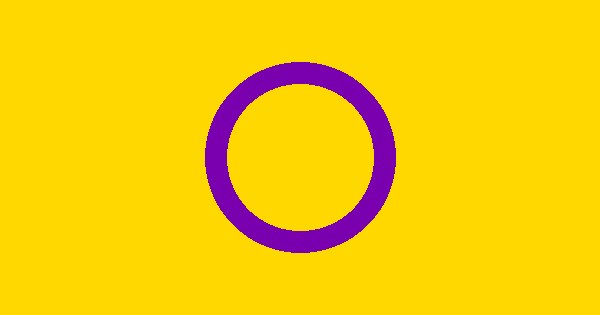
When we write about LGBTQ+ rights, the “I” in the acronym is too often the letter that gets skipped. Intersex people — those born with sex characteristics that don’t fit typical definitions of male or female — are among the most overlooked in the whole movement, even though the issues they face are some of the most physically consequential. So a case now moving through Zimbabwe’s courts deserves far more attention than it has gotten, because it puts intersex rights, and the practice of operating on intersex children who cannot consent, squarely in front of a national government.
The case
For the first time in the country’s history, intersex people have taken the Zimbabwean government to court. The lawsuit brings together seven applicants demanding legal recognition and protection from what they describe as decades of systemic exclusion. Among them are minors who were denied schooling because their official documents did not match their lived realities, and at least one adult left with lifelong complications from irreversible surgery performed on him as a child.
They are not alone in the filing. Two institutional applicants — the Health Law and Policy Consortium and the Intersex Community of Zimbabwe — have joined the case, and the respondents are some of the most senior offices in the state: the Registrar-General and the Ministers of Home Affairs, Health, and Justice, alongside the Attorney General. This is not a symbolic gesture aimed at a low-level bureaucrat. It is a direct challenge to the machinery of the state itself.
Why it matters so much
The heart of the case is bodily autonomy. In Zimbabwe, surgery on intersex infants is legal and widespread, and even intersex adults have reported being pressured into operations. These procedures — often described euphemistically as “corrective” or “normalizing” — are frequently performed before a person is old enough to have any say, and they are frequently irreversible. Human-rights bodies around the world have increasingly classified nonconsensual surgery on intersex children as a violation of the child’s rights, precisely because it forecloses a choice that should belong to the person whose body it is.
The other half of the case is recognition. When your identity documents don’t reflect who you are, ordinary life becomes a series of locked doors — enrollment in school, access to healthcare, employment, travel. For the intersex applicants who were shut out of education as children, the harm is not abstract; it shaped the course of their lives.
A government that has, unusually, started to move
What makes Zimbabwe’s story genuinely notable is that the government has not simply dug in. In mid-2025, the state launched a legal reform process aimed at recognizing and protecting intersex people for the first time — including protection from nonconsensual medical procedures — and officials have indicated they are working to implement recommendations on intersex protections, reportedly with support at the highest levels. That a country whose broader record on LGBTQ+ rights is deeply hostile is nonetheless moving on intersex protections is a reminder that these are distinct issues, and that progress does not always travel in a straight line.
It would be a mistake to read too much optimism into that. Zimbabwe remains a difficult and often dangerous place to be openly queer, and a reform process is not a law. But the combination of a landmark lawsuit and a government reform track running at the same time creates real pressure — the kind that has, elsewhere, turned court cases into statutes.
The part of the spectrum we owe more attention
We cover a lot of marriage rulings and Pride marches, and those matter. But intersex rights sit at a different and in some ways more fundamental place: they are about who gets to decide what happens to a person’s own body, and when. The Zimbabwean applicants are asking their courts a question every society should be able to answer clearly — that a child’s body is not a problem to be surgically solved before the child can speak for themselves.
However this case resolves, it belongs on the record as one of the more important LGBTQ+ human-rights stories of the year, in a country and a corner of the movement that the wider world too easily ignores. We’ll be watching where it goes.