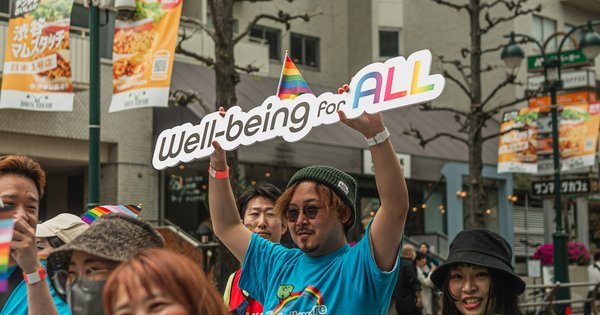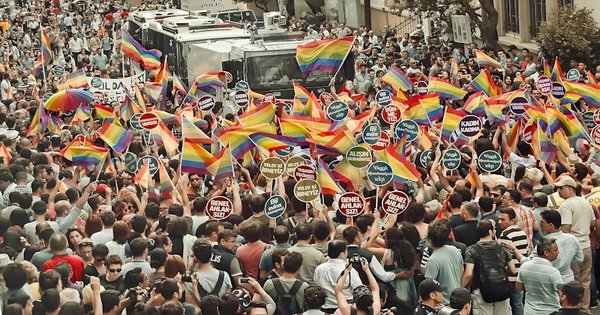
Thousands of people filled the centre of Zagreb on Saturday, June 6, for the 25th edition of the city’s Pride march — the Povorka ponosa — making this one of the few Pride parades in Europe that can claim a quarter century of uninterrupted history. The procession gathered near the Croatian National Theatre (HNK), then moved through the heart of the capital under a banner calling for solidarity, visibility, and the continued protection of human rights.
For a region where Pride is still routinely contested, postponed, or out-shouted by counter-protests, the simple fact that Zagreb has held its march every single year since 2002 is the headline. The 25th edition is less a debut than a milestone — proof that what began as a few hundred people marching under heavy police protection has become a fixture of Croatian public life.
A route through the centre, not the margins
This year’s parade followed a now-familiar path through the city’s main arteries: along Milan Amruš Street, Palmotić Street, and Jurišić Street, across Ban Josip Jelačić Square — the central square of the capital — and down Ilica toward Dr. Franjo Tuđman Park. Police closed roads and tram lines across the centre to accommodate the crowd, which drew participants from across Croatia along with supporters from abroad.
The geography matters. Routing a Pride march across Jelačić Square is not a neutral logistical choice; it puts the LGBTQ+ community in the most visible, most symbolically central public space the city has. In 2002, marchers needed a police cordon to cross far less prominent ground while facing open hostility. In 2026, the march moves through the middle of the city as a co-organised civic event — the City of Zagreb and the Zagreb Pride association run it together.
From 2002 to now
It is worth remembering how that first march went. Croatia’s inaugural Pride in 2002 drew a few hundred people and was met with violence and abuse; participants were attacked, and the event required a substantial security operation. The contrast with today is the whole story of Zagreb Pride. The march has grown into one of the country’s most prominent annual public gatherings, regularly drawing tens of thousands and functioning as both a celebration and a standing political demand.
Croatia’s legal landscape has moved alongside it, if unevenly. The country introduced “life partnerships” for same-sex couples in 2014, granting most of the rights of marriage including, after later court rulings, a pathway to fostering and adoption that activists fought hard to open. Same-sex marriage itself remains off the table — Croatia’s constitution was amended by referendum in 2013 to define marriage as a union between a woman and a man — and that constitutional ceiling is one of the things Pride organisers continue to push against.
Why this one carries weight regionally
Zagreb is not just a Croatian story. As the longest continuously running Pride in the Western Balkans, it functions as a kind of proof of concept for the smaller, newer, more embattled marches across the region. When organisers in Sarajevo, Podgorica, or Skopje argue that a Pride can become a permanent, safe, central part of a city’s calendar, Zagreb is the example they can point to. Croatia is also the Balkan country that has gone furthest into the European Union — a full member since 2013, inside both the Schengen Area and the eurozone — and its trajectory is frequently cited in debates about what EU accession can and cannot do for LGBTQ+ rights in candidate states still waiting at the door.
That comparison cuts both ways. EU membership did not deliver marriage equality to Croatia, and it has not erased the hostility that still surfaces around Pride and in parts of the political class. But membership coincided with a generation of legal gains, a normalisation of Pride as civic ritual, and a march that no longer needs to justify its own existence.
The honest picture
None of this means Zagreb is a finished project. LGBTQ+ Croatians still report discrimination and harassment, the marriage ban is written into the constitution, and the broader Balkan and Central European climate — with anti-gender campaigns gaining ground from Budapest to Belgrade — keeps the stakes real. Pride in Zagreb is celebration and protest at once, and after 25 years the organisers have never pretended otherwise.
But there is something genuinely worth marking when a Pride march turns 25 in a part of Europe where many activists still measure success in whether a march can happen at all. Zagreb has answered that question the same way for a quarter of a century: yes, in the centre of the city, every year. On June 6, several thousand people answered it again.
Sources: Total Croatia News, Zagreb Pride, Balkan Insight.