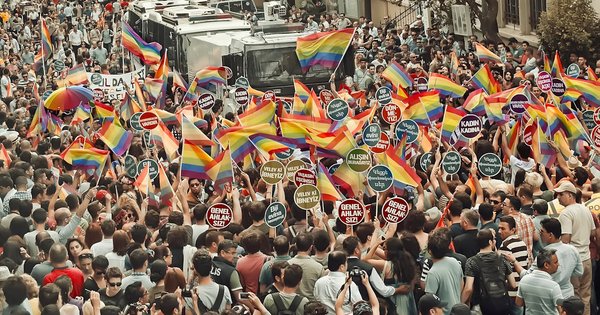
Pride season in the Western Balkans is now underway. Tirana marched on May 23 under the slogan “Together for the Family.” Sarajevo follows on June 20. Skopje, Belgrade and others fill out the calendar through the summer. From the outside, that calendar can read as a story of steady progress — more cities, more marches, more visibility every year. The organisers themselves are telling a more complicated story, and it is worth listening to.
What the organisers are actually saying
When Pride committees in Tirana and Sarajevo issued their messages this month, the dominant word was not celebration. It was solidarity. Both called on people to stand together at a moment of what they described as growing far-right extremism and prejudice. Livia Zotrija of Albania’s LGBT Alliance framed Tirana’s “Together for the Family” theme as a direct answer to that climate — a reminder that no one should have to face fear and insecurity alone.
This is not the language of a movement that feels the wind at its back. It is the language of one bracing for impact. And the thing it is bracing against has a name that researchers have settled on: the anti-gender movement.
What “anti-gender” actually means
The phrase can sound like jargon, so it is worth being precise. The anti-gender movement is a loose but increasingly coordinated coalition that opposes what it calls “gender ideology” — an umbrella term it uses to bundle together LGBTQ+ rights, reproductive rights, comprehensive sex education, and gender-equality policy generally. It is not unique to the Balkans; it runs through Hungary, Poland, the United States and beyond. But analysts who study the region, including researchers at the German Marshall Fund, have flagged the Western Balkans as a place where the movement poses a specific danger — not only to LGBTQ+ people, but to fragile democratic institutions themselves.
The reason is structural. In countries with young, contested democracies and weak checks on power, an organised campaign against a minority does not just produce discrimination. It becomes a tool for narrowing civic space — for delegitimising NGOs, independent media, and public assembly. That is why the framing matters: this is being analysed as a threat to democracy, with LGBTQ+ people as the most visible target rather than the only one.
The two battlegrounds
The movement in the region tends to concentrate its energy in two places. The first is education — fights over curricula, sex education, and what schools are permitted to say about families and identity. The second is public assembly, and that is where Pride sits squarely in the crosshairs. A Pride march is a permit, a police plan, a route, and a public square. Each of those is a pressure point, and anti-gender actors have learned to apply pressure at every one — lobbying officials, threatening counter-mobilisation, and framing a peaceful march as a provocation.
What has changed is the level of professionalism. The actors driving these campaigns — often a blend of religious institutions and far-right political organisations — are better financed than they were a decade ago, more transnational in their coordination, and more integrated into mainstream political and institutional channels. They are no longer fringe. In several countries they have allies inside parliaments.
The digital front
There is also a newer battleground that did not exist in the same form when Belgrade Pride was being attacked in the streets in 2010: the feed. Anti-gender mobilisation in the Balkans now runs heavily through disinformation. A recent example came in Albania around the March 8 women’s rights protests, when online outlets spread false claims about the organisers, triggering hundreds of comments laced with homophobic and gender-based hate speech. Digital harassment is cheaper than a counter-demonstration, harder to police, and just as effective at making people afraid to show up.
Honest about both halves
It would be a disservice to readers — and to the activists doing this work — to tell only the grim half of this story. The other half is real. Tirana Pride happened. It happens every year now. Sarajevo, which held its first march only in 2019 under heavy security, is preparing for another. These marches are not symbolic gestures that the backlash has rendered meaningless; they are the evidence that the backlash has not won. Each one represents organisers who did the permits, the security planning, and the community outreach in the face of exactly the pressures described above.
That is the honest shape of LGBTQ+ life in the Western Balkans in 2026. The anti-gender movement is stronger, smarter, and better resourced than it used to be — and Pride is still marching. Both of those things are true. For anyone watching the region, the useful posture is neither despair nor easy optimism. It is attention: to who funds these campaigns, to which politicians amplify them, and to the organisers who keep showing up anyway. Sarajevo is next. We will be watching.