A new report from Nash Svit LGBT Human Rights Center, published this week, gives the clearest picture yet of what the first half of 2026 actually looked like for LGBTQ+ Ukrainians — and it confirms the split we flagged back in early July: the courts keep moving forward while parliament keeps stalling.
The courts said yes, twice
The most significant win came from Ukraine’s Supreme Court on February 25, which rejected an appeal from an anti-LGBTQ group called “All Together! Civic Movement” that was trying to overturn lower-court rulings recognizing same-sex partners as a de facto family. That ruling held, and it matters because it establishes a judicial precedent operating entirely independent of — and currently ahead of — anything parliament has been willing to pass into law.
A second, more specific case came out of a Kharkiv administrative court, which ordered a military recruitment center to remove a person from its registration after that person had legally changed their gender from male to female. In a country three and a half years into a full-scale war, with conscription woven into daily life, a ruling like that touches something more immediate than symbolic recognition — it’s about whether the state’s own bureaucratic categories reflect who someone actually is.
Parliament is going the other way
Set against those wins is a legislative track that’s actively regressing. A proposed new Civil Code, tracked as Bill 15150, would formally exclude same-sex partners from the definition of “family member” — a definition that directly contradicts the more inclusive language already sitting in Ukraine’s existing Family Code. Meanwhile, a separate civil partnership bill that has presidential backing remains stalled, buried under more than 20,000 submitted amendments, with advocates now saying a second reading isn’t realistic before autumn at the earliest.
President Volodymyr Zelensky has been unusually direct about where he stands personally, telling Ukrainians earlier this year: “We are all here with you, we are defending the state, we are equal and have absolutely equal rights.” But personal statements from a wartime president don’t move a bill through a parliament where his own coalition can’t agree on the amendment count, let alone the substance.
What “26 incidents” actually means
The report documents 26 cases of homophobia or transphobia across the first six months of 2026 — six meeting the threshold of hate crimes, five classified as hate incidents, with the remainder falling into other categories the report tracks separately. That’s a modest number set against a population of tens of millions, and it’s worth reading in the context Nash Svit itself provides: a country where policing, courts, and daily life are all reorganized around an active war, and where a huge share of ordinary crime reporting infrastructure is stretched thin. A number that looks small in isolation is, in that context, a number that likely understates how often LGBTQ+ Ukrainians encounter hostility they don’t report.
The report also notes something structural about who isn’t saying anything at all: Ukraine’s church leadership, per Nash Svit, “avoid public statements” on LGBTQ+ issues while privately maintaining ultraconservative positions and lobbying against the very protections parliament is failing to pass. Silence, in other words, is doing some of the same work opposition would.
Pride marched anyway
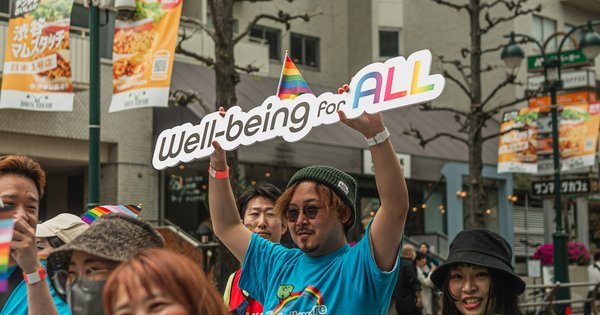
None of this stopped people from showing up. The Kyiv Equality March on June 21 drew roughly 5,000 participants — a striking number for a capital under regular missile threat — and organizers report successful Pride events extending well beyond the capital, to Odesa, Kharkiv, Lviv, Lutsk, Dnipro, Vinnytsia, and Uzhhorod. That’s a geographic spread that would have been unthinkable in Ukraine a decade ago, war or no war, and it’s arguably the most concrete evidence in the whole report that public visibility has outpaced what the law is willing to grant.
The numbers behind the divide
Perhaps the most interesting data in the report is the breakdown of public support by religious affiliation, which helps explain exactly where the parliamentary logjam is coming from. Support for banning anti-LGBTQ discrimination outright runs high across the board — 81 percent among non-denominational Christians, 78 percent among Orthodox Church of Ukraine believers, and 72 percent even among believers affiliated with the Ukrainian Orthodox Church–Moscow Patriarchate. But support drops sharply, and splits along the same religious lines, when the question shifts to legalizing same-sex partnerships specifically: 63 percent among the non-denominational, 56 percent among OCU believers, and just 44 percent among UOC-MP adherents.
That gap — broad support for non-discrimination, considerably softer support for actual legal recognition — is a fairly precise diagnosis of why a civil partnership bill with presidential backing can still be sitting under 20,000 amendments with no floor vote in sight. It’s not that Ukrainians broadly reject the idea of protecting LGBTQ+ people. It’s that turning “protect” into “recognize” is a harder sell, and parliament knows it.
Sources: 76 Crimes; The New Voice of Ukraine; Kyiv Independent.