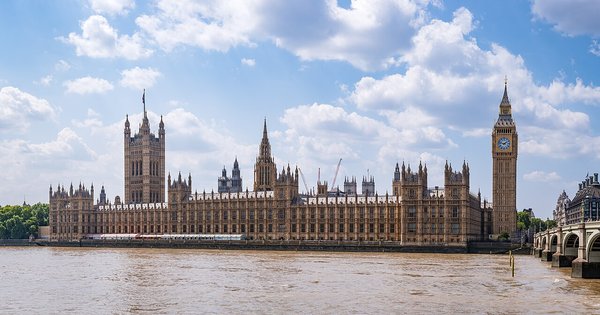
The queue for Westminster Hall on Wednesday afternoon ran the length of the Palace of Westminster and across the road past Abingdon Street Gardens — roughly 500 feet of people waiting, some of them for hours, to spend a few minutes with the MP who represents them. Nearly 1,000 trans people and allies had signed up for the mass lobby organised by the Trans+ Solidarity Alliance, and by 1pm the hall was full of constituents explaining, one conversation at a time, what the last month has done to their daily lives.
A mass lobby is a deliberately unglamorous format. There is no march, no sound system, no banners. People book a slot, come to Parliament on the same day, and ask their own MP to listen. That is the entire mechanism, and it is why the Trans+ Solidarity Alliance has now used it twice — the first time in June 2025, days after the Supreme Court’s ruling in For Women Scotland v Scottish Ministers, and again this week.
What changed on 5 August
The trigger this time is the Equality and Human Rights Commission’s updated Code of Practice, which came into force on 5 August. Following the April 2025 Supreme Court judgment that the protected characteristic of “sex” in the Equality Act refers to biological sex, the code sets out that services describing themselves as single-sex must exclude trans people from them — or stop calling themselves single-sex at all. That applies even where someone holds a Gender Recognition Certificate changing their legal sex.
As Attitude noted ahead of the lobby, the code is statutory guidance rather than law — it describes how service providers should apply the ruling. In practice the distinction has mattered less than campaigners hoped. A growing list of large employers and service providers, including the Co-operative Group, Lloyds Banking Group and Barclays, have already changed their policies to bar trans women from women’s facilities. Campaigners argue the guidance effectively invents a third category of person and then declines to provide anywhere for them to go.
Alexandra Parmar-Yee, director of the Trans+ Solidarity Alliance, put the problem in terms of legal exposure as much as dignity: by declining to fix the underlying equality law, they said, the government has created “a legal minefield” that leaves communal spaces and services across the country at risk of being sued, while making trans people less safe going about ordinary life. “Trans people cannot simply evaporate,” Parmar-Yee said. “We have no choice but to navigate the dangerous environment the government has created.”
What people said inside the hall
Inside Westminster Hall, the conversations were specific rather than abstract — accounts of being challenged in toilets, dropped from sports clubs and community groups, and quietly excluded from services people had used for years. Dozens of MPs came down to meet constituents, and several stayed on to talk to people whose own MPs had declined the meeting.
Alfie Bailey-Bearfield, advocacy lead at the Trans+ Solidarity Alliance, summarised the ask afterwards: hundreds of people had turned up with a clear message for the Burnham government that the current situation is dangerous and unacceptable, and that the government must fix it.
Labour MP Nadia Whittome backed the call. The current situation, she said, is preventing trans people from living their lives with dignity and putting them at risk of harassment, and it is vital that parliamentarians listen to the experiences of their trans constituents and the people who care about them. Green MP Siân Berry also lent support, raising concerns brought to her by constituents in Brighton Pavilion.
Across the road in Parliament Square, attendees wrote messages in an oversized greeting card addressed to the Prime Minister. The card read: “Farewell to Britain’s standing on LGBTQ+ rights.”
The card is not really a joke
That line lands harder than a stunt usually does, because the ranking it refers to is real. The UK placed first on ILGA-Europe’s Rainbow Map in 2013, 2014 and 2015. It sat 16th in 2024. It sits 22nd in 2026. Very few countries in Europe have moved that far in that direction in a decade.
Andy Burnham arrived in Downing Street in July with a long record of LGBTQ+ allyship behind him — a record he built over years in the Commons and as mayor of Greater Manchester. During the leadership campaign this summer he set out a “live and let live” position on the Supreme Court ruling, telling LBC that the time had come to implement the ruling and the guidance, but to do it “in the fairest and most compassionate way possible” — protecting single-sex spaces without marginalising communities that are already marginalised.
What the lobby was asking is what that sentence means in legislative terms, because so far it has not meant anything the code can be measured against. Statutory guidance can be replaced. The Equality Act can be amended. Both require a government willing to spend political capital on a group of people who currently poll badly, which is precisely why a thousand constituents queued down the pavement to ask in person rather than by email — more than 15,000 had already written to their MPs by June, and the guidance came into force anyway.
Parliament returns to a crowded autumn. The people who spent Wednesday in Westminster Hall will be watching for one thing: whether any of the MPs who nodded sympathetically across a table put their names to something. The lobby was, by design, easy to ignore — no chanting, no photogenic confrontation, nothing for a wire photographer to file. Whether it can be ignored a third time is now a question for the government, not the organisers.