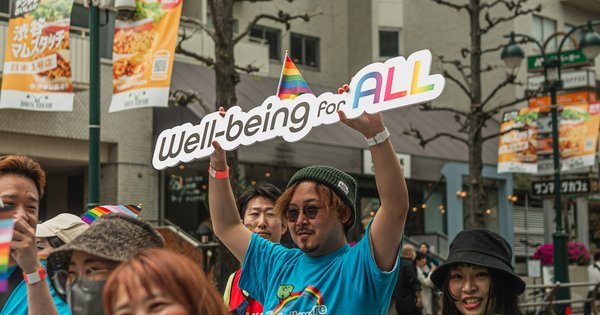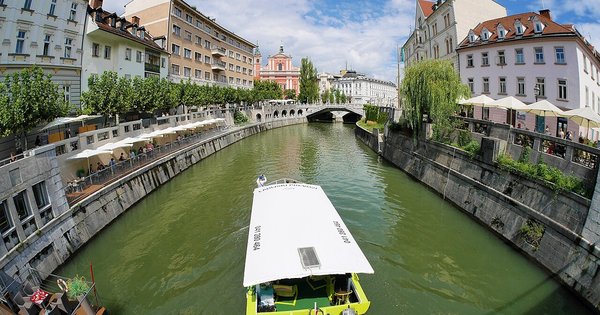
Around 200 trans activists from across Europe and Central Asia are in Ljubljana this weekend for the tenth TGEU European and Central Asian Trans Council, which opened on Friday and runs through Sunday. It is co-hosted by TGEU’s Slovenian members Legebitra and TransAkcija, it happens only once every two years, and the theme this time is a word that does not exist in any dictionary: Transphoria: collectively resist and celebrate again and again.
That choice is doing a lot of work. In a year when most trans-related headlines out of Europe have been about rollbacks, court fights and hostile legislation, a gathering that puts celebration in its title is making an argument, not just picking a nice slogan.
What “Transphoria” is actually claiming
TGEU’s framing is explicit about holding two things together. The organisation describes the theme as both “a call to collectively resist the backlash against trans rights through solidarity, shared strategies, and coordinated action” and “a reminder to celebrate again and again the power, creativity, and resilience that define our communities.”
Anyone who has spent time in movement spaces knows why that needs saying out loud. Sustained political attack tends to produce organisations that are excellent at documenting harm and terrible at anything else — where every gathering becomes a casualty report, and the people doing the work burn out in about three years. Naming joy as a strategic requirement rather than a nice-to-have is a deliberate correction, and it is one the trans movement in particular has been making for a while now.
It also reflects something about the structure of the event itself. Alongside policy sessions, the Council has invited participants to submit performances and exhibitions of their own artistic work, and TGEU has built in interpretation between English and Russian, live captioning, a quiet room, step-free access and a dedicated awareness team. That last list is not decoration either — it is what makes it possible for disabled activists, D/deaf activists and activists from Central Asia who work in Russian to be in the room at all.
The political reading behind the programme
The sessions are not soft. One is devoted specifically to combating anti-trans legislation and policy, and brings in Yanna Parnin from the Council of Europe’s SOGIESC Unit and Susanne Knöfel from the European Commission’s Directorate-General for Justice and Consumers — which is to say, the two institutional bodies most likely to matter if anything is going to be done at a European level rather than country by country.
Another looks at the EU’s neighbourhood as a new front, with perspectives from Montenegro, Ukraine, Türkiye and Slovenia. Participants are also examining strategic litigation before European and international courts, the treatment of trans asylum seekers and refugees within the Common European Asylum System, and the impact of digital rights and online hate.
The asylum strand deserves particular attention. The Common European Asylum System has been repeatedly criticised for procedures that require trans claimants to prove an identity to officials with no training in what they are assessing, and for accommodation and detention arrangements that place trans people at obvious risk. As European states harden their asylum regimes generally, trans applicants are among the people with the least margin for a system that gets it wrong.
TGEU’s executive director Juliane Rosin has framed the wider moment in terms that connect trans rights to a broader democratic argument: “The same forces attacking the human rights of trans people are challenging the rights of all marginalised people, as well as democratic institutions, civil society and the principle that everyone should be able to live with dignity and respect.”
Who is in the room
Ireland sent a delegation through Transgender Equality Network Ireland, including TENI’s research and policy manager Luna Liboni and former TENI chairperson Sara Phillips. TENI’s executive director Daire Dempsey summarised the point of turning up in six words: “We’re stronger together, and we’ll win together.”
That sounds like a rally line until you look at how trans rights have actually advanced in Europe, which is almost never through a single country acting alone. Legal gender recognition reforms have spread by example and by pressure — one state adopting a self-determination model, then being cited in the next state’s parliamentary debate, then being cited again in a Strasbourg judgment. The same is true in reverse: the anti-trans playbook currently circulating between European governments is recognisably the same document with the place names changed.
Which is the strategic case for a gathering like this one. When activists from Montenegro, Ukraine, Ireland and Slovenia compare notes in the same room over three days, they can see a pattern that no national campaign can see on its own. TGEU’s board chair Isa Nico Borrelli has described the emotional cost of that choice honestly: “There is always a tension between wanting to walk away from what hurts us and choosing, again, to stay.”
Why this one matters more than the last one
TGEU has run this Council every two years for close to two decades, which makes a tenth edition an institution rather than an event. It is also happening in a fundraising environment that has gutted comparable gatherings elsewhere: the global collapse in LGBTQ+ organisational funding since early 2025, documented in Outright International’s “Breaking Point” report earlier this week, has left many groups unable to send anyone anywhere. TGEU offered scholarships precisely to stop the Council becoming a room full of well-resourced western European organisations, with explicit priority for trans people from Eastern Europe and Central Asia, from racialised communities, from disabled and D/deaf communities, and from refugee and sex worker backgrounds.
The Council closes on Sunday. What comes out of it will not be a document anyone reads; it will be the connections, the borrowed arguments and the sense — for 200 people who mostly work in small, exposed, underfunded organisations — of not being the only one. In a year that has given European trans communities very little, that is a reasonable thing to build a weekend around, and a reasonable thing to call phoria.