For years, Tbilisi Pride kept showing up, even when mobs stormed its offices and the police didn’t stop them. Now it has had to leave the country to keep going.
Georgia’s best-known LGBTQ+ rights and Pride organisation is now working out of the Brussels office of Forbidden Colours, a European LGBTIQ+ advocacy group, Forbidden Colours announced last week. The group describes it as a space from which Tbilisi Pride can continue its work in exile, as the Washington Blade and PinkNews report.
“We never wanted to leave Georgia,” said Tamar Jakeli, Tbilisi Pride’s director. “Our address has changed, but our mission has not. We carry our Pride with us.”
How it came to this
This didn’t happen overnight. According to Forbidden Colours, Tbilisi Pride faced “violent intimidation and attacks by far-right groups” in 2019, 2021 and 2023, and “Georgian authorities repeatedly failed to protect organizers and participants,” the Blade reports.
- July 2021: the planned Pride march was cancelled after attackers stormed Tbilisi Pride’s offices and violence spread across the city, PinkNews reported at the time.
- 2023: nationalists disrupted that year’s Pride festival, and then-President Salome Zourabichvili condemned them.
- May 2025: Tbilisi Pride closed its offices in Georgia because of “escalating government repression,” according to Forbidden Colours.
The law that effectively banned Pride
The turning point was a sweeping package on “family values and the protection of minors.” Georgia’s parliament passed it on 17 September 2024 by 84 votes to 0, with the opposition boycotting the vote, Al Jazeera reported. When President Zourabichvili refused to sign it, parliament speaker Shalva Papuashvili signed it into law on 3 October 2024, NBC News reported.
According to Al Jazeera’s reporting, the law:
- gives authorities a legal basis to outlaw Pride events and ban public displays of the rainbow flag
- allows censorship of films and books
- bans gender transition and gender reassignment surgery
- bans adoption by gay and trans people
- restates the constitutional ban on same-sex marriage and nullifies same-sex marriages performed abroad on Georgian territory
At the time, Jakeli told Al Jazeera: “This law is the most terrible thing to happen to the LGBT community in Georgia,” and said the group would likely have to close. Forbidden Colours now says the legislation, passed by the Georgian Dream government of Prime Minister Irakli Kobakhidze, “effectively” banned Pride marches and “severely” restricted “public expressions of LGBTIQ+ identities.” It also points to restrictions on civil society and foreign funding, including “the threat of lengthy prison sentences.”
We looked at what life has been like since in our state of LGBTQ+ rights in Georgia explainer earlier this year.
Why Brussels, and why it matters
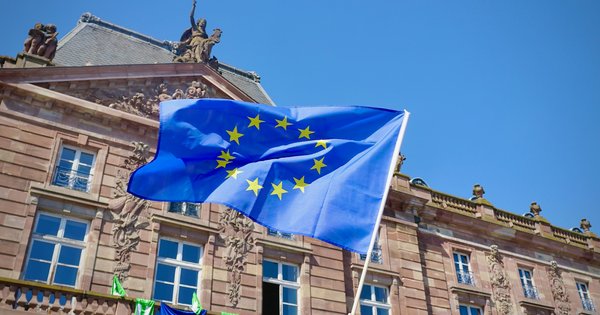
Georgia is officially still on the road to the European Union. That is exactly the point Forbidden Colours wants to make. Its executive director, Rémy Bonny, said the authorities “could not silence their voices,” and that human rights defenders being “forced into exile in a country aspiring to join the European Union should alarm every European decision-maker.”
The EU had already warned in 2024 that the law would have “important repercussions” for Georgia’s path to membership, and noted that the accession process was de facto halted, Al Jazeera reported.
Being in Brussels puts Tbilisi Pride in the same city as the EU institutions that will weigh Georgia’s future. The two organisations say they will focus their advocacy on European “institutions and governments” and “join forces to advocate for LGBTIQ+ rights and democracy in Georgia.”
What comes next: Pride in Exile
The groups are preparing an initiative called Pride in Exile, meant to raise international awareness of what LGBTQ+ Georgians are living through, PinkNews reports. No dates or details have been published yet; we’ll follow it when they are.
It’s a hard story. It’s also a stubborn one. A group that was told to disappear has instead found a desk, a new address and a bigger audience. Queer Georgians are still there, in Tbilisi, Batumi, Kutaisi and everywhere else, and the people speaking up for them haven’t gone quiet. They’ve just moved somewhere they can’t be shut down.