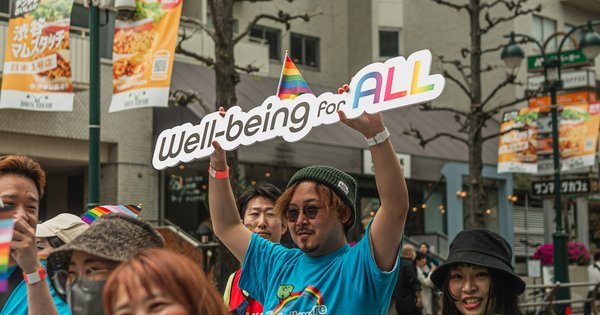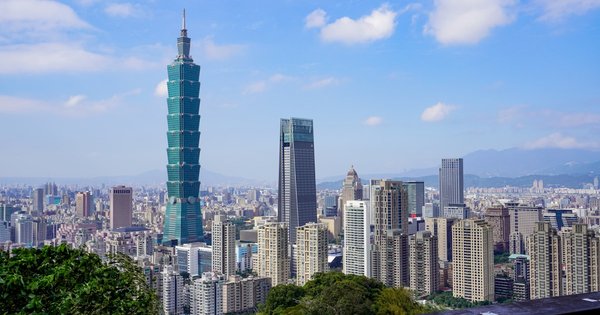
Seven years after Taiwan became the first place in Asia to legalize same-sex marriage, the question its annual polling answers is no longer “did the sky fall?” — nobody serious still asks that — but “is the consensus durable?” The new numbers from the Taiwan Equality Campaign, released around the May anniversary of the 2019 law, say: yes, with caveats worth taking seriously.
The numbers
Headline support for same-sex marriage came in at 54.3 percent — exactly flat from last year. After several years of post-legalization growth, Taiwanese public opinion seems to have found its plateau: a stable majority, but not a growing one.
The more interesting movement is underneath the headline. According to the survey, support rose notably in the categories that represent marriage equality’s unfinished business: same-sex couples’ adoption rights, recognition of transnational same-sex marriages, and gender equality education in schools. That pattern — flat on the symbol, rising on the substance — suggests something quietly encouraging. Marriage stopped being a culture-war abstraction and became a normal fact of Taiwanese life, and as it did, the public got more comfortable with the practical details.
It’s a trajectory we’ve watched begin elsewhere in the region. Thailand’s first year of marriage equality produced more than 26,000 married couples and a similar normalization effect, with gender recognition emerging as the next frontier. Taiwan ran this experiment first, and its data still functions as Asia’s proof of concept.
Why activists are uneasy anyway
If the domestic numbers are stable, the environment around them is not. A recent Global Taiwan Institute analysis lays out the headwinds, and they’ll sound familiar to anyone following our European coverage.
The first is global. The 26-country Ipsos Pride report has tracked worldwide support for same-sex marriage falling from 74 percent in 2021 to 69 percent in 2025, with adoption support down five points over the same period. Taiwan’s plateau is happening inside a global downdraft — which arguably makes holding steady an achievement rather than a stall.
The second is financial and geopolitical. The American retreat from LGBTQ+ rights advocacy abroad — dismantled aid programs, withdrawal from UN human rights bodies — has consequences even for movements that never depended on US government money. Taiwanese advocacy groups, including the Taiwan Equality Campaign and the Tongzhi Hotline Association, have historically received significant philanthropic funding through international civil-society networks now under political attack in Washington. When the infrastructure of global rights funding wobbles, movements at the supposedly safe end of the spectrum feel it too.
The third headwind is internal, and it’s the one Taiwan’s community talks about most candidly. Last October’s Pride season was marked by a public rupture after a parade organizer posted statements opposing legal gender change without surgery, prompting condemnation from trans groups, partnership-rights organizations, and several regional Prides. The dispute — and a parallel fight over revising the movement’s long-standing “6 Colors” manifesto — exposed real disagreements over trans inclusion and sexual rights inside a movement that built its legislative wins on unity. Anti-gender groups in Taiwan, some now explicitly borrowing rhetoric from the American right, have been happy to work that seam.
The unfinished agenda
What would forward motion look like? Advocates point to two concrete items. The Assisted Reproduction Act still limits fertility treatment to married heterosexual couples, locking out single women and married lesbian couples — a restriction increasingly hard to square with a marriage-equality state. And Taiwan still lacks a comprehensive anti-discrimination law, which matters more as anti-trans mobilization grows.
Neither is glamorous. Both are the kind of second-decade work that determines whether marriage equality matures into full equality or stays a beautiful exception.
Why this matters beyond Taiwan
Taiwan’s numbers are worth watching from anywhere queer rights are contested, because Taiwan is the standing rebuttal to the claim that LGBTQ+ equality is a Western imposition that traditional societies will reject. Seven years in: a stable majority, rising comfort with adoption and education, weddings as municipal routine. The plateau is real, the internal arguments are real, the global pressure is real — and so is the proof that none of it has moved the foundation. In a year when support is sliding across much of the world, “unchanged at 54.3 percent” reads less like stagnation and more like ballast.
Sources: Global Taiwan Institute, Focus Taiwan, Taiwan Equality Campaign, Ipsos LGBT+ Pride Report.