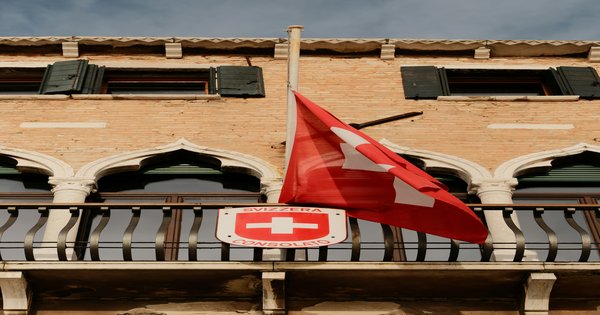
Switzerland’s Federal Council announced this week that it supports a nationwide ban on so-called conversion therapy, the widely discredited practice of trying to change someone’s sexual orientation or gender identity. It’s not a law yet — but it’s the clearest signal in years that Bern is ready to stop treating this as a local matter.
In a report published September 2, the government said conversion practices targeting lesbian, gay, bisexual, trans, and queer people are still happening in Switzerland, and that they can cause “considerable harm.” That’s a notable admission from a federal body that, until now, has mostly let individual cantons decide whether and how to regulate the practice.
A patchwork, not a policy
Right now, Switzerland’s protections against conversion therapy depend entirely on where you live. Neuchâtel became the first canton to ban it back in 2023. Valais followed with its own prohibition, and lawmakers in Vaud, Bern, and Geneva have floated similar measures. But there’s no national law, which means someone’s legal protection against being subjected to these practices can change the moment they cross a cantonal border.
The Federal Council’s report stops short of endorsing a specific bill. Instead, it says more precise federal regulation “could help replace” the current cantonal patchwork with something clearer and more consistent. The government also acknowledged a real limitation: it doesn’t have solid data on how widespread conversion practices actually are in Switzerland, because so little research has been done.
That data gap is part of why this fight has taken so long. Advocacy groups have argued for years that the absence of hard numbers has been used as an excuse for inaction, even as similar bans moved forward elsewhere in Europe.
Where this fits regionally
Switzerland’s move follows growing pressure across the continent. The European Commission said earlier this year that it wants all EU member states to ban conversion therapy outright, and a number of countries — including Germany, France, and Spain — already have national bans on the books in some form. Switzerland, notably, is not an EU member, so it isn’t bound by that push, which makes this week’s announcement more significant as a sign of independent political will.
It’s also a reminder that “progressive on paper” doesn’t always mean “ahead of the curve” in practice. Switzerland was one of the last countries in Western Europe to legalize same-sex marriage, which didn’t happen until 2022. A conversion therapy ban, if it eventually passes, would be another case of Swiss lawmakers catching up to where much of the region already stands.
What happens next
This is very much a first step. Before any federal ban can take effect, parliament has to formally give the government a mandate to draft legislation — a process that in Switzerland’s consensus-driven political system can take years, not months. Advocacy groups are treating the Federal Council’s statement as a foothold rather than a finish line, and they’re likely to keep pushing for parliament to move quickly rather than let the report sit.
For LGBTQ+ Swiss residents, especially those in cantons without any current protections, the practical reality hasn’t changed yet. But the government has now gone on record saying conversion practices are harmful and that a unified national response would be an improvement — language that gives future legislation something concrete to point back to.
We’ll be watching to see whether this translates into an actual bill in the next parliamentary session, or whether it becomes one more report that a government cites for years without following through on.