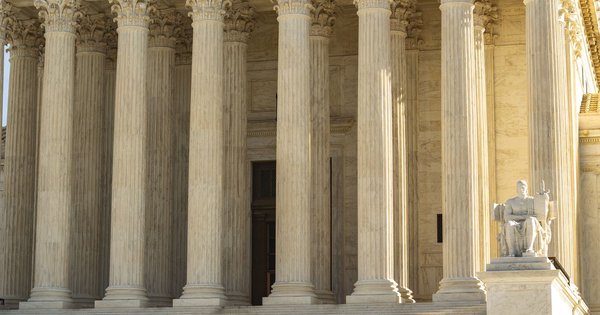
Sometime in the next few weeks, the US Supreme Court will hand down decisions in two cases that have been quietly waiting since the winter. They are not the kind of cases that dominate a news cycle the way an abortion or immigration ruling does, but for transgender young people in the United States they may be the most consequential rulings of the year. It is worth understanding them before they land, rather than after.
The two cases
The Court is deciding West Virginia v. BPJ and Little v. Hecox together, because they ask versions of the same question: can a state bar transgender girls and women from competing on female school sports teams?
BPJ began in 2021, when a transgender girl — 11 years old at the time, now in her mid-teens — challenged West Virginia’s “Save Women’s Sports Act.” She had wanted to try out for her middle school’s cross-country and track teams. Hecox involves Lindsay Hecox, a transgender woman who challenged Idaho’s “Fairness in Women’s Sports Act” so she could run for Boise State University. Idaho’s 2020 law was the first of its kind in the country; West Virginia’s followed a year later. Today, by most counts, around 27 states have some form of ban on the books.
Both athletes won in the lower courts, but on different legal grounds — and that distinction matters. The Fourth Circuit ruled that West Virginia’s law violated Title IX, the 1972 federal statute prohibiting sex discrimination in federally funded education. The Ninth Circuit ruled that Idaho’s law violated the Equal Protection Clause of the Fourteenth Amendment. The Supreme Court is now reviewing both theories at once, which means it could issue a narrow ruling on one and a sweeping one on the other.
Why this is bigger than sports
It is tempting to file these cases under “school athletics” and move on. That would be a mistake. The legal questions underneath are foundational.
The Equal Protection question is whether laws that single out transgender people get meaningful scrutiny from courts, or whether legislatures can regulate them more or less at will. If the Court says transgender status does not trigger heightened scrutiny, that reasoning will not stay contained to locker rooms. It will be cited in cases about healthcare, identity documents, bathrooms, and more. The Title IX question is whether “sex” in that statute can be read to permit — or even require — the exclusion of trans students. However the Court answers, it will ripple through every school district in the country.
This is also not happening in isolation. In June 2025, the Court decided United States v. Skrmetti, upholding Tennessee’s ban on gender-affirming medical care for transgender minors. That ruling declined to treat the Tennessee law as sex discrimination demanding close judicial review. The athlete cases are, in part, a test of how far that logic travels.
What observers expect — and the limits of expectation
After January’s oral arguments, most Court watchers came away expecting the conservative majority to uphold the state bans in some form. Predicting outcomes from argument is an imprecise art, and the justices have surprised people before. But the direction of recent rulings makes a result favorable to the two athletes the harder bet.
What remains genuinely uncertain is the breadth. The Court could rule narrowly — deciding that these particular laws survive review without resolving the larger constitutional question — or it could write something expansive that forecloses equal-protection arguments for trans plaintiffs for a generation. The gap between those two outcomes is enormous, and it is the part worth watching when the opinions actually publish.
The human scale
It is easy, in a piece like this, to drift into the vocabulary of circuits and clauses and lose the people. So it is worth saying plainly: these cases are named for a girl who wanted to run cross-country with her classmates and a college student who wanted a spot on a track team. The litigation has followed both of them for years. Whatever the Court decides, they have already spent a meaningful slice of their youth as the named parties in a national legal fight they did not ask to symbolize.
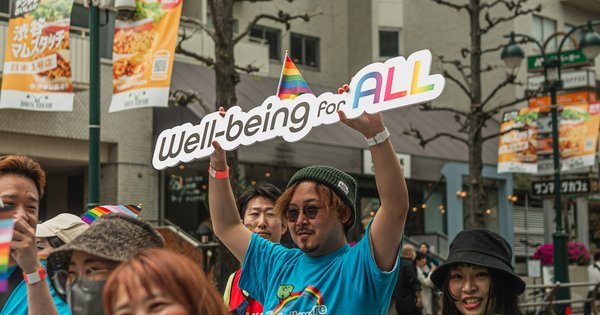
For the broader trans community in the US, the stakes are about belonging — whether a transgender kid can do an ordinary, joyful, formative thing like join a team, and whether the country’s highest court will say the Constitution has anything to offer them when a state says no.
What to do with this
If you are in the US, the practical advice is unglamorous: pay attention to your own state. A Supreme Court ruling sets a floor, not a ceiling, and state laws and school-district policies will still vary enormously. Local advocacy organizations and groups like the ACLU and Lambda Legal — which are litigating these cases — will have the clearest read on what a decision means where you live.
And if you are reading this from Europe, as many of our readers are, it is a reminder of how differently this question is being resolved on either side of the Atlantic. We will cover the rulings here as soon as they are released. For now, the cases are decided in everything but name — and the wait is the news.