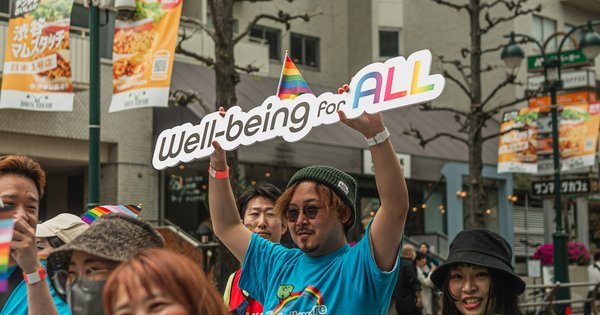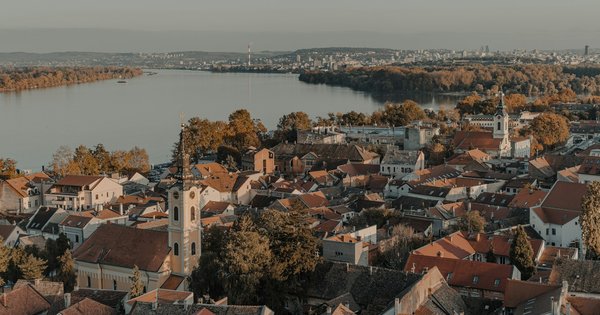
Belgrade Pride Week is underway, running through Saturday, September 6, with the Pride Protest March set for September 5 in Manjež Park. It’s a good moment to step back from the parties and panels and ask a more basic question: what does Serbian law actually say about LGBTQ+ people right now, in 2026?
The answer is a mix of real, if partial, protections on the books — and two glaring gaps that organizers have been pointing at for more than a decade.
What exists
Serbia has had a unified anti-discrimination framework since 2009, when parliament passed the Prohibition of Discrimination Act. It bars discrimination on the basis of sexual orientation and gender identity across employment, education, and public services, and Article 18 of the country’s 2005 Labour Law separately names sexual orientation as a prohibited ground for workplace discrimination. On paper, that puts Serbia ahead of several of its EU-member neighbors, which still lack comprehensive nondiscrimination statutes.
The Penal Code has treated bias-motivated violence as an aggravating factor since amendments passed in December 2012, explicitly including sexual orientation and gender identity among the protected categories. Legal gender recognition has also existed in some form since well before 2019, when the process was loosened: transgender and intersex people can now change their legal gender marker with confirmation from a psychiatrist and an endocrinologist after a year of hormone therapy, rather than requiring surgery, as the law previously demanded. Non-binary gender markers remain unrecognized.
What doesn’t exist
The two gaps that Belgrade Pride organizers cite most consistently, year after year, are a Law on Same-Sex Unions and a standalone Law on Gender Identity. Neither exists. Same-sex couples in Serbia have no path to marriage, civil union, or registered partnership — no mechanism for inheritance rights, shared medical decision-making, or next-of-kin recognition regardless of how long a couple has been together. A separate gender identity law, which advocates have pushed for to formalize and streamline the legal recognition process rather than leaving it to case-by-case medical sign-off, has likewise stalled.
This isn’t for lack of trying. Draft same-sex partnership legislation has circulated in Serbia for years, and the country has periodically signaled openness to it — a 2017 milestone often cited internationally was Ana Brnabić’s appointment as prime minister, making her Serbia’s first openly gay head of government and, at the time, one of very few in the world anywhere. Brnabić left the premiership in 2024 and now serves as Speaker of the National Assembly, but the pattern she set has held: a symbolically significant LGBTQ+ figure in high office hasn’t translated into a change in family law. Same-sex partnership legislation has not become a legislative priority for any Serbian government since.
The EU accession backdrop
Serbia’s LGBTQ+ rights record sits inside its long-running, long-stalled bid for European Union membership. Chapter 23 of the EU accession framework — covering judiciary and fundamental rights — explicitly evaluates protections for LGBTI people, and the Council of Europe has been directly supporting Serbia’s capacity-building on anti-discrimination enforcement as part of that process. In theory, this gives Brussels real leverage: EU accession chapters don’t close without credible progress on fundamental rights. In practice, Serbia’s accession process has been stalled for other reasons — rule-of-law backsliding, media freedom concerns, and its posture toward Kosovo — for long enough that LGBTQ+ rights haven’t been the deciding factor in either direction.
Pride against a backdrop of unrest
This year’s Pride Week is also unfolding alongside the most sustained domestic political crisis Serbia has seen in years. A student-led protest movement, which grew out of anger over a fatal railway station canopy collapse in Novi Sad in late 2024 that killed more than a dozen people, has evolved into broad opposition to President Aleksandar Vučić’s government, with recurring mass demonstrations and, at points, mass detentions of protesters. Belgrade Pride organizers have explicitly aligned themselves with that movement this year, arguing that police violence against student protesters and the state’s long failure to protect LGBTI people from violence come from the same source: a government unwilling to be held accountable.
That framing is also why Belgrade Pride has never fully adopted the softer branding some Western European Prides now use. It’s still officially the Pride Protest March — a name organizers keep deliberately, thirty-plus years after Serbia decriminalized homosexuality and sixteen years after the 2010 march was met with riots that injured more than 100 people.
Where that leaves things
Belgrade in 2026 is safer for LGBTQ+ people than it was in 2010 by almost any measure — the march itself now draws thousands rather than being fought street by street, and the legal architecture against discrimination and hate-motivated violence, while imperfect, is real. What’s missing is family law: the recognition that a same-sex couple’s relationship, and a trans person’s identity, deserve the same institutional weight as everyone else’s. Until Serbia passes a same-sex union law or a gender identity law, that’s the gap Pride Week will keep marching toward.