Montenegro occupies an unusual place on the Balkan map of LGBTQ+ rights: it got out ahead of its neighbors on one big thing and then largely stopped. In 2026, it is a country with a landmark partnership law it does not fully enforce, no legal gender recognition to speak of, and a real shot at being the next country to join the EU. That combination — genuine progress, genuine stagnation, and an open European door — is what makes Montenegro worth understanding.
The partnership breakthrough
The headline achievement is real and was hard-won. In July 2020, Montenegro’s parliament passed the Law on Life Partnership of Persons of the Same Sex by 42 votes to 5, and it took effect a year later, in July 2021. With it, Montenegro became the first EU-accession country in the western Balkans to legally recognize same-sex couples — a genuinely significant moment in a region where most countries still recognize nothing at all.
The law gives registered same-sex partners almost the same legal rights as married opposite-sex couples: inheritance, property, guardianship, hospital and prison visitation, domestic-violence protections, and more. The conspicuous exclusion is adoption, which the law does not cover. Even so, for couples in Sarajevo, Skopje, or Tirana looking across the border, Podgorica’s law remains the closest thing the region has to a model.
Where progress stalled
The trouble is that passing a law and implementing it are two different achievements, and Montenegro has been better at the first than the second. Civil-society monitors have repeatedly flagged that the Life Partnership Law is applied inconsistently — couples encounter officials who do not know the procedure or are unwilling to follow it, and the practical experience of registering and exercising those rights does not always match what the statute promises.
The bigger gap is legal gender recognition. Montenegro has no clear, accessible legal process for trans people to change their gender marker, leaving a whole category of citizens without basic documentation that matches who they are. Institutional responses to hate speech and anti-LGBTIQ violence remain weak, and enforcement against perpetrators is patchy. ILGA-Europe’s 2026 Rainbow Map placed Montenegro 18th out of 49 European countries with a score of 53% — respectable for the region, middling for the continent, and a number that has not moved much in recent years.
That stagnation is the real story. The partnership law was supposed to be a beginning, and in much of the country it has functioned more like a ceiling.
A society still divided
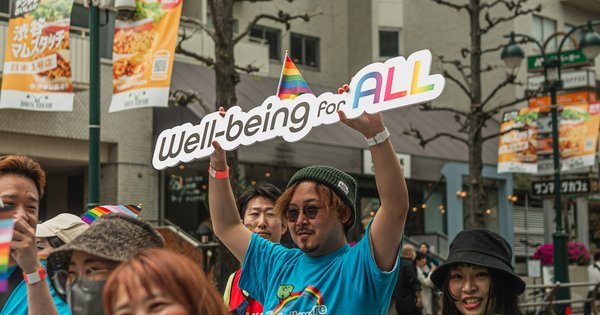
Social attitudes lag the law, as they do across the Balkans. Montenegro is a small, socially conservative country where the Orthodox Church holds significant cultural authority and public hostility toward LGBTQ+ visibility is still common. Pride events in Podgorica have historically required heavy police protection, and organizing remains an act of some courage rather than routine civic life.
The climate of intimidation is not abstract. In May 2026, a concert in Podgorica was disrupted when someone discharged tear gas toward the stage — a reminder that public events of many kinds can become flashpoints in a country where social tension runs close to the surface. For LGBTQ+ Montenegrins, the daily calculus of how visible to be is a familiar one.
The EU lever
Here is the reason for cautious optimism. Montenegro is widely regarded as the frontrunner among EU-accession candidates, further along the negotiating track than any of its neighbors and openly discussed as potentially the next member state. That matters enormously for LGBTQ+ rights, because accession conditionality puts a country’s treatment of minorities under sustained external scrutiny and gives reformers inside the country a powerful lever to pull.
The pattern we have watched across the Balkans is consistent: the prospect of EU membership does not erase domestic prejudice, but it changes the cost-benefit math for governments. A state that wants to demonstrate it meets European standards has a concrete reason to actually enforce the laws already on its books and to fill the gaps — gender recognition chief among them — that it has so far left open. Montenegro’s challenge for the rest of the decade is less about passing dramatic new legislation and more about making the rights it already granted real, and adding the one major piece it never did.
The bottom line
Montenegro in 2026 is a country that took a brave first step and then hesitated. The partnership law makes it a regional leader; the uneven enforcement, the missing gender-recognition framework, and the still-hostile social climate make clear how much is unfinished. With the EU door closer than it has ever been, the question is whether Montenegro treats that opening as a reason to finish what it started — or settles for being ahead of its neighbors while standing still.