Correction (September 28, 2026): This article originally said trans people in Kosovo cannot change their gender marker at all. In fact, there is no administrative procedure, but courts have ordered name and gender-marker changes in individual cases since 2019, including that of trans activist Blert Morina.
Kosovo is the kind of place that scrambles the easy narratives people bring to the Balkans. It is Europe’s youngest country, majority-Muslim, still only partially recognized internationally — and it has, on paper, one of the more progressive legal frameworks for LGBTQ+ people in the region. It has also just held its tenth Pride march. And yet a trans person still cannot change their gender marker without going to court, and same-sex couples still have no legal recognition of any kind. In 2026, Kosovo is a country whose laws and whose lived reality are further apart than almost anywhere else in Southeast Europe. Here is where things actually stand.
The law on paper
Start with the good news, because it’s real. Kosovo’s post-independence constitution explicitly bans discrimination on the basis of sexual orientation — a protection written into the country’s founding document rather than bolted on later. In 2015, parliament went further and passed a Law on Protection from Discrimination that covers both sexual orientation and gender identity across employment, education, and the provision of services.
That combination — constitutional protection plus a comprehensive anti-discrimination statute naming gender identity — puts Kosovo ahead of several EU member states on the letter of the law. For a country that only declared independence in 2008, building that framework this fast is a genuine achievement, and it reflects the outsized role international partners and EU-accession ambitions have played in shaping Kosovo’s institutions.
The two big gaps
Now the gaps, and they are large.
First, there is no procedure for legal gender recognition. A transgender person in Kosovo cannot simply apply to change the gender marker on their identity documents, even after medical transition. A few have won the change in court: in 2019 the Court of Appeals ordered the civil register to change a trans person’s name and gender marker, and months later the Basic Court in Pristina did the same for activist Blert Morina. But those rulings created no administrative route, so everyone else still has to sue case by case. The anti-discrimination law names gender identity as a protected category, but the state provides no administrative mechanism to have your gender legally recognized — a contradiction that leaves trans Kosovars protected in theory and stranded in practice, carrying documents that don’t match who they are.
Second, there is no recognition of same-sex couples. Kosovo’s Law on Family defines marriage as a union “between two persons of different sexes.” Activists have long argued this contradicts the constitution’s own equality guarantee, and a draft Civil Code that would have opened the door to civil unions was floated years ago — then stalled, watered down, and left unresolved. The promise of civil unions has become one of the longest-running unkept commitments in Kosovo’s LGBTQ+ politics: repeatedly raised, repeatedly deferred, never delivered.
So the framework protects you from discrimination but won’t recognize your relationship or your gender. That’s the paradox at the center of Kosovo in 2026.
A decade of Pride
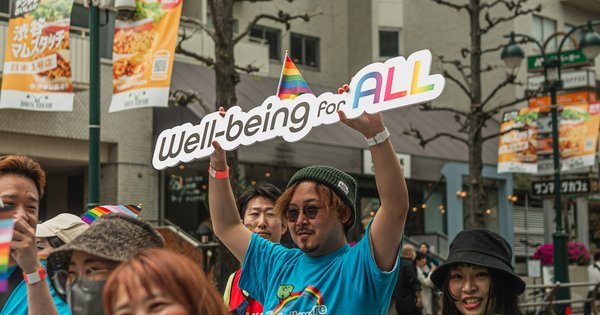
The clearest sign of how far the ground has shifted is the street. In June 2026, Pristina held its tenth Pride march under the slogan “Equality or Revolt,” closing a Pride Week that ran from the start of the month with conferences, cultural events, and a landmark gathering — “10 Years of Pride, Resistance and Action” — bringing together activists, institutions, and international partners to take stock of a decade of organizing.
Ten years is worth sitting with. When Kosovo held its first Pride, the idea of a public LGBTQ+ march in a conservative, majority-Muslim society on Europe’s edge was treated as almost unthinkable. That it now happens annually, with diplomatic presence and police protection, is a marker of how much space the community has carved out. Pristina has quietly become one of the more consistent Pride cities in the Western Balkans — less internationally famous than Belgrade or Zagreb, but remarkably durable.
The social reality
None of this means it’s easy to be queer in Kosovo, and it would be dishonest to pretend otherwise. Social attitudes remain conservative, particularly outside Pristina, and the political climate has grown harsher rather than gentler in recent years. During the 2024–25 election cycle, several parties reached for discriminatory and denigrating language about LGBTQ+ people as campaign material, and the issues the community cares about were largely pushed to the margins of the political conversation. Pride marches still require significant security. Visibility outside the capital carries real risk.
This is the honest texture of Balkan LGBTQ+ life that gets flattened in both directions — neither the “hopeless persecution” cliché nor a tidy “steady march of progress” story fits. Kosovo is a place where you can attend a well-attended Pride in the capital and still not be able to legally exist as a couple or as your correct gender.
Where the leverage is
If there’s a lever that moves Kosovo forward from here, it’s the same one operating across the region: the European Union. Kosovo wants EU accession, and the fundamental-rights chapters of that process are where LGBTQ+ reforms — legal gender recognition, civil unions, actual enforcement of the anti-discrimination law — get turned from aspirations into benchmarks. The pattern in neighboring Montenegro and North Macedonia, where accession pressure produced partnership laws and institutional reforms, is the template Kosovar activists are hoping to follow.
For now, Kosovo sits in a genuinely unusual spot: a young country that got the principles into its constitution before it got the mechanisms into its statutes, celebrating a decade of Pride while its trans and coupled citizens wait for the law to catch up to the marches. The distance between those two things is exactly the work of the next decade.