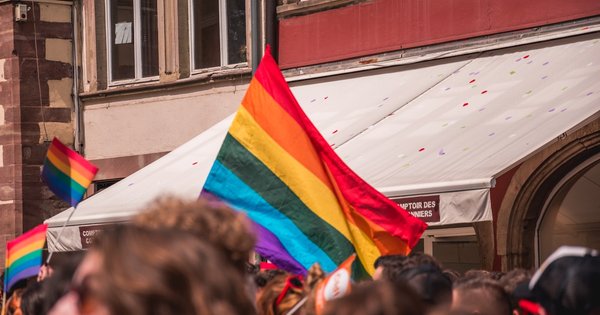
France has a reputation as one of Europe’s more progressive countries on LGBTQ+ rights, and on paper the reputation is mostly earned. But “mostly earned” is doing real work in that sentence. In 2026, France is a country with strong foundational protections, a stubbornly court-bound process for trans people, rising reported hate crime, and a far-right movement that has decided LGBTQ+ rights are a useful place to plant a flag. Here is where things actually stand.
What’s solid
The legal core is genuinely strong. France became the thirteenth country in the world to legalize same-sex marriage in 2013, and that fight, bruising as it was at the time, is settled. Same-sex couples can marry and jointly adopt. In 2021, France extended access to medically assisted reproduction — IVF — to lesbian couples and single women, closing one of the more glaring gaps in its family law and bringing it in line with its Western European neighbors.
Discrimination, hate speech, and hate crimes based on sexual orientation and gender identity are all illegal. France also criminalized so-called “conversion therapy” in 2022, joining a still-small group of countries that have put an explicit ban on the books rather than leaving the practice in a legal gray zone. For day-to-day life — employment, housing, public services — the anti-discrimination framework is comprehensive and enforceable.
Where it lags
The clearest weak spot is legal gender recognition. France does let transgender people change their legal gender marker without requiring surgery or sterilization, which puts it ahead of the countries still demanding medical intervention. But the process is not based on self-determination. It runs through a court proceeding in which the applicant has to demonstrate to a judge that they live publicly as their gender and are recognized as such by family, friends, or colleagues. In practice that means asking a court to rule on the authenticity of your identity — slower, more invasive, and more uncertain than the self-declaration models now operating in Spain, Belgium, Ireland, and elsewhere.
There was a notable signal in 2025, when France’s national health authority recognized the principle of self-determination in its first formal guidelines on gender-affirming care. That is a meaningful shift in the medical framing. But it has not yet translated into a change in how the legal recognition process works, and nonbinary genders are still not recognized at all under French law. For trans and nonbinary people, France remains a place where the law trails the lived reality.
The numbers that worry advocates
The gap between France’s legal protections and its social climate shows up in the data. French authorities recorded roughly 4,800 anti-LGBTQ+ offenses in 2024, up about 5% on the previous year — part of a multi-year upward trend that mirrors what other European countries are reporting. Survey data tells a similar story: large shares of French respondents describe discrimination based on sexual orientation, and especially gender identity, as widespread.
This is the part of the picture that a list of laws can obscure. Strong statutes do not automatically produce safety on the street, and France’s rising offense numbers are a reminder that legal equality and social equality are not the same achievement.
The political pressure
The most important variable heading into the rest of the decade is political. The far-right Rassemblement National has grown from a fringe presence into one of the most powerful blocs in French politics, and it has increasingly made LGBTQ+ rights — trans rights in particular — a target. The party launched an anti-LGBTIQ grouping in the National Assembly in 2023, and that kind of organized parliamentary hostility normalizes rhetoric that was, not long ago, confined to the margins.
We have watched this pattern play out across the continent: a country with good laws and a complacent assumption that the fights are over, suddenly finding that nothing is permanent when a well-organized movement decides to reopen them. France is not Hungary, and its institutions and courts remain a real backstop. But the comfortable view that French LGBTQ+ rights only move in one direction is harder to hold in 2026 than it was a decade ago.
The bottom line
France in 2026 is a country where the foundation is strong and the frontier is contested. Marriage, adoption, IVF access, and anti-discrimination law are secure. Trans legal recognition is stuck in the courts and overdue for reform. Hate crime is rising, and a resurgent far right has put LGBTQ+ people back in its sights. For a visitor, France is broadly safe and welcoming, especially in major cities. For the people who live here, the more honest summary is that France has built an impressive house and now has to decide whether it is willing to defend it.