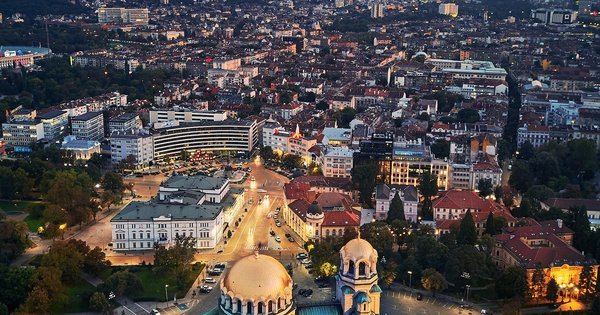
Bulgaria is a country we came to like a great deal and worry about in almost equal measure. Sofia surprised us — a walkable, affordable capital with a real café culture, mountains at the edge of the city, and a queer scene that exists and endures even though the law gives it very little to stand on. That gap, between the life people build and the rights the state is willing to grant them, is the whole story of being LGBTQ+ in Bulgaria in 2026. It’s an EU member. It’s also, by most serious measures, one of the worst places in the Union to be openly queer.
Bottom of the class in the EU
ILGA-Europe’s annual Rainbow Map, which scores 49 European countries on their laws and policies, routinely places Bulgaria near the bottom of the EU pack — a cluster it shares with Romania, Poland, and a handful of others. This is not an accident of a bad year. It reflects a legal framework that has, on several fronts, been moving backward rather than forward while much of the continent moved the other way.
The clearest illustration is what happened in schools.
The 2024 “propaganda” law
In August 2024, Bulgaria’s parliament amended its education law to prohibit “propaganda, promoting and inciting in any way, directly or indirectly, ideas and views related to non-traditional sexual orientation and/or gender identity other than the biological” in the country’s preschools and schools. The measure was introduced by the pro-Russian, far-right Vazrazhdane (Revival) party and passed comfortably — 159 votes in favor to 20 against, with 10 abstentions — drawing support well beyond the far right.
The design of the law will be familiar to anyone who has followed Russia’s “gay propaganda” statute or Hungary’s 2021 child-protection law: vague language, no clear definition of what counts as “promotion,” and a chilling effect that does most of the work. A teacher who isn’t sure whether acknowledging that gay people exist counts as “propaganda” will, understandably, say nothing at all. That silence is the point. What alarmed rights groups just as much as the vote was Brussels’ muted response — critics accused the EU of turning a blind eye to a member state importing one of the Kremlin’s signature cultural exports.
No recognition for couples
Bulgaria offers same-sex couples essentially nothing at the level of family law. Article 46 of the constitution, in place since 1991, defines marriage as a union between a man and a woman, constitutionally foreclosing marriage equality without an amendment. There is no civil partnership or registered-union alternative either, which leaves same-sex couples — including binational couples and families raising children — without inheritance rights, hospital visitation, or the ordinary legal scaffolding that opposite-sex couples take for granted.
Bulgarian courts have been pushed on this, largely by EU law. In cases involving free movement and the recognition of families formed elsewhere in the Union, European jurisprudence has forced narrow openings. But at the level of domestic law, the wall is still standing.
Trans people locked out of their own documents
The situation for transgender Bulgarians is, if anything, starker. In an interpretative decision published on February 20, 2023, the Supreme Court of Cassation ruled that “the only meaning of the term sex should be its biological one,” effectively barring legal gender recognition — the ability to change the gender marker on official documents. That puts Bulgaria out of step with the European Court of Human Rights, which has repeatedly held that states must provide a clear, accessible procedure for gender recognition. The result is a country where trans people cannot align their paperwork with who they are, with all the daily friction — at banks, borders, clinics, job interviews — that a mismatched ID creates.
What progress there is
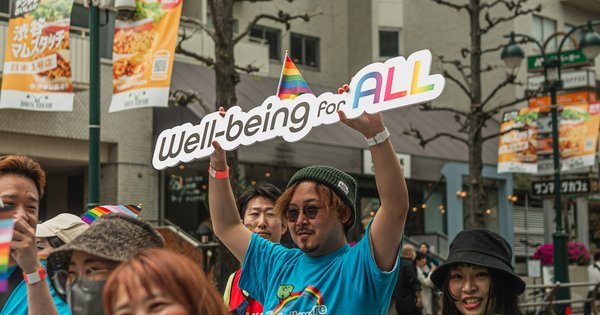
An honest accounting has to include the pieces that aren’t bleak, because they’re what people organize around. Discrimination on the basis of sexual orientation has been prohibited in Bulgarian law since 2004, and discrimination on the basis of “gender reassignment” since 2015 — protections that exist on paper even where enforcement is thin. Sofia Pride has marched every year since 2008, growing from a few hundred people behind heavy police cordons into an event that now draws thousands, and Plovdiv and other cities have seen their own smaller mobilizations. Bulgaria’s 2026 Eurovision win, and the prospect of Sofia hosting in 2027, has put an unexpected international spotlight on a country whose government would rather queer visibility stayed low.
None of that offsets the legal reality. But it does explain why the community here is stubborn in the best sense. The activists we met in Sofia weren’t waiting for permission from the state to exist; they’d simply built parallel spaces — bars, collectives, support networks, quiet online communities — that function regardless of what parliament does.
The bottom line for 2026
Bulgaria in 2026 is a cautionary tale about EU membership as a guarantor of rights: joining the Union did not, on its own, protect queer Bulgarians, and Brussels has shown limited appetite for a fight. Same-sex couples have no legal recognition, trans people can’t change their documents, and schools now operate under a law designed to erase queerness from the curriculum. And yet the community is visible, organized, and — from what we saw — not going anywhere. For LGBTQ+ travelers, Sofia is welcoming in its queer spaces and best navigated with the same discretion you’d bring to any conservative country. For LGBTQ+ Bulgarians, 2026 is a year of holding the line and waiting, with justified impatience, for the law to catch up to the life they’re already living.