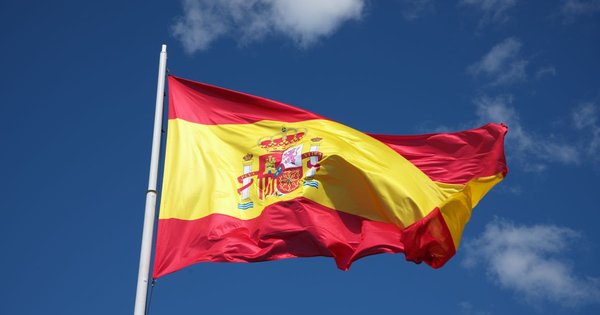
Spain keeps quietly proving that the harder work of trans equality happens after the landmark law is signed. Fresh off topping Europe’s Rainbow Map and rolling out a national strategy for trans inclusion earlier this month, Madrid has now closed one of the most quietly humiliating gaps in its system: as of 14 July 2026, trans foreigners living in Spain can finally have their correct name and gender printed on the documents the Spanish state issues them.
It sounds like paperwork. For the people affected, it is the difference between being seen and being erased every time they show an ID.
The loophole, in plain terms
Spain’s 2023 Ley Trans (Law 4/2023) gave people the right to change their legal gender through self-determination — no medical gatekeeping, no court battle. But that right ran into a wall for one group: migrants whose transition was not recognized in their country of origin.
Here is how the old system failed them. A trans woman arriving from a country that refuses to acknowledge her gender would be registered by Spanish authorities using the name and gender marker on her home-country passport. Her Spanish residency card — the TIE, or the green EU residency certificate — would then be issued with her deadname and the wrong gender marker. Even after building a life in Spain, she was handed, by the Spanish government itself, an official document that misgendered her at every border, bank, clinic, and job interview. The Ley Trans could not help her, because the correction had to happen in a home country that would never allow it.
What changed on 14 July
The fix came through a new police protocol published in Spain’s Police General Order, approved by a resolution signed by the Director General of the Police. From 14 July, foreigners in Spain can formally request a rectification of name and gender on documents issued by the National Police.
The mechanism is designed around exactly the trap described above. Spain’s Immigration and Borders Brigade will request a report from the Ministry of Foreign Affairs certifying the legal or practical impossibility of making the correction in the applicant’s home country. Once that impossibility is confirmed, the change is entered into the Central Register of Foreigners and a new document is issued with the correct name and gender.
In other words, Spain stops treating a hostile foreign government’s refusal as the final word on who a person is.
This also builds on a related reform already underway. In 2024, Spain moved to add a third gender option to foreigners’ residency documents — the “sexo/sex” field on TIE cards gaining an “X” marker alongside “M” and “F” for non-binary people. The new protocol pushes the same principle one step further: the document should reflect the person carrying it, not a bureaucratic accident of where they were born.
Why this matters beyond Spain
The significance here is not the volume of people — it will be a relatively small number in any given year. It is the principle, and the timing.
Across Europe this year, the dominant trans-rights story has been subtraction: healthcare restrictions, passport-marker fights, and legislatures backing away from recognition. Spain keeps moving in the opposite direction, and it keeps doing so at the level of implementation rather than grand declaration. A self-determination law is the headline; a police order that quietly lets a refugee stop being deadnamed by her own residency card is the follow-through most countries never get around to.
It matters especially for LGBTQ+ asylum seekers. Many trans people who reach Spain are fleeing precisely the countries most likely to deny them recognition. For that population, the old rule effectively imported the persecution they had escaped — the Spanish state, unintentionally, kept issuing them documents that reflected the legal fiction of the regime they fled. Closing that gap is a meaningful piece of what a functioning asylum system for queer people should look like.
The honest caveat
None of this erases the harder truth sitting underneath Spain’s legal success: recorded attacks on LGBTQ+ people in the country have climbed sharply, from roughly 7% to 22% of tracked incidents in just two years, by some counts. Being number one on the Rainbow Map measures the law on the books, not the safety of a trans person walking home. Spain is a useful reminder that strong legal frameworks and rising street-level hostility can — and do — exist at the same time.
But that is exactly why the small, technical wins are worth naming. A protocol like this one does not make headlines or win elections. It just means that the next trans person who lands in Spain from a country that denies she exists can walk into a police station and walk out with a document that finally says her name. In a year defined mostly by what’s being taken away, that counts for something.
Sources: The Local Spain, ILGA-Europe Rainbow Map — Spain, TGEU.