For seventeen consecutive years, the United States Embassy in Sofia did something small but symbolically enormous: it backed Pride. A statement of support here, a modest grant there, a diplomatic signature on a letter alongside a dozen other embassies. In a country where roughly 80% of the population identifies as Orthodox Christian and where “LGBT propaganda” was written out of schools using language borrowed from Moscow and Budapest, that American signature mattered. It told a nervous, heavily policed march that someone powerful was watching, and was on their side.
This year, that signature was gone — and the absence is the story.
A budget cut to the bone
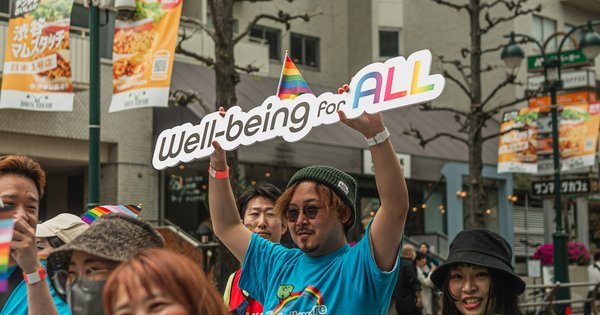
Sofia Pride 2026 still happened. Thousands marched through the center of the Bulgarian capital under heavy police protection, as they have every June since the first edition. But the organizers behind it, the GLAS Foundation, spent the spring scrambling. The withdrawal of US Embassy support set off a chain reaction: some of the largest corporate sponsors, who had quietly taken cover behind the embassy’s lead, pulled out too. Organizers warned that if the trend continues, future editions could be stripped down to a silent march — Pride reduced to its barest, most defiant form.
It’s worth being precise about the numbers, because precision matters and the headline figure is smaller than the symbolism suggests. The GLAS Foundation has said that in 2024 it received only about $15,000 from the US Embassy, and that for 2025 it did not apply for embassy funding at all. So this was never an event propped up by American cash. What the embassy provided was something harder to put on a balance sheet: cover. Legitimacy. The signal to local corporate sponsors and to the watching public that supporting Pride was a respectable, allied thing to do. When that signal vanished, the money that had clustered around it drifted away.
The DOGE connection
The retreat did not come out of nowhere. It traces back to Washington, where the so-called Department of Government Efficiency moved to suspend a large tranche of US foreign assistance, and where Secretary of State Marco Rubio ordered the cancellation of scores of financial grants. Reporting has put the suspended Bulgaria-linked grants in the range of $215 million across all programs — democracy, civil society, anti-corruption, and the small line items that touched LGBTQ+ organizing among them.
For American readers, foreign-aid cuts can feel abstract, a budget fight happening somewhere far away. Sofia Pride is what they look like on the ground. A grant program ends in an office in Washington, and ten months later a Pride organizer in the Balkans is deciding whether she can still afford a sound system. This is the part of US rights rollback that rarely makes the domestic news: the country has spent decades building soft-power credibility as a defender of LGBTQ+ people abroad, and that credibility is now being spent down, quietly, embassy by embassy.
The ruling party picks a side
Into that vacuum stepped the opposition — and this year it had official backing. The ruling Progressive Bulgaria party publicly endorsed a “March of the Family,” scheduled for the same Saturday as Pride, celebrating what its organizers called Christian, patriotic, and “traditional” values. A counter-march framed around “the family” is not new in the region; what is new is a governing party putting its name behind it.
That endorsement tells you where the political wind is blowing. When the United States was visibly in Bulgaria’s corner on this issue, a ruling party had a reason to stay neutral, or at least quiet. With Washington stepping back, the calculus shifts. There is now less cost to siding openly with the counter-marchers, and more room for the anti-gender movement that has been gaining ground across the Balkans and Central Europe to claim the mainstream.
Why this matters beyond Bulgaria
We cover the Balkans because nobody else does it consistently, and because the region is where the future of European LGBTQ+ rights is genuinely contested rather than settled. Bulgaria is an EU member that sits, with Romania, at the bottom of ILGA-Europe’s Rainbow Map — no marriage, no civil partnership, no meaningful legal gender recognition. In places like this, civil society is thin and external support has been load-bearing in a way it simply isn’t in Berlin or Amsterdam.
Sofia is the test case, but it won’t be the last. The same American funding architecture that backed Pride in Bulgaria has underwritten LGBTQ+ organizations, shelters, and legal-aid groups across the Western Balkans for years. As that architecture is dismantled, the organizations that depended on it are doing the math the GLAS Foundation already did. Some will adapt and find European or local funding. Some will shrink. A few may not survive.
There is a hard truth in here for everyone who assumed progress was a one-way ratchet: it isn’t, and external support that looked permanent can disappear in a single budget cycle. But there is something else, too, and it was visible on the streets of Sofia this month. The march went ahead. The crowd showed up anyway, smaller budget and all. Pride in the Balkans was always more protest than party, built by local activists long before any embassy signed a letter — and it is those activists, not the funding, who decide whether it continues. This year, again, they decided it does.
Sources: Balkan Insight, EU Alive, Novinite.