Branislav Sovljanski says nobody has called him yet. As news director at N1, the Belgrade television channel best known for criticising Serbia’s government, he told the Balkan Investigative Reporting Network (BIRN) last week that the channel’s new owners had not asked him to pull a story or drop a guest. He said he hoped it would stay that way. According to BIRN’s September 17 report, the mood in the newsroom three months after the sale is best described as people holding their breath.
Serbia votes in a snap parliamentary election on October 25. For LGBTQ+ Serbians, what happens inside these newsrooms may turn out to matter as much as the ballot.
What changed hands
On May 29, United Group announced it would sell Adria News Network (ANN) to Alpac Capital, a Portuguese investment fund. ANN’s Serbian outlets include the television channels N1 and Nova S, the Nova.rs news site, the daily newspaper Danas and the weekly Radar. ANN also owns Vijesti in Montenegro. BIRN describes the Serbian outlets as having long been almost alone in criticising democratic backsliding under President Aleksandar Vučić and his Serbian Progressive Party (SNS), which has governed since 2012.
Alpac Capital also bought the pan-European broadcaster Euronews in 2022. Reporting by Le Monde and the Hungarian investigative outlet Direkt36 later found that the Euronews deal was heavily financed by Hungarian state money and by companies close to Viktor Orbán’s political machine. Serbia’s competition regulator approved the ANN sale in August. European Western Balkans reported that directors were dismissed soon after the takeover. The European Federation of Journalists (EFJ) has named two of them: Katja Šeruga, director and editor-in-chief of N1 Slovenia, and Igor Božić, news editor-in-chief at N1 Serbia.
In late August, the EFJ, the International Federation of Journalists and Serbia’s Independent Journalists’ Association (NUNS) raised concerns about a letter from Alpac CEO Pedro Vargas David. He wrote it in reply to Serbia’s information minister, Boris Bratina. The letter said journalists should be free to investigate without restriction. It also criticised media organisations becoming “political forces” and called for “serious, non-activist, Western-style journalism.”
The unions pointed out that Serbian officials have for years accused N1, Nova, Danas and Radar of being exactly that: political actors and “activists.” They also said staff had repeatedly asked to meet the new owner and that no meeting had yet been scheduled.
Why this is an LGBTQ+ story
Media ownership can seem far from queer life. In Serbia, the two are closely linked.
The country’s media is sharply polarised, and outlets aligned with the government have a record of targeting people they see as opponents. In its March monitoring report, the Reporting Diversity Network described a feminist protest in Belgrade on International Women’s Day whose central demand was early elections. Pro-government tabloids Informer and Novosti, which the network says are known for targeting political and ideological opponents, framed the organisers as propagandists. The Instagram page beogradinfo.rs posted videos of an openly queer speaker, singling them out for their gender and sexuality. The network said the posts set off a wave of homophobic, transphobic and misogynistic comments online.
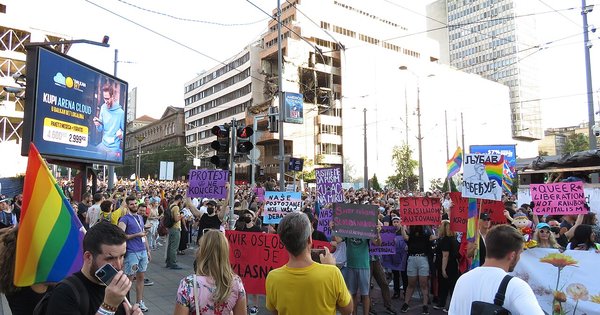
That is the environment LGBTQ+ activists work in. Serbia’s parliament has now refused three times even to debate a law recognising same-sex partnerships. Draft laws on same-sex partnerships and on gender identity and intersex rights have not been adopted. Belgrade Pride marked 25 years this month, and the march has long needed a large police presence to go ahead safely.
When most of the broadcast landscape is friendly to the ruling party, the few outlets outside it help decide whether LGBTQ+ people are covered as citizens with legal demands or as material for culture-war attacks. Whether those outlets keep their editorial independence through a hard-fought election campaign is a practical question for queer Serbians.
What to watch before October 25
It is too early to say the sale has changed what N1 or Danas publish. Sovljanski’s account suggests it has not, at least so far, and Alpac’s CEO has said publicly that attempts at influence will not succeed. The unions are asking him to put that in writing, with verifiable guarantees on staffing, editorial decisions and the choice of topics and guests.
In the coming weeks, it will be worth watching:
- Election coverage. Whether Pride organisers, partnership-law campaigners and other rights groups still get airtime and column space during the campaign, or quietly disappear from it.
- Further personnel changes. More dismissals of senior editors before the vote would worry press freedom groups.
- Regional ripple effects. Through Vijesti, the same ownership shift reaches Montenegro, which has had registered same-sex partnerships since 2021 and where Queer Montenegro spent this spring calling for an institutional response to online threats against a trans activist.
The EFJ has asked European regulators to review the deal under the European Media Freedom Act. Serbia is an EU candidate country, and media freedom is one of the areas Brussels watches most closely in its accession talks. The same process has driven much of the region’s progress on LGBTQ+ rights.
Queer communities in the Balkans have long known that legal change tends to follow visibility, not come before it. Serbia’s election will decide who governs. The fate of its independent newsrooms will help decide who gets heard.