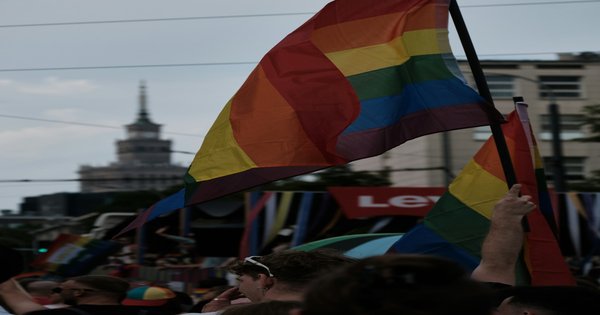
Poland has never legally recognized a same-sex relationship. It is one of only a handful of European Union members that offers couples nothing at all — no marriage, no civil partnership, not even a registry of cohabitation. This summer, for the first time, that could change. A bill that would give two adults a legal framework for their life together has cleared both chambers of Poland’s parliament and now sits on the desk of President Karol Nawrocki, who has until roughly mid-July to decide its fate.
For a country that spent years painting itself into a corner over “LGBT-free zones” and campaign-trail scapegoating, this is a genuinely historic moment. It is also a fragile one.
What the law actually does
The legislation is officially called the Act on the Status of the Closest Person in a Relationship, paired with an introductory act that amends more than 240 existing statutes. The name is careful, almost deliberately unromantic — and that is the point. This is not marriage, and it is not even framed as a civil partnership. It is a cohabitation agreement that any two adults, regardless of gender, can enter into.
Under the act, a couple would sign the agreement before a notary rather than at a civil registry office, and it would then be recorded so that both partners gain the legal status of a “close person.” That status unlocks the practical protections that unmarried couples in Poland have long been denied: shared property and tax arrangements, maintenance obligations, and — crucially — the right to access a partner’s medical information and make decisions in a hospital. Anyone who has sat in a waiting room while staff refused to acknowledge them as family understands exactly why that last provision matters.
What the law does not do is grant joint adoption or full marital equality. It was drafted narrow on purpose, in the hope that a modest, technically-worded reform might survive a political environment that has killed every previous attempt.
The parliamentary math
Getting even this far required a coalition to hold its nerve. The Sejm, Poland’s lower house, passed the legislation in its final reading on 29 May by a vote of 230 to 198. The Senate followed on 25 June, approving it 55 to 29. Both numbers are comfortable margins, and together they represent something Poland has never produced before: a full parliamentary majority for recognizing same-sex couples.
That majority exists because the governing coalition that took power after 2023 promised to move the country off its collision course with EU values. Delivering on LGBTQ+ rights has been slow and contentious even within that coalition, with more conservative partners wary of anything resembling marriage. The “closest person” framing was the compromise that made the votes possible.
Everything now hangs on one signature
Here is where the celebration has to pause. Under the Polish constitution, the president has 21 days to sign a bill, veto it, or refer it to the Constitutional Tribunal. Nawrocki, who is aligned with the conservative opposition, has given every signal that he intends to block it. In late May, a spokesperson stated flatly that there “is not and will not be consent from the president for the introduction or legalisation of civil partnerships,” while leaving a sliver of room by suggesting he might accept limited cohabitation rights that do not mirror a partnership framework.
Opponents, including well-funded conservative legal groups, have spent the intervening weeks arguing that the “closest person” act is simply civil partnerships wearing a disguise, and calling openly for a veto. If Nawrocki vetoes, the coalition would need a three-fifths majority in the Sejm to override him — a threshold it almost certainly cannot reach. A referral to the Constitutional Tribunal, a body reshaped during years of rule-of-law disputes, could bury the law just as effectively.
Why this matters beyond Warsaw
It would be easy to read this as another story about a likely veto. We would push back on that framing. Even if Nawrocki blocks the bill, Poland has now done something it never had before — assembled a democratic majority, in both chambers, willing to put its name to legal recognition of same-sex couples. That is a marker that does not disappear when a president reaches for his pen. It changes what is thinkable, and it sets the baseline for the next attempt.
From where we sit, watching Europe’s map shift country by country, Poland has long been the cautionary tale — the place where the anti-LGBTQ+ playbook was road-tested and exported across the region. A win here, even a partial one, would send the opposite signal to the Balkans and beyond: that the direction of that playbook can be reversed. The next few weeks will tell us which Poland is writing the headline. Either way, the couples who have waited decades for their relationships to count for something in the eyes of the law are closer than they have ever been.