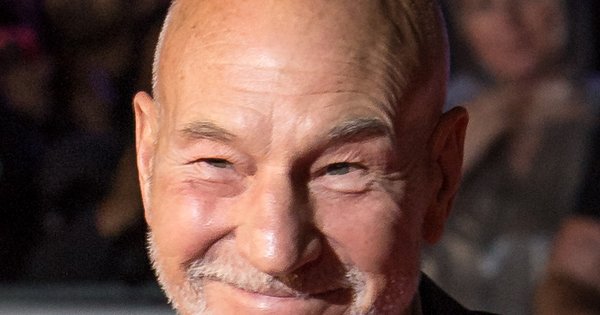
Sir Patrick Stewart has died. He was 86.
He died at his home in Los Angeles on Wednesday, October 28, “in the loving care of his beloved wife Sunny,” after what his longtime spokesperson Kelly Bush Novak called “a brief and poignant journey with Alzheimer’s Disease and Lewy Body Dementia,” CBS News and NBC News report.
“He will be remembered for the dignity, compassion and humanity he brought to every role — in his art and life,” the statement said.
For millions of people he was Captain Jean-Luc Picard. For a lot of queer people, he was also something rarer for his generation: a famous straight man who never made a fuss about being on our side, and was always there anyway.
The career, in one breath
Stewart started on stage in the UK and joined the Royal Shakespeare Company in the 1960s, appearing in more than 60 RSC productions, CBS reports. In 1987 he became Picard in Star Trek: The Next Generation: seven seasons, four films, and later three seasons of Star Trek: Picard. He played Professor Charles Xavier in more than half a dozen X-Men films and reprised the role in Avengers: Doomsday, due in December.
He won three Olivier Awards, was made an OBE in 2001 and was knighted in 2010 for services to drama. His memoir, Making It So, came out in 2023. His spokesperson listed the causes he fought for: social justice, women’s rights, domestic abuse advocacy, veterans’ rights, the refugee crisis, animal rights and political reform.
”A natural and uncomplicated choice”
Stewart never pretended his allyship was a heroic decision. In a 2015 interview with The Advocate, he said: “So there was never a moment where I made an intellectual choice that I would be a supporter of gay civil rights.” He credited the theatre, saying: “I think this is where the theater is such an appealing world, because it embraces everything and always has.”
“It was always a natural and uncomplicated choice,” he said. Later in life, as he got to know activists like his friend Ian McKellen, he said he was “only too happy to join campaigns, march, and support in whatever way I could.”
Some of the moments fans remember, collected by PinkNews:
- When a newspaper mistakenly described him as gay in 2014, he laughed it off. “Quite frankly, I was utterly flattered by that assumption,” he later told The Advocate.
- He kissed McKellen on the red carpet at the Mr Holmes premiere in 2015, and the pair shared holiday photos from New York that year, including holding hands outside the Stonewall Inn.
- For Pride 2016 he posted a photo in a Pride T-shirt: “Pride now, pride always. HAPPY PRIDE!”
Not always a perfect ally, and he said so
It wasn’t all applause. In 2015, speaking as an Amnesty International advocate, he said he was “on the side of the bakers” in the Northern Irish case of a bakery that refused to ice a cake supporting marriage equality, PinkNews reported at the time. It drew sharp criticism from LGBTQ+ people.
His reply was telling. He wrote that he knew “many disagree with my sentiments, including the courts,” and added: “I have long championed the rights of the LGBT community.” You can disagree with his view on that case and still recognise a man who explained himself, in public, to the community he’d upset.
Ian and Patrick
The friendship is the part people will hold onto. The two met at the Royal Shakespeare Company about 50 years ago, played Magneto and Professor X on screen, and shared the stage in Waiting for Godot. In 2013, McKellen officiated at Stewart’s wedding to the singer Sunny Ozell.
On Friday, McKellen posted a tribute on Instagram, quoted by PinkNews: “He wore his heart on his sleeve, which made him a man to rely on, to admire and in my case, love.”
In a culture that still teaches many men to keep their friendships at arm’s length, two old actors kissing on red carpets and posing for silly photos for years was its own quiet lesson.
Why it matters
Allies don’t change the law on their own. But for queer kids in the 1990s who couldn’t see themselves on TV, and for those in places where they still can’t, it mattered that the most reassuring captain in science fiction was, off screen, plainly and cheerfully on their side.
Engage.
Photo: Bill Ingalls / NASA, public domain, via Wikimedia Commons (TIFF 2015).