Correction (September 28, 2026): This article originally said North Macedonia’s anti-discrimination law does not name gender identity, that Skopje Pride 2026 was set for June 27, and that the 2019 court ruling was six years old. In fact, the law adopted in October 2020 names both sexual orientation and gender identity (though not sex characteristics), Skopje Pride took place on June 20, 2026, and the ruling was seven years old at the time of writing.
North Macedonia is one of the harder Balkan countries to summarise. On paper it looks middling — better than Serbia on some measures, worse on others, and broadly stuck in the same place it has occupied for most of a decade. With Skopje Pride scheduled for June 20 and the European Commission’s enlargement report due in the autumn, this is a useful moment to lay out where the country’s roughly two million people actually stand if they are LGBTQ+.
The legal baseline
Same-sex sexual activity has been legal in North Macedonia since 1996. That is the floor, and it is a meaningful one — a third of the world still criminalises queer people, and North Macedonia is not among them. Anti-discrimination law is the next layer up, and here the picture is partial. The Law on Prevention and Protection from Discrimination names both sexual orientation and gender identity as protected grounds, but it does not name sex characteristics. That omission is not a technicality; it leaves intersex people without clear statutory protection.
There is a complicated history here worth knowing. In 2019 parliament adopted an anti-discrimination law that did include sexual orientation and gender identity, passing with 52 votes in favour. The Constitutional Court struck it down on procedural grounds in May 2020 — not over its substance, but over how it was passed. Parliament adopted a replacement on 27 October 2020, and it again names both sexual orientation and gender identity.
What does not exist
Two large gaps define the everyday reality.
The first is relationship recognition. North Macedonia recognises neither marriage nor civil partnership for same-sex couples. The Family Law defines marriage as a union between a man and a woman. A draft partnership bill has been circulated by civil-society groups — Coalition Margins and the LGBTI Support Centre among them — since 2022. It has never been brought to a vote. The reason is arithmetic: the governing coalition depends on a small religious-conservative partner whose continued support is conditional on the bill not advancing. A couple who have built a life together in Skopje have no legal mechanism to formalise it, no inheritance rights, no next-of-kin standing in a hospital.
The second gap is legal gender recognition. North Macedonia has no functional procedure for changing one’s legal gender. This is not merely a policy preference the government has declined to adopt — it is a binding obligation the state is ignoring. In 2019 the European Court of Human Rights ruled against the country in X v. North Macedonia, ordering it to introduce a gender-recognition procedure. Seven years later, none exists. The Council of Europe’s enforcement committee, which monitors compliance with the Court’s judgments, has flagged the case repeatedly. A trans person in North Macedonia in 2026 cannot bring their documents into line with who they are, full stop.
The EU lever
The most important variable in all of this is accession. North Macedonia opened formal EU accession negotiations in 2022, after Bulgaria lifted a years-long veto, and is now working through the clusters of chapters that decide whether a candidacy moves or stalls. Fundamental rights live in “Cluster 1,” and anti-discrimination and minority protection are explicitly part of what Brussels assesses.
This is the lever queer-rights groups have learned to pull, because domestic politics offer so little traction. The Commission’s enlargement reports increasingly name the same-sex partnership law and the missing gender-recognition procedure as outstanding items. That external pressure is real, but it produces uneven results. Governments in the region tend to move fastest on the rule-of-law and judicial chapters — the ones that unlock the next stage of negotiations — and let the fundamental-rights items drift, because moving on them costs domestic political capital they would rather spend elsewhere. North Macedonia fits that pattern almost exactly.
On the ground
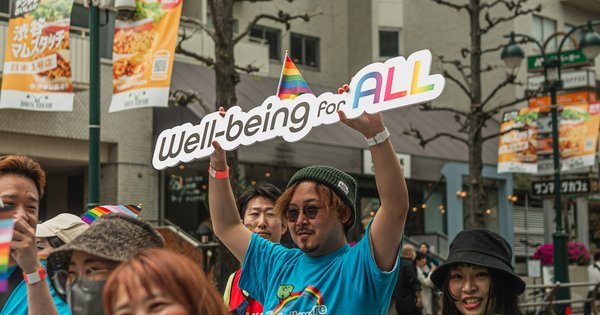
The lived climate is better than the legal scorecard suggests, if only in the narrow sense that organised violence has receded. There has not been serious counter-violence at a Skopje Pride since the first march in 2019, which needed heavy police protection and a wall of foreign embassies at the front of the crowd. Last year’s march drew around 2,500 people and passed without major incident. The Macedonian Orthodox Church maintains a steady rhetorical opposition to Pride that does not usually translate into mobilisation on the day. The nationalist-left party Levica, which has campaigned against Pride before, has lost some visibility since the 2024 election.
That does not mean daily life is easy. North Macedonia remains a socially conservative country, and outside the relative anonymity of central Skopje, being out can carry real social and economic cost — job loss, family rejection, harassment. The improvement is in the political weather around visible events, not in a transformation of public attitudes.
What to watch
Three things will tell you where North Macedonia is heading. First, whether the autumn enlargement report names the partnership law and gender-recognition procedure as explicit accession conditions, rather than soft recommendations. Second, whether the parliamentary opposition tables either long-shelved bill as a political marker, even without the votes to pass it. Third, whether the religious-conservative coalition partner keeps its veto over the partnership bill or loses leverage in the next reshuffle.
The honest summary is this: North Macedonia is neither a horror story nor a success. It is a country doing the bare minimum to keep its EU candidacy alive while declining to do anything that would cost it at home. Skopje Pride on June 20 will, as it does every year, ask the government to comply with commitments it has already made. The interesting question — the same one we asked about the march itself — is whether 2026 is the year any of it stops being symbolic.