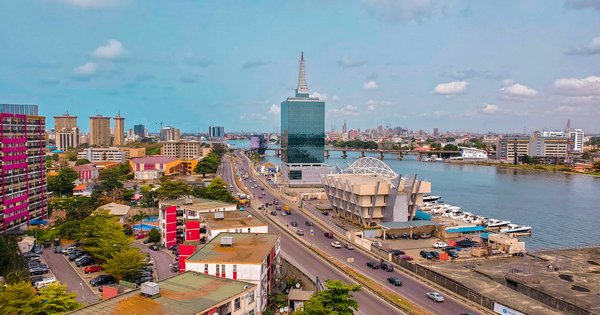
Five young flatmates in Lagos. Relationships, sexuality, family hardship, and trying to get by. On paper, Living in Colors is a pretty classic ensemble drama.
In Nigeria, it became a test of who gets to tell queer stories at all.
The short version
- August 26–27: Nigeria’s National Film and Video Censors Board (NFVCB) moved to stop the series’ press call and premiere at a Lagos cinema, Premium Times reported.
- August 30: The series went up on YouTube anyway, on the channel of its production company, Prism House Studio.
- By September 2: It was gone, after a run of just two days. In that time, each episode drew more than 90,000 views.
- September 13: It was re-released on the same channel. As of September 20, three of the seven episodes were back, according to Premium Times.
Who made it
Living in Colors (Premium Times also spells it Colours) is produced by Manuel Ruben of Prism House Studio and directed by Tega Idogho and Udo Casciavit. The cast includes Solomon James, Gabby John, Kris Shaddy and Khalid Omokalemoh.
Premium Times describes the story as five Lagos flatmates navigating sexuality, relationships, and survival amid violence and family hardship. That is not a fringe experience in Nigeria. It just rarely gets shown.
What the censors said
The board’s August warning claimed that “the trailer for this film depicts explicit pornography and actively promotes same-sex relationships,” and said the production had never been submitted for classification, per Premium Times.
The board said it was working with federal and state security agencies to stop the premiere, and warned cinema operators that screening unclassified films could lead to sanctions, including closure and the loss of their licence. It also cited Nigeria’s Same Sex Marriage (Prohibition) Act of 2013.
After the episodes resurfaced, NFVCB head Shaibu Husseini went further. “The movie in totality is a promotion of same-sex; it is not a film that encourages the art,” he said, adding that the board would “go all the way to ensure it is removed from streaming platforms like YouTube,” Premium Times reported.
Back in April 2026, Husseini had already said that films released on platforms such as YouTube must be submitted for classification and registration before release.
Who took it down? Nobody’s saying
This is the part that’s still murky. Premium Times put it plainly: “It is not known whether YouTube or the filmmakers removed the videos, whether the NFVCB submitted a formal takedown request, or why only three of the seven episodes were restored.”
So the honest answer is: we don’t know yet whether the September takedown was a platform decision, a precaution by the makers, or the result of state pressure.
The law in the background
Nigeria’s 2013 law goes far beyond marriage. It bans any “public show of same sex amorous relationship,” and sets a 10-year prison sentence for anyone who “registers, operates or participates in gay clubs, societies and organization” or supports them, Human Rights Watch documented. Punishments under the act range from 10 to 14 years.
Whether a fictional drama counts as a “public show” of anything has never been settled by a court, Erasing 76 Crimes notes. That’s one reason the board leans on classification rules: an unclassified film is easier to go after than a story.
This has happened before, and the films still got made
Living in Colors isn’t the first Nigerian queer production to meet the censors head-on.
In 2020, Ìfé, a lesbian love story produced by activist Pamela Adie, was released online after the NFVCB threatened its makers, as Wikipedia’s entry on the film records. “When we released the first film in 2020, the chairman of the Nigerian film and censors board went on CNN, threatening to arrest me,” Adie told PinkNews this March, when Ìfé (The Sequel) screened at BFI Flare in London.
Her reason for making more? “African audiences were very hungry to see themselves on screen,” she said.
Ninety thousand views an episode, in two days, says the same thing.
Why it matters
For queer Nigerians, seeing a Lagos flat full of people like you, written by people from home, is rare. The internet has become the place these stories can live when cinemas can’t show them, and the board’s April statement and its September vow show that the state now wants a say there too.
What happens next will tell us a lot: whether YouTube keeps the restored episodes up, whether the remaining four return, and whether the board follows through on its threat of legal action.
If you’re watching from Nigeria: be careful about sharing or commenting under your real name, and think twice before reposting clips with faces of people you know. Interest in a show isn’t a crime, but the climate around it is hostile.
Sources: Premium Times, Aug 27; Premium Times, Sep 20; Erasing 76 Crimes; Human Rights Watch; PinkNews; Wikipedia: Ìfé. Photo: Nupo Deyon Daniel / Unsplash.