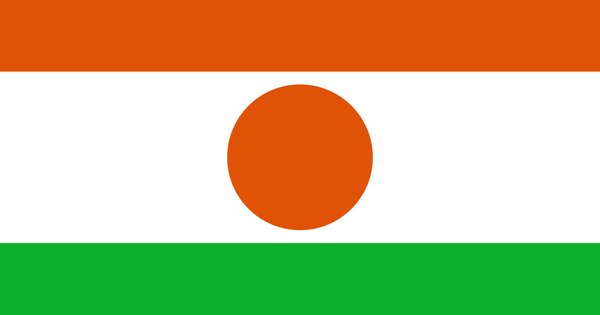
For most of its history, Niger was one of a small number of West African countries that did not explicitly criminalise same-sex intimacy. That changed on June 11, 2026, when the military government enacted a new Criminal Code that, for the first time, writes homosexuality into the statute books as a crime — and attaches sentences severe enough to end lives.
Within weeks, the law stopped being theoretical. Human-rights monitors and international outlets report that roughly 40 people have already been arrested in the crackdown that followed, with at least 16 men jailed. The Guardian described the operation as a “witch-hunt.” For a community that until this summer lived in legal grey space rather than under explicit prohibition, the shift has been abrupt and frightening.
What the new code actually says
The penalties are not symbolic. Under the new Criminal Code — introduced through Ordonnance No. 2026-09 and promulgated in June — consensual same-sex relations carry five to ten years in prison and fines of up to 100 million CFA francs, a sum that would ruin almost any household in one of the world’s poorest countries. Same-sex marriage, though it was never legally available in the first place, is punishable by ten to twenty years. And managing, operating, or financing any organisation that supports LGBTQIA+ people can bring up to twenty years’ imprisonment.
The cruelest technical detail is one that is easy to skim past: the code bars courts from considering mitigating circumstances or handing down suspended sentences. In practice that removes judicial discretion entirely. A judge who might otherwise weigh a defendant’s youth, coercion, or first offence has no legal room to do so. The sentence is the sentence.
That last provision — criminalising the organisations themselves — is the part that echoes a pattern we have covered elsewhere on this site, from Senegal to Uganda. When a government wants a crackdown to be durable rather than momentary, it does not only target individuals. It targets the infrastructure of solidarity: the groups that provide legal aid, HIV testing, shelter, and a place to be known. The Guardian reports that HIV-prevention services for men who have sex with men have already been severely disrupted, which is exactly the kind of downstream public-health harm these laws produce and their authors rarely acknowledge.
The politics behind the timing
Niger has been governed by a military junta since the July 2023 coup, with General Abdourahamane Tchiani sworn in as president in 2025 for a five-year term. The government has leaned hard into an anti-Western, anti-colonial posture, expelling French forces and reorienting the country’s alliances.
The recriminalisation of homosexuality has been folded into that same nationalist narrative. Officials have framed the repression of LGBTQ+ people as a rejection of Western cultural imposition — a way of casting a crackdown on Niger’s own citizens as an act of sovereignty and liberation. It is a rhetorical move worth naming clearly, because it is designed to make outside criticism self-defeating: any European or North American condemnation can be recast domestically as proof that LGBTQ+ rights are a foreign project.
That framing does not survive contact with the facts. The people being arrested are Nigeriens. The families being frightened into silence are Nigerien families. There is nothing foreign about them, and there is nothing anti-colonial about a state deciding which of its own people it will imprison for whom they love.
What this means beyond Niger’s borders
Niger now joins the direction of travel across parts of West Africa and the Sahel, where the last two years have brought harsher penal codes in several countries and, in Senegal, a same-sex marriage ban written directly into the constitution. Each of these moves makes the others easier — a regional ratchet in which governments watch one another and calculate that the political cost of cruelty is low.
For LGBTQ+ Nigeriens, the practical calculus is now brutally narrow. Those who can leave will try to; those who cannot — and most cannot — face a choice between deeper concealment and the risk of prosecution with no legal mercy available. In the coming months, asylum systems in Europe and elsewhere will begin weighing claims from people who can now point to a specific statute, enacted on a specific date, that names them as criminals. Careful, unsentimental documentation of what this law says and whom it has already reached is part of what those claims will rest on.
We spend a lot of our coverage on hard-won progress — Pride marches held under pressure, courts recognising families, bans overturned. This is the opposite kind of story, and it deserves the same attention. A country that was, until this summer, an exception has chosen to stop being one. The least the rest of us can do is refuse to let that happen quietly.
This piece touches on criminalisation and persecution. If you are an LGBTQ+ person navigating asylum or safety concerns, organisations such as Rainbow Railroad and ILGA World maintain resources and can point to region-specific support.