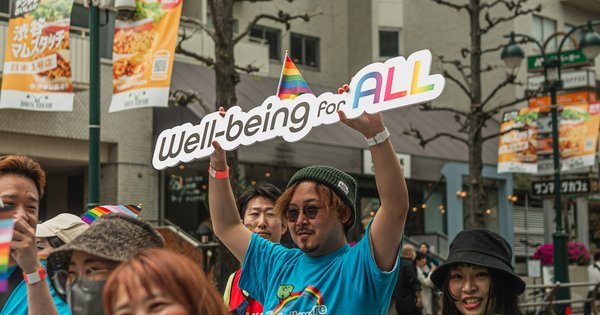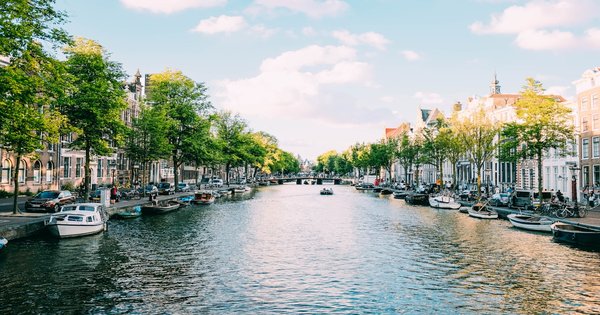
There are years when a Pride is just a Pride, and then there are years when the calendar does something almost too neat to be true. This is one of the second kind. WorldPride has come to Amsterdam in the exact summer the Netherlands turns 25 as the first country on earth to open marriage to same-sex couples — and it is doing so with an openly gay man living in the Catshuis as prime minister. If you wanted a snapshot of how far one small country has traveled, you could hardly stage a better one.
We’ve spent enough months in the Netherlands over the last few years — Amsterdam, Zaandam, quiet little Wormer up in the polders — to feel a certain protectiveness about how this story gets told. The temptation, especially from abroad, is to flatten it into a fairy tale. The reality is warmer, more complicated, and honestly more encouraging than a fairy tale, because it involves a country still arguing with itself about how to do right by its queer citizens rather than one that has decided it’s finished.
The anniversary that started it all
On April 1, 2001, the first four same-sex couples married in Amsterdam’s city hall, with then-mayor Job Cohen officiating just after midnight. It was the first time anywhere in the world that the word “marriage” — not partnership, not union, but marriage — was extended to gay and lesbian couples with the full weight of the state behind it. More than 36,000 same-sex couples have married in the Netherlands since.
Twenty-five years later, that decision looks obvious. It did not look obvious at the time. The law passed a parliament that argued hard over it, in a culture that was liberal but not unanimous, and it took political actors willing to spend capital on a group that was still, in 2001, a long way from universally accepted. The anniversary is worth sitting with precisely because it’s a reminder that the things we now treat as settled were once genuinely contested — and were won by people who decided to fight for them anyway.
A prime minister who didn’t hide it
The other half of this summer’s symbolism is Rob Jetten, sworn in on February 23, 2026, as the Netherlands’ first openly gay prime minister and, at 38, its youngest. The leader of the socially liberal D66 took the oath in The Hague after months of coalition talks — the ordinary, grinding work of Dutch politics — and the fact of his sexuality was treated less as a scandal than as a footnote. His fiancé, Argentine field hockey player Nicolás Keenen, is a public figure in his own right; the two plan to marry later this year, which means the country could see its head of government have a same-sex wedding during the same twelve months it celebrates 25 years of the right to have one.
Jetten has not treated his identity as merely personal. His government has committed to a “Rainbow Agreement” that promises to strengthen non-discrimination protections for transgender and intersex people, expand the ranks of discrimination investigators handling anti-LGBTQ+ violence, and push acceptance programs in schools. Last autumn he posted a blunt message of support for trans people, echoing the “protect the dolls” slogan that has spread through queer communities as a response to anti-trans violence. For a sitting prime minister to say that plainly is not nothing, and in the current European climate it’s closer to rare.
Where the work actually is
Here’s where we resist the fairy tale. Being the first country to do something in 2001 does not guarantee you’re still leading in 2026, and the Netherlands isn’t uniformly at the front of the pack anymore. Trans healthcare in particular has long waiting lists, with people facing multi-year delays to access gender-affirming care through the main clinics — a bottleneck that no amount of ceremony fixes. Intersex activists continue to press for a full ban on non-consensual surgeries on intersex infants. And Dutch queer people, like queer people everywhere in Europe, are watching a continental mood in which anti-gender and anti-trans rhetoric has migrated from the fringe into ordinary political speech.
The point of a WorldPride landing here, in this particular summer, isn’t to declare the job done. It’s the opposite. The Netherlands is a useful case study because it shows both what’s possible — a gay prime minister, a quarter-century of marriages, a broad social consensus that would have seemed utopian a generation ago — and how much remains even after you’ve achieved the headline wins. Marriage equality did not fix healthcare access. A gay head of government does not, by himself, shorten a waiting list.
Why it still matters
For the roughly one million visitors expected across WorldPride’s run of events, and for the queer people who live here year-round, the value of this moment is partly emotional and partly strategic. Emotional, because it is genuinely moving to see a country hold up its own history and say: look how far. Strategic, because the Netherlands’ example is a live argument aimed at the rest of Europe — at the Balkans still fighting for basic civil unions, at the Western democracies where trans rights are being rolled back, at everyone insisting that acceptance is somehow foreign to “traditional” values.
Twenty-five years ago, four couples got married just after midnight in Amsterdam and the sky did not fall. That remains, all these years and all these complications later, the whole argument. This summer the country gets to make it in front of the world.