The country that made marriage equality real for the world had an unusually honest moment at its own party.
Speaking Thursday at the Human Rights Conference in Amsterdam, held as part of WorldPride’s closing days, Dutch State Secretary Judith Tielen told the room something you don’t often hear a government official say out loud at a Pride event: that her own country’s progress on LGBTQ+ rights has stalled. “The Netherlands has a proud history when it comes to promoting LGBTQ+ equality,” Tielen said, “but in recent years, our progress has stalled, while other countries have moved forward. And no country can afford to stand still. The moment we stop moving forward, we risk moving backward.”
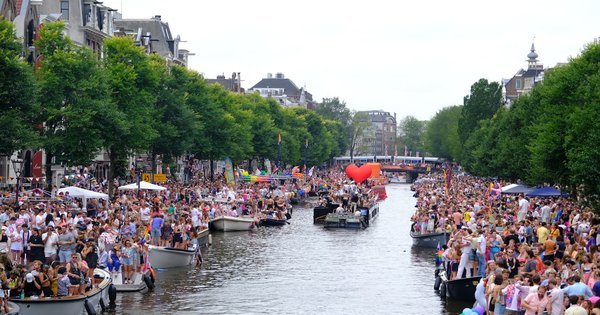
It’s a striking thing to hear from the government of the first country in the world to legalize same-sex marriage, which it did in April 2001 — a milestone WorldPride Amsterdam spent the summer marking as its 25th anniversary. Amsterdam hosted both WorldPride and EuroPride simultaneously this year, drawing an estimated half a million visitors and closing with a march and concert on August 8. But Tielen’s speech, four days before that closing weekend, was a deliberate note of caution dropped into the middle of the celebration.
The backdrop: a Pride attack, and a warning
Tielen’s remarks came in the shadow of the July 25 attack in Berlin, where a van struck pedestrians near that city’s Pride march route, killing one person and injuring dozens more. The attacker had a prior record — arrested in Lebanon in 2025 while attempting to reach Syria and join ISIS, later convicted in Germany of planning an attack but given a suspended juvenile sentence before carrying out the assault months later. Dutch Prime Minister Rob Jetten and Amsterdam Mayor Femke Halsema had already addressed the Berlin attack at the Pride conference’s opening the day before Tielen spoke, and Amsterdam had visibly tightened security around its own WorldPride events in response.
Tielen referenced Berlin directly, framing it as evidence that “the threats facing the LGBTQ+ community can be severe” — not an abstract concern but a current one. It’s a notable pairing: a government secretary using a hate-motivated attack in a neighboring country to argue that her own country’s sense of finished business on LGBTQ+ rights is premature.
What “stalled” actually looks like
Tielen didn’t offer a policy list so much as a diagnosis. Her argument was that formal legal equality — the marriage law, the anti-discrimination statutes, all the frameworks earlier generations of Dutch LGBTQ+ activists fought for — doesn’t run itself. “Real change requires more than political commitments and government policies,” she said, arguing that progress depends on individuals and communities translating those commitments into concrete, everyday action.
To make the point concrete, she returned repeatedly during her speech to a small, specific example: a street in Haarlem where neighbors put up Pride flags in solidarity after a family living there faced threats for hanging a rainbow flag outside their home. It’s a modest anecdote for a head-of-state-adjacent Pride speech, but it was clearly the point — that the health of LGBTQ+ life in the Netherlands isn’t measured only in what parliament has passed, but in whether a family can put up a flag without needing their block to organize in their defense.
Why this matters beyond one speech
The Netherlands’ self-image as a finished project on gay rights is part of what makes it a useful bellwether. If the country that got here first is telling its own Pride conference that standing still is itself a form of backsliding, that’s a harder claim to wave off than the same warning from a country still fighting for basic legal recognition. It also lands at a moment when the broader European picture is genuinely mixed — Hungary has moved to criminalize Pride marches even as the EU’s top court ruled its “anti-LGBTI propaganda” law unlawful, and ILGA-Europe’s own 2026 rankings show real divergence between countries moving forward and countries actively legislating backward.
Tielen’s speech didn’t announce new legislation or new funding. What it did was put an official, public marker down: that 25 years after the Netherlands led, leading again means acknowledging that the work quietly stopped being new news — and deciding to make it news again.