On paper, Mozambique looks like a success story. In 2015 its new penal code took effect and same-sex relations stopped being a crime, a step Human Rights Watch praised as rare in the region.
Ask LGBTQ+ Mozambicans how it’s going, though, and you get a more complicated answer. A Global Voices feature by writer Tirso Sitoe, republished this week by Erasing 76 Crimes, argues the country offers “tolerance that doesn’t eliminate exclusion”. Nobody needs a law against you if nobody ever talks about you.
”As nobody writes about us, we become invisible”
That’s Pepetsa Fumo, a trans activist with the group Transform, which works for trans recognition and inclusion. Her line is the heart of the piece: the problem isn’t loud persecution, it’s quiet erasure.
The feature walks through where that erasure happens.
1. School
Sitoe describes school curricula as “profoundly heteronormative”, and notes the government has withdrawn references to sexual orientation from school materials. Bullying fills the gap.
“The challenge begins in the ministry itself, and in the way teachers are trained to not respect diversity,” Fumo says.
2. Work
Economic precarity comes up again and again. Activists describe barriers to formal jobs and the economic security that comes with them.
“Today you have work, tomorrow it’s over,” Fumo says. “Then you’re back to taking a break in the shade again.”
3. Health care
Here the picture is uneven. Trans people have gained some visibility through HIV programmes. But lesbian, bi and queer women barely show up at all, missing from health programmes and from violence statistics.
And being visible only as a public-health category has its own cost. One interviewee put it sharply: “I am not a ‘key population.’ I’m Darius. Don’t confuse me with this category.”
Groups like Por Ela (“For Her”), which works on rights and economic empowerment for LBQ women, are trying to fill that gap.
4. Online
Social media has been a lifeline for organising and finding each other. It’s also where activists face harassment, surveillance and hate speech, the feature reports.
The group that still can’t register
There’s one place where the exclusion is written down. Lambda, the country’s main LGBTI association, first asked to be registered in 2008. Officials pointed to a clause in the 1991 Law on Associations barring groups whose aims were “contrary to the moral, social, and economic order”.
In 2017, Mozambique’s Constitutional Council ruled that clause unconstitutional, the Human Rights Campaign reported. Lambda’s executive director Danilo Da Silva called it “a huge victory for us and for the whole civil society.”
Nearly nine years later, that victory still hasn’t turned into a registration certificate. In a June 2026 report prepared for Mozambique’s UN sustainable development review, Lambda named “the refusal to legally register LAMBDA” as a persistent barrier, alongside the “absence of explicit SOGIESC protections” and LGBTQIA+ people’s exclusion from official data.
Without registration, an organisation can work, but without the official status it needs to access funding and tax benefits, as Human Rights Watch pointed out back in 2016. For other groups, HRW noted, the process normally takes about six weeks.
Why this story is worth your time
Mozambique is a useful mirror. Decriminalisation is a huge, necessary step, and it’s worth celebrating. But it’s a floor, not a finish line. The same pattern shows up in plenty of places, including parts of the Balkans we cover: legal on paper, invisible in practice.
What changes that is exactly what Fumo, Por Ela and Lambda are doing: insisting on being written about, counted, and named. Writing about them is the least we can do.
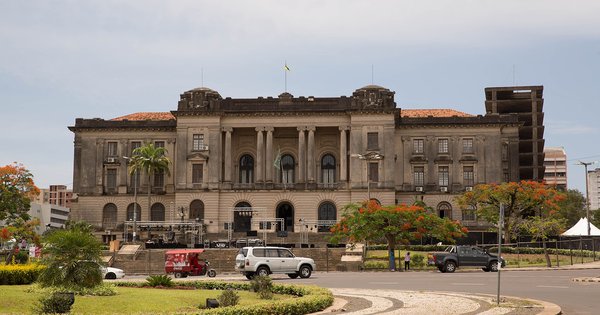
Sources: Global Voices (Tirso Sitoe, translated by Liam Anderson); Erasing 76 Crimes; Human Rights Watch; Human Rights Campaign; LGBTI Stakeholder Group. Photo: MOPA Maputo, CC BY-SA 2.0, via Wikimedia Commons.