When people ask us about queer Germany, the conversation almost always jumps straight to Berlin. Fair enough — Berlin’s reputation is earned. But we stopped in Munich on our first big Europe trip back in 2015, before we’d even started living abroad full-time, and it’s stuck with us as one of those cities that quietly does everything right without needing to shout about it.
First impressions
Munich reads as conservative on the surface — it’s Bavaria, after all, and the city’s public image leans heavily on beer halls, dirndls, and old-world Catholic tradition. What surprised us was how little that translated into anything unwelcoming in daily life. Munich is wealthy, orderly, and international in a way that shows up as quiet acceptance rather than loud advocacy. We didn’t get looks holding hands walking through the city center near Marienplatz, and nobody blinked at two guys sharing a table at a beer garden.
Where the scene actually is
Munich’s queer neighborhood is Glockenbachviertel, just south of the city center near the Isar river. It’s a compact, walkable district with a concentration of gay bars, cafes, and shops that feels more like a genuine neighborhood than a nightlife strip — during the day it’s full of regular Munich life, and after dark the bars along Hans-Sachs-Straße and the surrounding blocks fill in. We spent an evening bar-hopping there and found a mix of low-key neighborhood spots and a couple of proper dance clubs, without ever feeling like we’d wandered into a tourist-trap version of a gay district.
What to actually do
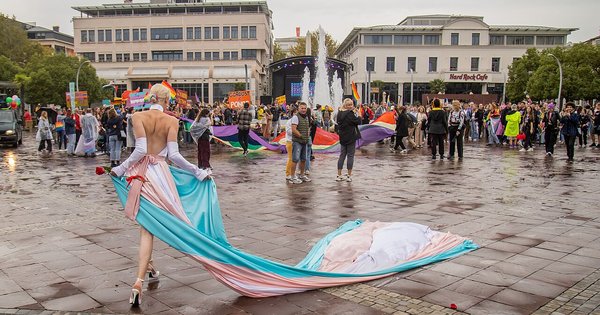
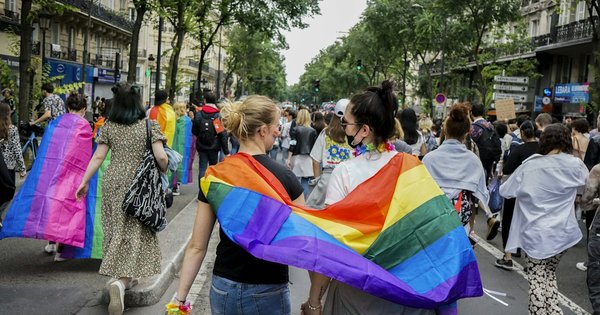
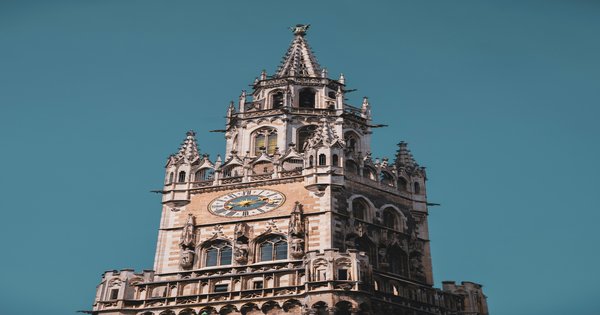
Beyond the obvious sightseeing — Marienplatz’s glockenspiel, the English Garden, the museums — Munich rewards slower travel. We spent an afternoon in the English Garden, which is enormous and genuinely feels like countryside inside the city, and another wandering the Viktualienmarkt food market, which is a good gauge of how food-forward and unpretentious Munich can be despite its wealthy reputation. If your trip lines up with it, Munich Pride (Christopher Street Day) happens in July and draws a solid, well-attended crowd without the overwhelming scale of Berlin’s or Cologne’s.
Safety and the bigger picture
Germany overall remains one of the more consistently protective countries in Europe for LGBTQ+ residents and travelers, with anti-discrimination protections, recognized same-sex marriage, and generally high public support. Munich specifically benefits from being both wealthy and cosmopolitan, which tends to translate into fewer everyday friction points for visibly queer travelers. That said, Germany has seen a real rise in far-right political organizing in recent years, including anti-Pride activity at Christopher Street Day events in some cities, so it’s worth checking current conditions if you’re traveling around Pride season specifically — Munich hasn’t been a flashpoint the way some smaller German cities have, but it’s part of the same national picture.
The honest comparison
If you’re choosing between German cities for a queer-friendly trip, Berlin will always win on scale — more bars, more history, more sheer density of queer life. Munich’s case is different: it’s a city where being visibly queer barely registers as remarkable, wrapped around genuinely excellent food, architecture, and access to the Alps for a day trip. We went in expecting Bavarian conservatism to make us a little more careful than usual. Instead, Munich turned out to be one of the easiest, least self-conscious stops of that entire trip — the kind of place that doesn’t need a queer travel guide to tell you you’ll be fine, but it’s nice to have one anyway.