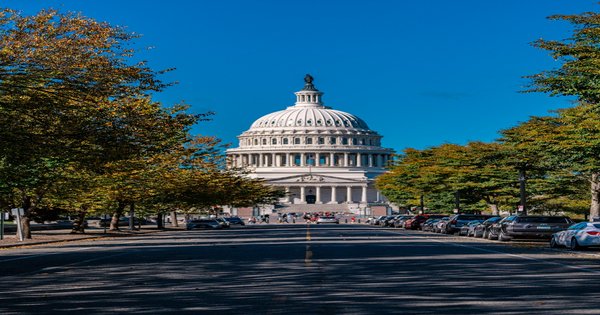
Amid a year of steady losses for transgender Americans, the U.S. House of Representatives did something on July 22 that has become rare: it declined to make things worse. By a vote of 212 to 217, the House rejected an amendment to the annual defense bill that would have written the Trump administration’s ban on transgender service members directly into federal law.
The distinction matters. Right now, the exclusion of transgender troops exists as executive policy — a directive from the White House and the Pentagon that courts can review and a future administration could reverse. Codifying it into the National Defense Authorization Act would have hardened it into statute, far more difficult to unwind and insulated from much of the ongoing legal challenge. The amendment failed, so that did not happen.
What was on the table
The amendment was offered by Representative Lauren Boebert of Colorado during debate on the NDAA for fiscal year 2027, the sprawling annual bill that sets policy for the Defense Department. Her language would have required all personnel to “serve in accordance with their biological sex,” framed around arguments about military readiness and unit discipline. Attaching it to the NDAA was a deliberate strategy: the defense bill passes every year and carries must-fund provisions, making it a favored vehicle for riders that might not survive as standalone legislation.
The math didn’t hold. Four Republicans joined every voting Democrat to defeat it: Brian Fitzpatrick of Pennsylvania, Mike Lawler of New York, James Moylan of Guam, and Kimberlyn King-Hinds of the Northern Mariana Islands. In a chamber where the majority has moved in near-lockstep on culture-war measures, a four-member defection was enough to flip the outcome.
Why it stops short of a victory
It would be a mistake to read this as the tide turning. Transgender service members are still barred under the existing executive policy, and this vote does nothing to reinstate them. Separately, the Pentagon has continued processing separations of transgender troops, and litigation over the ban — including the D.C. Circuit’s ruling earlier this year in Talbott v. United States, which found the policy likely driven by animus — is still working through the courts. What the House rejected was an attempt to make the ban permanent, not the ban itself.
Still, the vote is worth marking for what it reveals. It shows there is not, at this moment, a stable majority in the House willing to enshrine the exclusion in law — and that a handful of Republicans were prepared to break with their leadership to keep it out of the statute books. For a community that has spent much of the past eighteen months absorbing one setback after another, the difference between a policy that can be litigated and challenged and a law carved into the NDAA is not academic. It is the difference between a door that is closed and a door that is bolted shut.
The broader picture
This is the kind of legislative moment that rarely makes international headlines, which is part of why it’s worth flagging from outside the United States. Much of the coverage of American trans rights this year has, understandably, centered on the Supreme Court and the executive branch — the places where losses have been sharpest. Congress is the third arena, and it operates on different math. Amendments like Boebert’s will keep coming, attached to defense bills and appropriations riders, and each one will turn on whether a small number of members are willing to cross the aisle.
For now, they were. The transgender military ban remains an executive policy fighting for its life in federal court, rather than a line in the United States Code. That is a narrow margin, decided by five votes and four Republicans — but in 2026, narrow margins are where a good share of the fight is being won and lost.
Sources: Washington Blade; The Hill; Watermark.