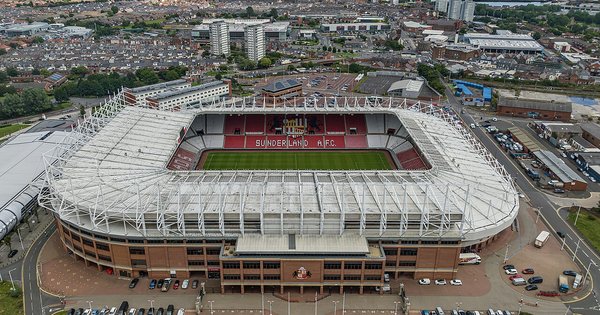
For six months, Ghana’s tourism promoters and English Premier League club Sunderland AFC worked on a deal that would have put the words “Visit Ghana” across the front of Sunderland’s shirts. It was reported to be worth £10 million a year, roughly $13.5 million, and would have made Ghana the first African country to hold the main shirt sponsorship on a Premier League kit. The deal now looks dead. The reason matters to LGBTQ+ travelers, even though the club’s statement never mentions it.
What happened
On September 14, Sunderland told Ghana’s Graphic Sports that it was “now working on the basis that the proposed front-of-shirt partnership will not proceed.” Club media officer Ian Taylor said the two sides had actually reached an agreement, one that “government representatives involved in the proposed partnership” had even announced in public. After that, he said, “we have not received the formal approval from the government of Ghana required to proceed, and communication and engagement have slowed.” The Athletic reported the same position.
The deal had gone far enough that a “Visit Ghana” Sunderland jersey had already been presented to Ghana’s Chief Justice during a trophy tour for Parliament’s Democracy Cup football tournament. Sunderland chairman Kyril Louis-Dreyfus led a delegation to Ghana in June. Speaker of Parliament Alban Bagbin had championed the project and told lawmakers in August that it was privately funded: “This is not being sponsored by parliament. In fact, the main sponsor is from the private sector. We are leading under my canopy to get this done.”
The collapse also takes down a planned friendly between Sunderland and Ghanaian club Asante Kotoko. Sunderland has started the season with no sponsor on the front of its shirts. The club says it remains interested in a partnership with Ghana “in the future.”
Why LGBTQ+ advocates were watching
Neither side has said LGBTQ+ rights played any part in the breakdown, and there is no evidence that they did. What went wrong, according to the club, was an approval from Accra that never came. But the deal was controversial long before it stalled, because of what Ghana is on the verge of becoming.
On May 29, Ghana’s Parliament passed the Human Sexual Rights and Family Values Bill. The version described by Erasing 76 Crimes would make identifying as LGBTQ+ punishable by three years in prison, unless the person submits to “counseling” aimed at changing their sexual orientation or gender identity. Attending a same-sex wedding would carry three years. So would taking part in gender-affirming surgery. “Funding, sponsorship or promotion” of LGBTQ+ activity would carry three to five years. The bill also creates a “duty to report” suspected LGBTQ+ activity to police, and it keeps Ghana’s existing three-year penalty for same-sex intimacy.
Rightify Ghana, a Ghanaian LGBTQ+ rights group, objected that the sponsorship would come at a time when the country “is facing growing human rights concerns” over a bill that “could criminalise and imprison LGBTQ+ people, as well as certain tourists, visitors and allies.” The group also criticized Bagbin, the deal’s main promoter, calling him a “prominent cheerleader and hardliner” for the bill. In Sunderland, the fan site Roker Report asked whether the club “should accept commercial success at any cost,” and wrote that the deal “raises difficult questions about values, human rights and the club’s identity.”
That is the tension at the center of sports-based tourism marketing. A shirt sponsorship works because it invites fans to picture themselves somewhere. Premier League audiences include plenty of LGBTQ+ supporters. Some are gay men who already follow English football’s slow, uneven progress on inclusion, and others are fans who would be traveling with a same-sex partner. Inviting them to visit a country preparing to make their identity a crime is a hard message to reconcile.
Where the bill stands
The bill is not yet law. President John Dramani Mahama has said he would sign it if Parliament endorsed it. On June 1, speaking at Chatham House in London, he said the bill would first go through legal and constitutional review by his legal counsel and the Attorney General. He pointed to questions about whether Parliament had a quorum when it voted and about procedural lapses in its passage. He said he could return the bill to Parliament or refer it to the Council of State if “substantial issues” came up, and that “there’s still quite a while to go before that bill becomes law.”
Nearly four months later, it still has not been signed. Parliament’s attempt this summer to make the penalties even harsher stalled before the August recess. Meanwhile, some voices inside Ghana have shifted: in August the country’s top Anglican cleric said his church does not support criminalization.
The bigger picture
The model Ghana wanted to copy is Rwanda, whose “Visit Rwanda” deals with Arsenal, Paris Saint-Germain, Bayern Munich and others have made it the best-known African tourism brand in European football. Ghana Tourism Authority deputy chief Gilbert Aberiku Aggrey made the same comparison to Graphic Sports, while noting that his agency had not been directly involved in the negotiations.
Whatever actually sank the Sunderland deal, the episode shows a real contradiction. Ghana wants international visitors and global visibility, and its Parliament has also voted to criminalize a share of the people it hopes to attract. As long as that bill sits on the president’s desk, every “Visit Ghana” campaign will draw the same scrutiny. LGBTQ+ travelers, and the clubs and brands that court them, are paying attention.
Sources: Graphic Online; Erasing 76 Crimes; MyJoyOnline. Photo: Arne Müseler, CC BY-SA 3.0 DE, via Wikimedia Commons.