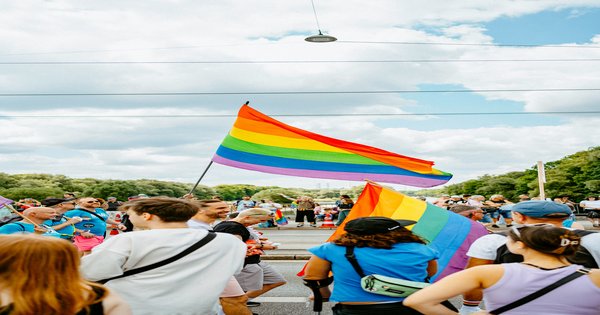
For 35 years, Lambda has been one of the quiet, load-bearing pieces of LGBTQ+ life in Germany — a national network of regional youth groups, phone and chat counseling lines, and safe spaces built specifically for queer and trans young people, many of whom show up because there’s nowhere else in their town willing to have that conversation with them. Founded in 1990, Lambda operates the kind of infrastructure that doesn’t make headlines when it’s working. This summer, it’s making headlines because the German federal government decided to stop paying for it entirely.
What happened
In mid-July, Germany’s federal cabinet finalized a budget decision eliminating core federal funding for Lambda as part of a broader austerity package touching various social and cultural programs. The cut isn’t a reduction — organizers describe it as a total withdrawal of the federal subsidies that keep Lambda’s national operations running, from its counseling infrastructure to support for its regional chapters across the country.
The justification came through Germany’s Federal Ministry for Family Affairs. Responding to questions about the decision, State Secretary Mareike Wulf, of Chancellor Friedrich Merz’s Christian Democratic Union (CDU), framed it in the neutral language of budget discipline: the federal government, she said, is obligated to “concentrate the available funds and streamline its grant activities.” No specific alternative funding mechanism for Lambda’s work was announced alongside the cut.
Why activists don’t buy the budget framing
Lambda’s leadership and allied organizations have pushed back hard on the idea that this is simple fiscal housekeeping. Germany’s federal budget is enormous and touches thousands of programs; singling out one of the country’s few national LGBTQ+ youth organizations for complete defunding, rather than a proportional trim, reads to critics as a targeted choice rather than an unavoidable one. Opposition parties and international human rights organizations have both condemned the decision in similar terms — not as austerity, but as a signal about whose programs this government considers expendable.
That reading is harder to dismiss given the political context. Germany’s federal election earlier this year produced a coalition led by Merz’s CDU, a shift rightward from the previous government, against a backdrop in which the hard-right Alternative for Germany (AfD) has spent years treating “gender ideology” as a core campaign issue and polling competitively enough to shape the terms of debate even from outside government. Lambda’s defunding doesn’t require AfD votes to happen — a CDU-led cabinet made this decision on its own — but it lands inside a political climate where LGBTQ+ youth programs specifically have become an easier target than they would have been a few years ago.
What’s actually at stake
Lambda isn’t a symbolic organization. Its counseling services function as a first point of contact for young people — some in crisis, many just isolated — in parts of Germany where a local queer youth group might be the only one within a couple hours’ drive. The organization has warned that without an alternative funding source materializing quickly, several of its regional centers will be forced to scale back or close outright, which would functionally end in-person support in some of the areas that rely on it most.
That’s a specific, practical loss distinct from the broader political symbolism. Germany still has strong baseline LGBTQ+ protections on paper — marriage equality since 2017, a self-determination law now in force, robust anti-discrimination statutes. None of that changes with Lambda’s defunding. What changes is whether a queer teenager in a smaller German city, someone whose family or school isn’t a safe place to talk about who they are, has anywhere specific to turn. Federal law protecting adults on paper and a functioning support line for a scared sixteen-year-old are different things, and it’s the second one that just lost its funding.
What happens next
Lambda’s leadership says it’s actively seeking alternative funding — state-level government support in Germany’s federal system, private foundations, and public fundraising are all reportedly on the table, though none has been confirmed at the scale needed to replace what was cut. Opposition parties in the Bundestag have signaled they’ll push to reverse the decision, but with Merz’s coalition holding the votes, that’s a long shot in the near term.
For now, Lambda is operating on a runway that gets shorter the longer this goes unresolved, and the young people who’d normally pick up the phone or show up to a Tuesday-night youth group meeting are the ones absorbing the uncertainty in the meantime.