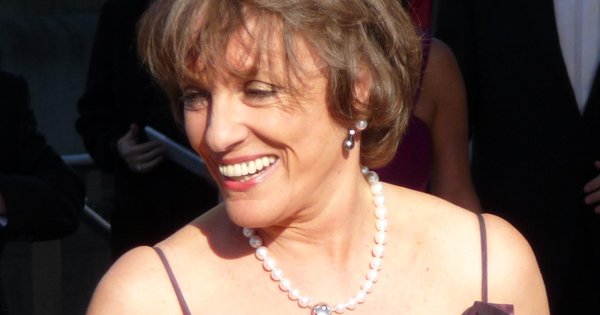
Dame Esther Rantzen died on September 30 at her home in the New Forest, surrounded by her family. She was 86, and had been living with stage-four lung cancer since 2023.
Most obituaries will lead with That’s Life, the consumer show that made her a household name, and with her final campaign for a change in the law on assisted dying. Both matter. But there’s a thread through her career that queer people, especially those of us who grew up in Britain, might recognise: she kept making room for people to say the thing they’d been told to keep quiet.
The helpline
Rantzen founded Childline in 1986: a free, confidential number any child could ring about anything. It is now run by the NSPCC, and it still answers.
For LGBTQ+ young people, that “about anything” was the point. A teenager who can’t tell their parents, their teacher or their friends still needs someone to tell. PinkNews notes that Childline supports young people struggling with their sexual or gender identity, and that its gender identity pages launched in 2015.
Rantzen spoke about exactly that. “I’ve met young people who were desperately unhappy because they couldn’t talk to anyone about issues regarding their sexuality or gender,” she said, in a quote PinkNews republished this week.
Coming out, on daytime TV, in 1996
On 4 November 1996, Rantzen hosted an episode of her talk show Esther about coming out. Her guests included Right Said Fred singer Richard Fairbrass, who talked about his own coming out, and radio presenter Peter Price, who described how painful his had been, according to PinkNews.
The same programme featured Janett Scott, a former president of the Beaumont Society, a UK support group for transgender people.
It’s easy to forget how unusual that was. This was the 1990s, the era of Section 28, when British schools were legally barred from “promoting” homosexuality. A daytime talk-show host giving airtime to people telling their own stories, in their own words, was not nothing.
Years later, in 2018, she presented a national citizenship award to Ben Whelan, a transgender volunteer whose work in Leamington was described as “inspirational”.
The fuller picture
Rantzen was a campaigner first, and her campaigns didn’t always line up neatly with anyone’s side. In her last years she became one of the most prominent voices for assisted dying in the UK, speaking openly about her own illness and her plans. That debate continues in Parliament without her.
Her family said they would remember “her endless capacity for joy, her ability to comfort every heartache, her beautiful way with words and her expert guidance in all things,” The Scotsman reports.
Why it still matters
Plenty of queer adults have a version of the same memory: a phone number, a TV episode, a stranger’s voice that said you’re not the only one. Rantzen built one of the biggest of those lifelines in the UK and kept it open for forty years.
If you’re under 19 in the UK and need to talk, Childline is still there: call 0800 1111 for free, or use the chat on childline.org.uk. Calls don’t show up on phone bills, though the number can stay in your call history, so you may want to clear it afterwards.
Sources: PinkNews; The Scotsman. Photo: Damien Everett, CC BY 2.0, via Wikimedia Commons.