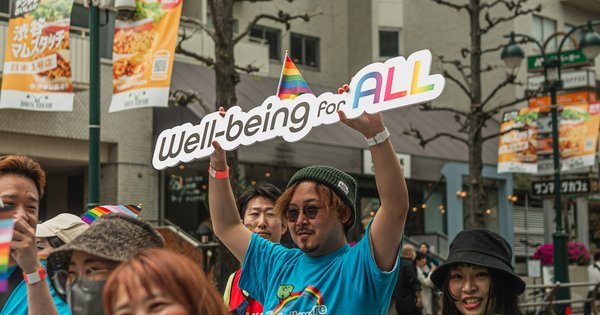
For the first time in years, nobody in Budapest had to risk a fine to march for their rights. On Saturday, June 27, tens of thousands of people filled the Hungarian capital for the 31st Budapest Pride — the first since Viktor Orbán was voted out of office in April, and the first in two years to take place with the blessing of the authorities rather than in open defiance of them.
An AFP photographer on the ground estimated the crowd at at least 100,000, marching under a punishing sun that pushed temperatures to 38°C (100°F). The heat thinned nobody’s resolve. If anything, the mood was one of exhale — a city that spent last summer turning a banned parade into an act of mass civil disobedience finally getting to simply celebrate.
From banned to authorized in twelve months
To grasp what this year’s march means, you have to remember what last year’s looked like. In 2025, under Orbán’s Fidesz government, Hungary amended its assembly laws to effectively outlaw Pride events, complete with the threat of facial-recognition surveillance and fines for those who showed up anyway. The response was one of the most striking acts of collective defiance in recent European memory: an estimated 200,000 people marched regardless, making the banned 2025 Budapest Pride the largest in the country’s history and a very public embarrassment for a government that had staked its brand on stopping it.
Ten months later, that government is gone. Orbán’s Fidesz lost the April 2026 election, and Hungarian police this year formally authorized the march, stating there were no grounds to prohibit it. Officers lined the route to provide security rather than to intimidate. For a country where Pride had become a proxy battle over the direction of the entire state, the sight of police protecting the parade instead of policing it out of existence was its own kind of statement.
The law is still on the books
It would be a mistake to file this under “problem solved.” Hungary’s new government has not yet repealed the Orbán-era legislation that criminalized Pride in the first place, nor the broader 2021 “child protection” law that bans depictions of LGBTQ+ identity to minors — the same law the European Court of Justice struck down in April 2026 as a violation of the EU’s founding values. The legal architecture of the crackdown still stands. What has changed is the will to enforce it.
That gap between what the law says and how it is applied is a familiar and precarious place for LGBTQ+ communities across Central and Eastern Europe. Rights that depend on the goodwill of whoever currently holds power are not yet secure rights. Marchers this year knew it, and many of the placards reflected it: gratitude for the moment, paired with a clear demand that the new parliament finish the job and strike the discriminatory laws from the books entirely.
Why this one matters beyond Hungary
Budapest has become a barometer for the region. When Orbán’s government moved against Pride, far-right and anti-gender movements from the Balkans to Berlin took note; the tactics — assembly bans dressed up as child protection, surveillance threats, counter-protests granted more space than the marchers — travel well and get copied. A Budapest Pride that returns to legality, under police protection, with six-figure turnout, sends the opposite signal: that the anti-Pride playbook can be beaten at the ballot box, and that the backlash is not inevitable.
For those of us watching from the Balkans, where Pride organizers in Belgrade, Skopje and Sarajevo still march behind police cordons against hostile crowds, the Budapest scenes land as something between a relief and a template. Change is possible. It is also reversible, which is exactly why the marchers kept marching even after they won.
The heat broke by evening. The law is still there. But for one Saturday, at least, Budapest got to be a city where Pride is just Pride — loud, sweaty, joyful, and legal.
Sources: PBS NewsHour, France 24, ABC News.