It’s official: Budapest Pride is legal again. This week, Hungarian police formally approved the 31st Budapest Pride march, scheduled for June 27, stating plainly that “no grounds for prohibiting the assembly arose.” For a march that was outlawed by the previous government just one year ago, those are quietly extraordinary words.
From banned to authorized in twelve months
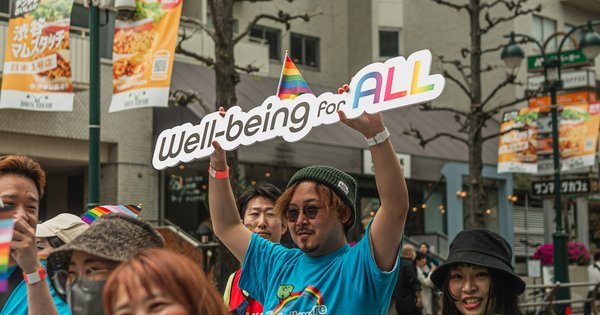
To understand how big this is, rewind to 2025. Under Viktor Orbán’s Fidesz government, Hungary amended its assembly laws to effectively ban Pride events, complete with threats of facial-recognition surveillance and fines for attendees. The response from Budapest was one of the most remarkable acts of collective defiance in recent European memory: an estimated 200,000 people marched anyway, turning a banned Pride into the largest in Hungarian history.
Then came April’s election. Péter Magyar’s center-right Tisza party ousted the Fidesz-KDNP coalition after fifteen years, and the political weather in Hungary shifted almost immediately. We covered the aftermath of that election and what Magyar’s first hundred days meant for LGBTQ+ Hungarians — cautious optimism, with the emphasis on cautious. This week’s police decision is the most concrete sign yet that the era of state-orchestrated hostility toward Pride is winding down.
What the police actually decided
The authorization covers the full march, and notably, police went further: they issued restrictive orders against three planned counter-demonstrations, requiring them to keep their distance from the Pride route. For organizers who spent last year wondering whether attending Pride would mean a fine generated by facial-recognition cameras, having the police actively protecting the march’s space is a reversal that’s hard to overstate.
Budapest Pride organizers welcomed the decision, saying they were “really happy” and inviting everyone who marched in defiance last year to return in celebration this year.
There’s an important caveat, and it deserves attention. The Magyar government has not repealed the Orbán-era legislation that rendered Pride-like events illegal in the first place. A government spokesperson indicated the government would not decide on those regulations and would instead let police determine whether such events can proceed. That means the legal architecture of the ban still exists — it’s simply not being enforced. Rights advocates in Hungary have been clear that nothing short of formal repeal will do. Laws left on the books are laws that a future government can pick back up.
The far right isn’t going quietly
Hungary’s right-radical Our Homeland party has announced a counter-event it’s calling “Family Pride,” a full-day program scheduled one week after the march. Party leader László Toroczkai framed it as “a positive answer to an event organised by the strongest LGBTQ lobby in the world” — rhetoric that will be familiar to anyone who’s tracked the anti-gender movement’s playbook across Central and Eastern Europe.
That a counter-event is happening a week later, rather than physically confronting the march, says something about where the energy is right now. But it’s also a reminder that the political forces behind the original ban didn’t disappear with Orbán’s government. They’re regrouping.
Why this matters beyond Hungary
Hungary’s Pride ban was never just about Hungary. It was the test case — the question of whether an EU member state could simply legislate Pride out of existence and weather the consequences. The European Court of Justice struck down Hungary’s broader anti-LGBTQ+ law earlier this year, and the EU has since released more than €16 billion in funds that had been withheld over rule-of-law violations.
For the Balkans, where we live and where governments watch Budapest closely, the signal matters enormously. When banning Pride looked politically survivable, politicians from Belgrade to Skopje took notes. Now the lesson reads differently: the ban fell, the government that imposed it fell, and the march is back with police protection.
The 31st Budapest Pride steps off on June 27. After the year Hungary’s queer community has had, it’s set to be one of the most meaningful Pride marches in Europe this summer — not a protest against a ban, but proof of what outlasting one looks like.