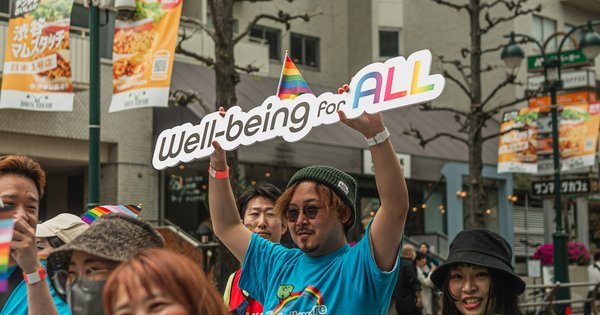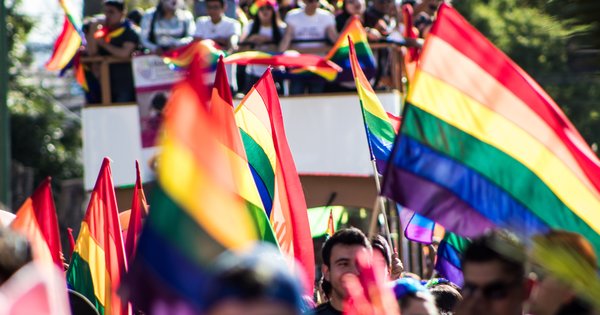
On Saturday, the two EU countries that consistently rank worst for LGBTQ+ legal protection threw two of the loudest parties of the European Pride season. Tens of thousands of people filled the streets of Bucharest and Sofia, waving flags, blowing whistles, and demanding the equality their governments still won’t write into law. If you want to understand why Pride still matters — why it is a protest before it is a party — these two cities are the clearest case study on the continent.
Last place, loudest crowd
Romania and Bulgaria sit at the bottom of all 27 EU member states on ILGA-Europe’s Rainbow Map, the annual ranking that scores countries on the legal and policy landscape for LGBTQ+ people. Neither recognizes same-sex marriage or civil partnership. Neither has moved on legal gender recognition in any meaningful way. Both have spent years ignoring or slow-walking European court rulings that told them to do better — Romania most notably in the Coman and Buhuceanu cases, where the European Court of Human Rights found the country in violation of its obligations to recognize same-sex couples.
And yet. ACCEPT, Romania’s oldest LGBTQ+ organization, estimated roughly 30,000 people at the Bucharest march — one of the largest in the city’s history. In Sofia, thousands marched through the center under heavy police protection, as they have every June since the first nervous, heavily guarded edition years ago. The contrast is the whole point: the legal floor is low, but the crowds keep growing. Visibility is outpacing legislation.
The opposition showed up too
This is not a story of uncomplicated triumph, and it would be dishonest to tell it that way. In Bucharest, a nationalist group held a competing “March for Normality,” the now-familiar counter-event designed to frame queer people as a threat to the family. In Bulgaria, the Orthodox Church — which claims the allegiance of roughly 80% of the population — issued a statement registering its “disagreement with the ideas and messages” of Pride and blessing what it called the “traditional family.”
That institutional opposition is not background noise. It is the engine behind the legislative paralysis. Bulgaria amended its constitution and education law in recent years to restrict so-called “LGBT propaganda” in schools, borrowing language straight from the Russian and Hungarian playbook. Romania’s parliament has repeatedly buried civil-partnership bills in committee. The marches are large precisely because the legal channels remain blocked; the street is where the conversation happens when the chamber refuses to.
Why this weekend mattered for the Balkans, too
We cover this region closely from our base in the Balkans, and the Bucharest–Sofia axis is a useful mirror for what’s happening a little further west. Romania and Bulgaria are the EU’s cautionary tale: membership alone does not deliver rights. Both joined in 2007, and nearly two decades later they remain at the bottom of the table. For accession candidates like Albania, Serbia, Montenegro, and North Macedonia, that’s a sobering data point. The carrot of EU membership pushes governments to pass anti-discrimination law and tolerate Pride; it does not, on its own, produce marriage equality or gender recognition. Those have to be fought for at home, year after year, in exactly the way 30,000 people in Bucharest fought for them this weekend.
There’s an encouraging side to the comparison as well. The size and confidence of these crowds — in countries where, twenty years ago, a public Pride march was unthinkable and often violently attacked — is real progress that no ranking captures. Sofia Pride’s first editions in the early 2010s drew a few hundred people behind lines of riot police. The marches now move through the capital as established civic events. Bucharest Pride has grown from a guarded curiosity into a fixture that fills the boulevards. The law lags, but the culture is shifting underneath it, and culture is usually what moves the law in the end.
What to watch next
The immediate question is whether the new European Court of Justice precedent on cross-border recognition of same-sex marriages will force Romania’s hand. Bucharest has been ordered, in effect, to recognize marriages its citizens lawfully entered into elsewhere in the EU, and ACCEPT has been pressing transcription requests through the courts to make that real on the ground. Bulgaria’s path is harder, with the constitutional amendment and church opposition forming a tighter wall.
For now, the takeaway from Saturday is simple. In the two places the EU’s own scorecard says are the hardest for queer people to live, tens of thousands of them showed up anyway — visible, joyful, and unwilling to be ranked out of existence. That is what Pride looks like when it still has work to do.
Sources: Washington Times / AP, PBS News, ILGA-Europe Rainbow Map.