Belgrade Pride has asked for the same things since 2014: a law recognizing same-sex partnerships, a Gender Identity Law with real healthcare access behind it, hate-crime cases that actually get prosecuted, and a formal apology to LGBTQ+ Serbians persecuted before 1994. None of it has arrived. This year, organizers are heading into Pride Week with that same unmet list — but for the first time in over a decade, they’re doing it inside a country that is, by nearly every outside account, in open political crisis.
A movement running alongside a movement
Serbia has spent nearly two years in sustained upheaval since a railway station canopy collapsed in Novi Sad in November 2024, killing 16 people. What began as demands for accountability over that disaster grew into a nationwide student-led movement calling for snap elections and an end to what protesters describe as institutional impunity under President Aleksandar Vučić. The protests have not let up in 2026 — analysts tracking the movement describe continued mass turnout, university blockades, and a government response that has increasingly relied on riot police rather than negotiation.
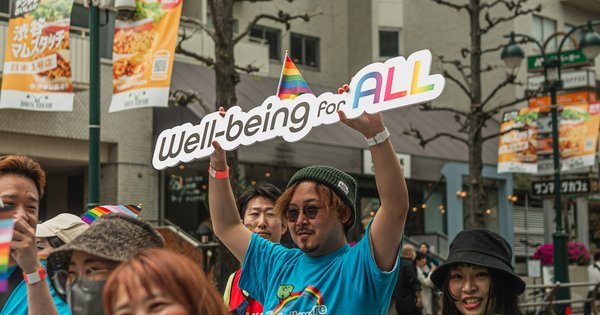
Belgrade Pride has explicitly aligned itself with that movement. Organizers describe this year’s march as “a form of struggle for free and safe assembly” as much as a celebration, and past Pride marches in the capital have doubled as demonstrations condemning police violence against student protesters. That framing isn’t new for 2026 — TrueQueer reported on it back in April, when organizers first signaled Pride would lead with protest rather than celebration — but the backdrop has gotten considerably more dangerous since then.
What’s escalated since spring
Analysts following the protest movement report a pattern that intensified over the summer: businesses seen as sympathetic to protesters targeted with arson, and bystanders near demonstrations — not just organizers — beaten by people widely believed to be government-aligned. The Centre for Eastern Studies, a Warsaw-based research institute that has tracked the Serbian crisis closely, describes both the government and its opponents as having “closed ranks,” with little room left for the kind of institutional mediation that might de-escalate things before September.
For a Pride march that has always drawn counter-protesters and, in past years, direct attacks from ultranationalist groups on police cordons, that climate matters. Belgrade Pride isn’t walking into a uniquely hostile summer in isolation — it’s walking into the most volatile stretch of Serbia’s protest crisis to date, as one more visible target in a country where visibility itself has become dangerous for a much wider range of people than just the LGBTQ+ community.
The list that hasn’t moved
The demands themselves are almost unchanged from a decade ago: a Law on Same-Sex Partnerships that still doesn’t exist despite years of promised drafts; a Gender Identity Law paired with accessible transition-related healthcare; visible, public condemnation from officials when hate crimes happen, rather than silence; local action plans for LGBTQ+ residents that most municipalities have never adopted; comprehensive sex education that addresses sexual orientation and gender identity; free and accessible PrEP and PEP; and the long-standing request for a formal state apology to those persecuted under Yugoslav-era laws before 1994.
Serbia did take one symbolic step this spring — a state apology specific to pre-1994 prosecutions, which TrueQueer covered when it was announced. Organizers have welcomed it as overdue, while pointing out that an apology for the past doesn’t substitute for the partnership law that would change anyone’s life today.
Why this year is different
Every Belgrade Pride carries risk. What’s different in 2026 is that the risk isn’t contained to Pride weekend anymore. Serbia’s LGBTQ+ community is watching a government it has never fully trusted respond to a much larger domestic crisis with tactics — mass arrests, unexplained violence against bystanders, arson against people seen as opposition-adjacent — that make the annual Pride march feel less like an isolated flashpoint and more like one visible node in a country-wide standoff. Organizers are proceeding anyway, in the first week of September, under the same banner they’ve used before: that showing up, even now, is the point.
Sources: prajd.rs — Belgrade Pride official site, OSW Centre for Eastern Studies, Al Jazeera, UN Serbia