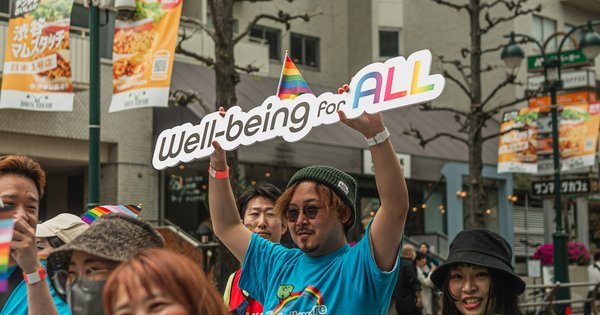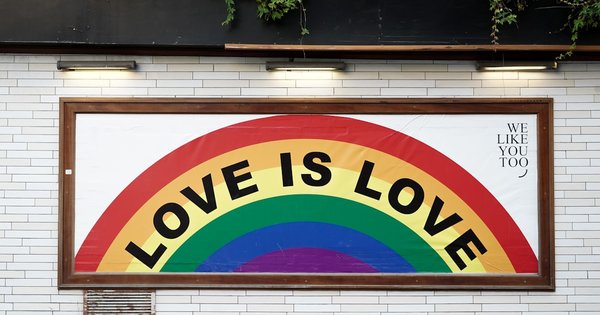
Pride season in the Balkans is winding down. Tirana marched in May. Pristina held its tenth parade in June under the slogan “Equality or Revolt.” Skopje and Sarajevo took their turns, and Belgrade’s protest march is still to come in September. For a few weeks each year, rainbow flags appear in city squares that spend the rest of the calendar looking studiously heterosexual, and international observers file their photographs and their optimistic paragraphs about progress.
Then the flags come down. And for the people who live in these cities year-round, that is when the more difficult reality begins.
The parade is the visible 1 percent
It is tempting — especially for outsiders — to treat the annual Pride march as a scoreboard. Did it happen? Was anyone hurt? Did politicians show up? By those metrics, 2026 looked like steady progress across much of the region. But activists across the Western Balkans keep making the same quiet point: a march that is protected for one afternoon tells you very little about whether a queer person is safe in their workplace, their family home, or their local clinic on an ordinary Tuesday in November.
The gap is stark. Kosovo’s constitution bans discrimination based on sexual orientation, yet as of early 2026 its parliament had again failed to adopt a Civil Code that would recognize same-sex civil partnerships, blocked by opposition from within the governing majority itself. Serbia has held Belgrade Pride without a ban every year since 2016, and still has no partnership law and a trans community that describes navigating healthcare as a bureaucratic ordeal. Albania has one of the most comprehensive anti-discrimination statutes in Europe on paper — explicitly covering gender identity — and no legal recognition whatsoever for same-sex couples, no path to legal gender affirmation, and a Gender Equality Law passed in late 2025 that was stripped of inclusive language before it reached a vote.
The march is the visible one percent. The other ninety-nine is legislation that stalls, protections that exist in statute but not in practice, and families where being out is still a private negotiation rather than a public right.
Why the off-season is where it counts
The Balkans are living through a particular moment. EU accession has become the region’s dominant political project, and fundamental-rights criteria — including how member-hopefuls treat LGBTQ+ citizens — are formally part of the scorecard. Albania has entered the final phase of its negotiations; Serbia, North Macedonia and Montenegro are all somewhere on the same road. In theory, that gives Brussels leverage and local activists a lever to pull.
In practice, the danger is that governments learn to perform the parade and skip the substance. It is relatively cheap to deploy police to protect a Pride march for one Saturday and photograph a minister smiling near a rainbow. It is politically expensive to pass a civil partnership law, fund a trans healthcare pathway, or prosecute the everyday discrimination that never makes the news. The visible gesture satisfies the checklist; the invisible work is where rights are actually won or quietly abandoned.
That is why the most useful thing allies can do is pay attention in the off-season. The community organizations that run the safe houses, the legal clinics, the mental-health lines, and the patient advocacy in front of parliaments do their hardest work in the months when no one is filming. They are the reason a Pride march is possible at all — and they are chronically underfunded precisely because donor attention, like everyone else’s, tends to arrive in June and leave in July.
What year-round freedom would look like
Ask activists across the region what they actually want, and the answers are strikingly unglamorous. Partnership and family recognition, so that a couple of fifteen years is not a legal stranger in a hospital. A gender-recognition procedure that does not require humiliation or fabrication. Hate-crime provisions that police and prosecutors are trained to use. Schools where a queer teenager is not left to absorb, uncorrected, the message that they are a problem to be managed.
None of that fits on a placard as neatly as “Equality or Revolt.” All of it is what equality would actually mean.
The Balkan Pride calendar is one of the genuine bright spots in a region often written off. The marches happen, they are getting bigger, and in several cities they now pass off peacefully behind a police cordon rather than under a hail of stones. That progress is real and worth celebrating. But the community’s own message this summer was consistent and clear: do not mistake the parade for the destination. Freedom that only shows up in June is not freedom yet.
Sources: Balkan Insight, Balkan Insight — Pristina Pride, Wikipedia — LGBTQ rights in Kosovo.