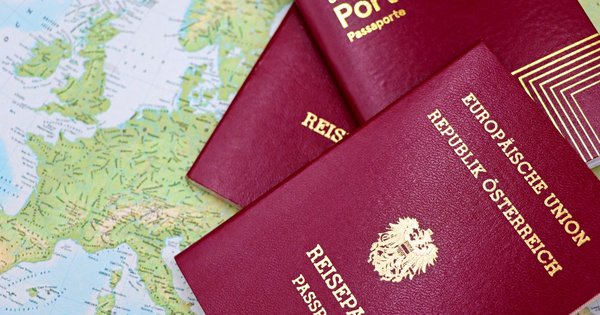
Austria has issued its first gender-neutral passport to a non-binary citizen — a small document with outsized legal meaning, since it’s the first concrete case testing how far a Court of Justice of the European Union (CJEU) ruling on cross-border gender recognition actually reaches in practice.
What happened
The passport went to a non-binary Austrian citizen who lives in Germany. Austrian authorities issued the document with a gender-neutral marker rather than “male” or “female” after the applicant’s legal gender status, recognized under German law, was carried over and honored by Austria. That’s the part that matters: this wasn’t Austria independently deciding to expand who qualifies for its own third-gender category. It was Austria being required, under EU law, to recognize a legal gender status its citizen had already secured somewhere else in the bloc.
The underlying principle comes from a CJEU ruling establishing that the right to move and reside freely within the EU is undermined if a member state refuses to recognize a legal gender change validly registered in another member state. In plain terms: if you’re an EU citizen and another EU country has legally recognized your gender identity, your home country can’t simply pretend that recognition doesn’t exist once you’re back on its books. The court framed access to legal gender recognition as a prerequisite for enjoying fundamental rights tied to freedom of movement — not a courtesy individual states can opt out of extending to their own citizens living elsewhere in the EU.
Why Austria, and why now
Austria has had a legal path to a third gender marker since 2018, when its Constitutional Court first recognized the option — but for years, that path was effectively limited to intersex individuals, not non-binary people more broadly. That changed in December 2025, when Austria’s Constitutional Court issued a ruling extending access to the third legal gender category to non-binary people regardless of intersex status. This August’s passport is the first time that expanded domestic standard has intersected with the EU’s cross-border recognition requirement, for a citizen whose gender status was already established abroad.
It’s a narrow case, but narrow cases are often how EU rights law actually gets built. A single passport doesn’t rewrite Austrian civil law, but it does establish, in practice, that the domestic legal gender categories a country recognizes for its own residents have to extend to citizens who secured recognition elsewhere in the EU and come home — or, in this case, never fully left.
The bigger, slower picture
Non-binary legal recognition remains rare in Europe. By most current counts, only three European countries formally recognize non-binary identities in law, and Austria’s own path there was built case by case through the courts rather than through a clean piece of legislation. Countries like Germany, the Netherlands, and Denmark have their own patchwork of third-gender or “diverse” marker options, each with different eligibility rules, which is exactly the kind of inconsistency the CJEU ruling is aimed at smoothing out — at least for people who move between EU states.
That inconsistency has real consequences. A non-binary EU citizen whose passport says one thing in one country and something else in another isn’t dealing with an abstract legal puzzle; it shows up at airport security, at banks, at hospital intake forms, in the small daily moments where an ID either matches who you are or doesn’t. The CJEU’s freedom-of-movement framing is significant precisely because it ties gender recognition to something the EU treats as close to sacred — the right to live, work, and move across borders without your legal identity resetting every time you cross one.
What to watch next
This is likely to be the first of several test cases rather than a one-off. Advocacy groups across the EU have been watching for exactly this kind of implementation moment, where a court ruling on paper turns into an actual document issued to an actual person. Whether other member states follow Austria’s lead smoothly, or whether some governments — particularly those with more restrictive domestic gender-recognition laws — try to resist or narrow the ruling’s practical effect, will shape how much this decision ends up mattering for non-binary and trans EU citizens more broadly.
For now, it’s one passport. But it’s the kind of small, procedural win that tends to matter more than it looks like it should.