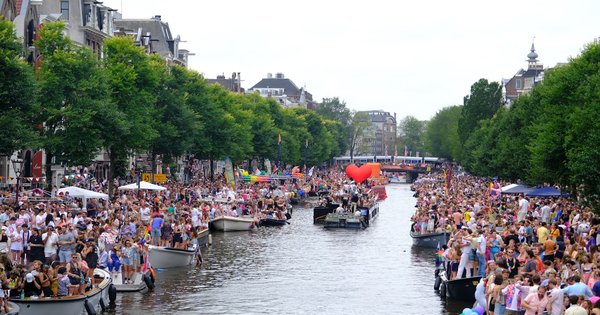
Two days after a van-and-blade attack killed one person and injured at least 29 others near Berlin’s Christopher Street Day festivities, the city hosting Europe’s next massive Pride celebration is adjusting its plans. Amsterdam Mayor Femke Halsema said Sunday the city will add security measures for WorldPride 2026, which opens with a canal boat parade on August 1 and culminates in a main march on August 8, with organizers expecting roughly a million visitors.
“What horrible news from Berlin: an attack on the freedom that we are also celebrating on a grand scale in Amsterdam these weeks,” Halsema said, acknowledging the attack would provoke fear among the LGBTQ+ people and allies planning to attend. She said the city’s “triangle” — the mayor, police, and public prosecutor — is working with WorldPride organizers on the response, and that she wants visitors to notice “as little as possible” of the added precautions.
What happened in Berlin
The attack unfolded around 10 p.m. on July 25, roughly ten hours into what had been a peaceful 48th annual CSD Berlin parade held under the motto “Haltung ist hot” (“taking a stand is hot”). A van drove roughly 100 meters into a crowd near Berlin’s Tiergarten park, close to the day’s closing festivities at the Brandenburg Gate, before the driver got out and attacked bystanders with a bladed weapon. One woman was killed and at least 29 people were injured, several critically. The evening’s remaining events were canceled and Tiergarten was cleared.
German police identified the suspect as Abdul Ballout, a 21-year-old German-born citizen with Lebanese roots who was already known to authorities as part of Berlin’s Islamist scene. According to prosecutors, Ballout had traveled to Lebanon in 2025 attempting to reach Syria and join ISIS, was briefly imprisoned there, and after returning to Germany was convicted in a juvenile court this past May for preparing a serious act of violence and posting Islamic State propaganda — receiving a suspended sentence of roughly 22 months. He was free pending that case when Saturday’s attack happened.
Police tracked Ballout to a garden plot in the Spandau district Sunday evening after a roughly 24-hour manhunt. Officers said he charged at them with a bladed weapon; they opened fire, and he died at the scene despite resuscitation attempts. German Interior Minister Alexander Dobrindt said “everything we see here points to us dealing with an Islamic terror attack.” Investigators have not said publicly whether they believe anyone assisted him.
Europe responds
The political reaction came fast and from across the continent. German Chancellor Friedrich Merz said the attack was an attempt “to divide our society” and told the public: “There are more of us, we are stronger, and we will stay together.” Berlin Mayor Kai Wegner said the city “will only get stronger” and would not let anyone take away “our way of living together.” European Commission President Ursula von der Leyen wrote that “hate and violence have no place in our societies. We stand united at the side of the LGBTQI+ community,” and French President Emmanuel Macron pledged that Europe’s response to hatred would be “unity, freedom, and firmness.” Dutch Prime Minister Rob Jetten called the attack “a direct attack on our free and tolerant society.”
LSVD⁺ (Federation Queer Diversity), one of Germany’s largest LGBTQ+ organizations, said in a statement that “it is difficult for us to put into words the shock and grief” felt by the community, and pressed the German government to strengthen protections for queer and intersex citizens going forward. Hundreds gathered at the Brandenburg Gate on Sunday with flowers and candles; one attendee told reporters, “They’ll never erase us, we’ll never be gone.”
What it means for WorldPride
The timing is difficult for organizers 1,150 kilometers away in Amsterdam, who have spent months preparing for what’s expected to be one of the largest WorldPride editions yet. Halsema’s comments suggest the added security will be layered in rather than dramatically visible — a balance many European Pride organizers have had to strike for years given a long, grim history of attacks on LGBTQ+ gatherings, from Oslo’s 2022 Pride shooting to the 2021 attack on Tbilisi Pride.
For TrueQueer’s readers across the Balkans, where Pride marches already routinely operate under police protection and, in cities like Belgrade and Oradea, under outright bans that organizers defy anyway, the calculus in Amsterdam will feel familiar: visibility itself is the point, and stepping back is not really on the table. Whether WorldPride’s opening weekend proceeds without incident will be closely watched well beyond the Netherlands.
TrueQueer will continue following developments as Amsterdam’s WorldPride events approach.
Sources: NPR, CBS News, Al Jazeera, France 24, NL Times, Los Angeles Blade.