Albania has crossed a threshold most candidate countries spend decades reaching. At the 8th Intergovernmental Conference between the EU and Albania on May 26 in Brussels, the bloc formally moved Tirana into the concluding phase of accession negotiations. Albania is now only the second country, after Montenegro, to receive an Interim Benchmark Assessment Report on the rule-of-law cluster — and the second to have closing benchmarks set for Cluster 1 ‘Fundamentals.’
For LGBTQ+ Albanians, that bureaucratic phrase is the most consequential thing the European Union has said about them in years.
What “closing benchmarks” actually means
Accession is structured around six clusters of chapters. Cluster 1, Fundamentals, contains Chapter 23 (judiciary and fundamental rights) and Chapter 24 (justice, freedom and security). Those two chapters are scored against a country’s record on human rights, anti-discrimination, hate crime, asylum, and minority protections — categories that, in the European Commission’s own language, include sexual orientation and gender identity.
When the EU sets closing benchmarks, it’s saying: here are the specific items you must deliver before this chapter can be provisionally closed. The benchmarks are not public in full, but past Western Balkans precedents — and the Commission’s most recent country report on Albania — point to the same gaps that activists in Tirana have been naming for years.
The gaps the EU is now scoring
Albania’s legal framework on paper is the strongest in the Western Balkans. The country has comprehensive anti-discrimination legislation, a partial conversion-therapy ban, and a Discrimination Commissioner’s office written into law. ILGA-Europe’s Rainbow Map 2026 ranked Albania in the upper tier of the region.
But the same report — and the European Commission’s annual progress assessments — flag persistent gaps:
- No legal recognition of same-sex couples. No marriage, no civil union, no registered partnership. Children of same-sex parents are not registered to both parents.
- No legal gender recognition. Trans Albanians cannot update identity documents to match their gender.
- A Discrimination Commissioner’s office that has been weakened by political contests over appointments and budget.
- Hate-crime enforcement that lags behind the statute. Bias-motivated attacks are recorded inconsistently; prosecutions are rare.
Each of those items maps directly onto the kind of language the Commission uses when it drafts Chapter 23 benchmarks. None of them require parliamentary majorities that Albania doesn’t have. All of them are politically uncomfortable.
Why the deadline matters
For most of the last decade, Albania’s LGBTQ+ rights conversation has run on a parallel track from accession talks. Pride happens. Politicians attend. The EU Ambassador marches. Then the news cycle moves on, and the substantive legal reforms get pushed to the next session of parliament.
Closing benchmarks change that math. Once benchmarks are set, the Commission’s next annual report measures Albania against them — line by line, in writing, in front of every other EU capital. Rights reforms that previously felt optional become trackable obligations. A government that wants to keep moving toward membership now has a concrete reason to send a partnership bill to parliament and to confirm a permanent Discrimination Commissioner.
It also creates leverage for activists. Aleanca LGBT, ProLGBT, Streha and the other Tirana-based organizations have spent years documenting what the gaps look like in practice. With closing benchmarks on the table, those reports become reference material for Brussels — and the cost of ignoring them goes up.
What’s not on the benchmark list (and what is)
A few things to keep in mind so the story doesn’t get oversold.
The EU does not require marriage equality for accession. It does require effective protection from discrimination and hate crime and legal certainty for families — which in practice has meant most member states arriving at some form of partnership recognition before joining. Croatia, Slovenia, the Czech Republic and Cyprus all enacted partnership laws in or shortly after their accession years. Albania does not have to copy any specific model. It does have to close the recognition gap somehow.
Closing benchmarks also don’t guarantee the chapter will close on any specific timeline. EU member states can — and do — block individual chapters for unrelated bilateral reasons. Bulgaria’s blockade of North Macedonia is the closest cautionary tale. Albania’s path forward is now more concrete, not automatic.
The political weather in Tirana
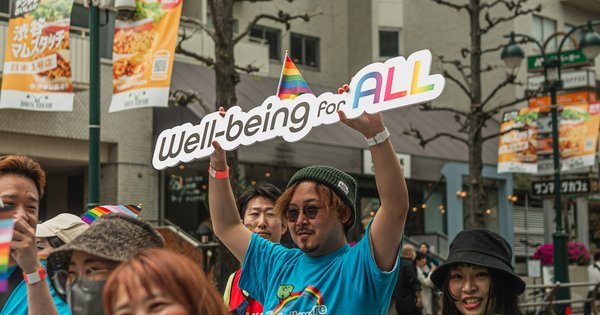
The Rama government has made EU accession the organizing project of its third term. Prime Minister Edi Rama has publicly committed to closing all chapters by 2027 — a target Brussels officials have called “ambitious.” Foreign Minister Igli Hasani has been visible at the IGC ceremonies. Minister of Health and Social Protection Albana Koçiu marched at Tirana Pride on May 23 alongside EU Ambassador Silvio Gonzato.
That kind of high-level visibility is real — and it is also relatively cheap politically. The harder question is whether the government will spend domestic political capital on the legal reforms the benchmarks now require. Albania’s parliament has previously stalled on a draft civil-partnership bill. With Cluster 1 closing benchmarks on the table, that bill — or something like it — is now a piece of the accession ledger.
The seven-year view
If Albania closes Cluster 1 in the next two years, the rest of the negotiation chapters move faster. If it doesn’t, the timeline stretches, and so does the period during which LGBTQ+ Albanians live without partnership recognition or legal gender markers.
For the first time, those two timelines are formally linked. Brussels just made the link official.